LISTEN TO THE PLACE
A story worth knowing
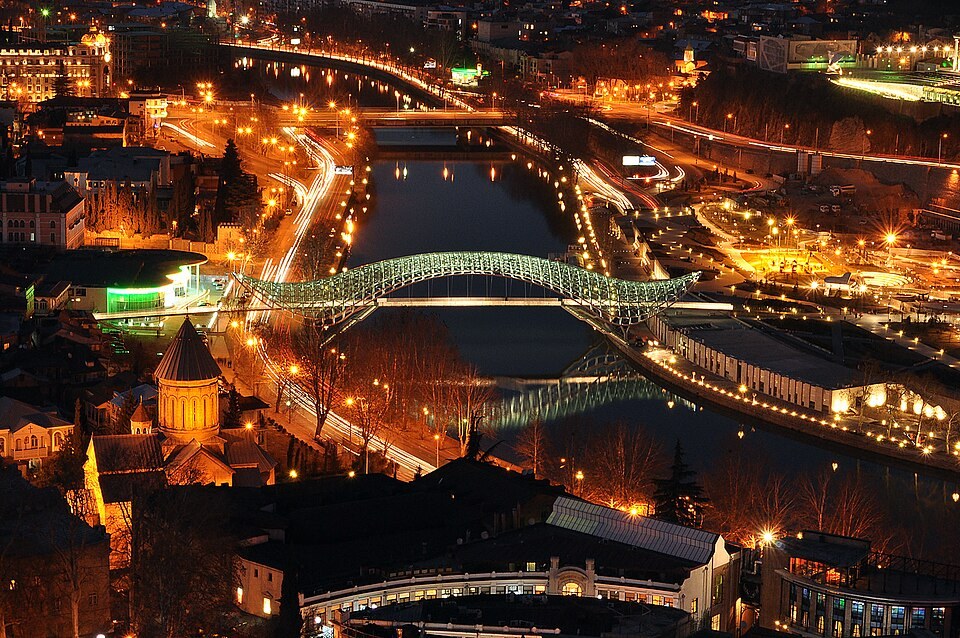
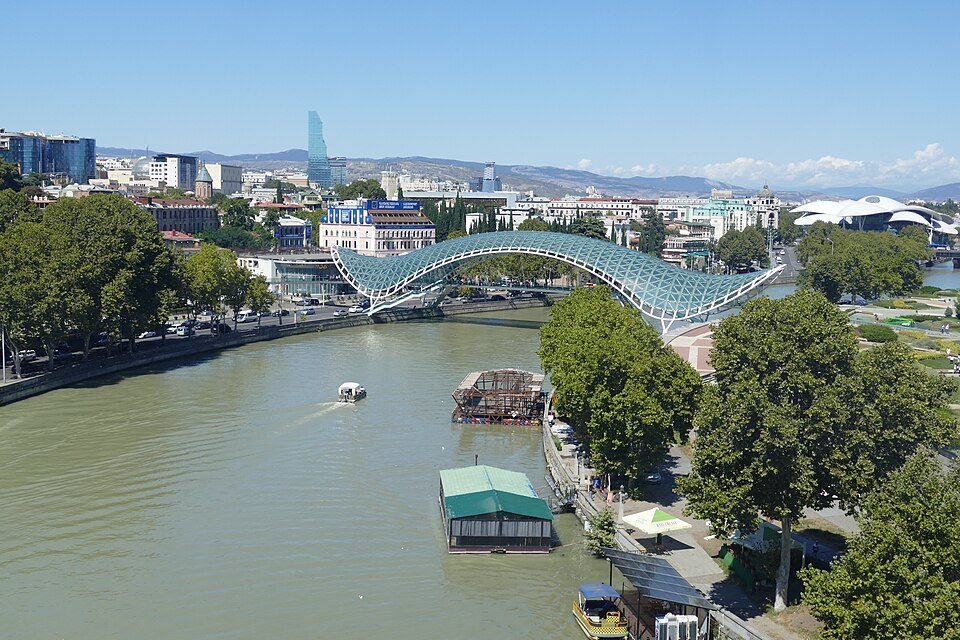
The Bridge of Peace makes Tbilisi's changes easy to notice. Old streets remain behind you, Rike Park opens ahead, and a glass canopy curves overhead. It looks as if a transparent wave has been stretched between the banks. This pedestrian crossing over the Mtkvari opened in two thousand and ten and became one of the centre's most recognisable modern landmarks.
Distinguish the route from its covering. The walkway answers a straightforward need: carrying people across water. The canopy also performs a visual task, turning an everyday connection into an object people recognise. A metal framework supports the glass, and the repeated components create a pattern that changes as you move. Take a few steps and a section that seemed densely woven may suddenly admit much more sky.
Seen from the side, the bridge looks like one continuous form. From within, it separates into lines, reflections and openings. That is one reason a photograph and a walk can offer different experiences of the same structure. Glass does not disappear entirely, even when it seems transparent. It catches the light and reflects fragments of the city, adding another layer to the actual view.
The contrast with Old Tbilisi is immediate. Instead of heavy masonry, there is a structure that appears light; instead of small windows, an open passage. It does not pretend to be an ancient bridge. It makes its modern age visible. You may enjoy or question the contrast, but it prevents the centre from looking like scenery frozen in a single historical period.
After dark, LED illumination changes the experience again. By day, sky, steel and glass attract attention. At night, the pattern of light becomes more prominent. The point is not a particular lighting sequence, which can change, but the transformation itself. The same crossing can create a very different mood at another hour.
Pause somewhere that leaves room for other pedestrians and look along the river. The bridge belongs to a longer sequence of crossings, banks and hills. Its name suggests connection, and walking makes that idea understandable without any further symbolism. A few minutes ago you were in one neighbourhood. Now you can reach another on foot, above the water, with a fresh angle on roofs you have already seen.
Learn more
Read the bridge as a sequence of views. From the bank you see the overall curve; at the entrance, the perspective of the walkway; in the middle, the river in both directions. No single view replaces the others. Walking through architecture can therefore reveal more than photographing it from outside. Your movement acts almost like film editing, continually changing the relationship between the frame, the water and distant buildings that remain in place.