LISTEN TO THE PLACE
A story worth knowing
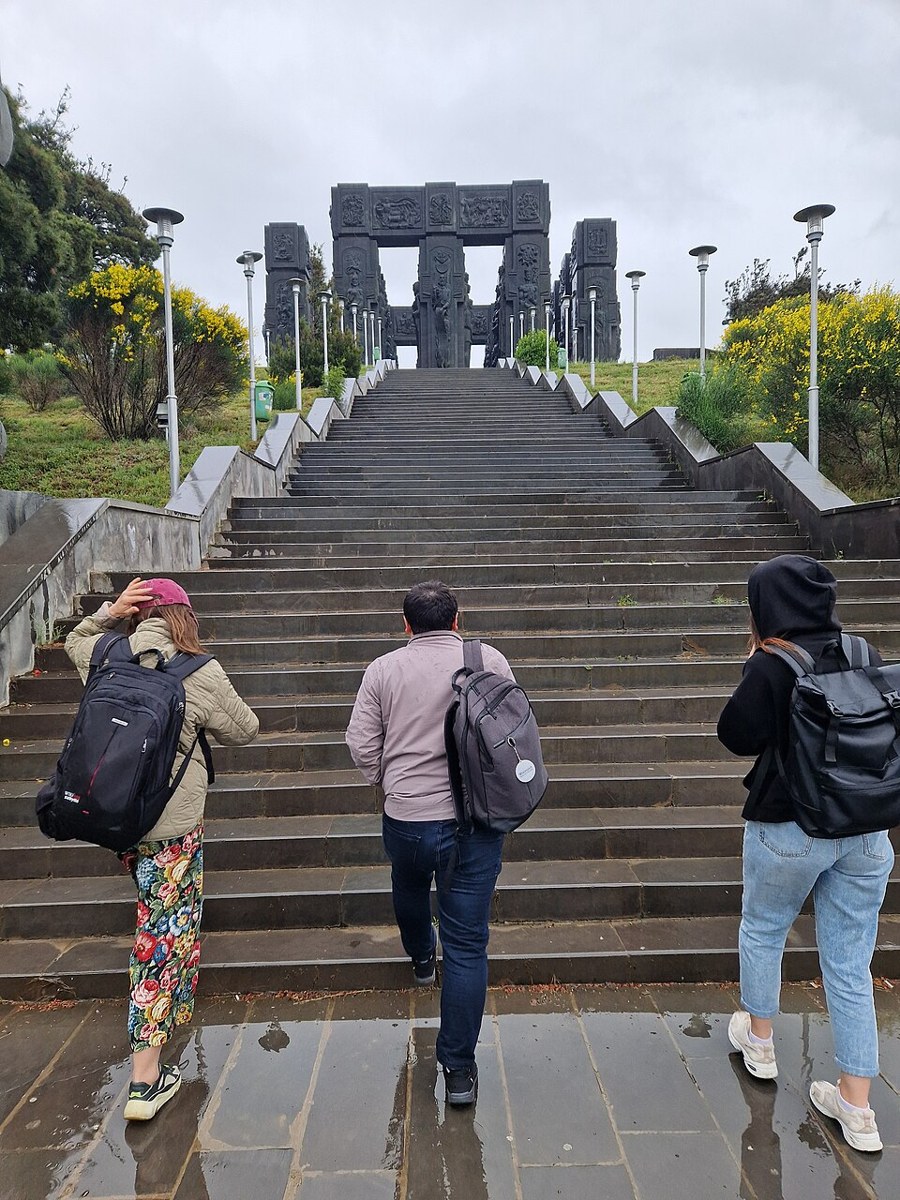
At the Chronicle of Georgia, the first impression is almost physical. You approach enormous pillars, and human height suddenly becomes a very small unit of measurement. Reliefs and figures rise above you, with gaps of sky between them. Despite the scale and hilltop setting, these are not the ruins of an ancient sanctuary. They belong to a monumental project by sculptor Zurab Tsereteli, begun in nineteen eighty-five.
The ensemble stands near the Tbilisi reservoir, often called the Tbilisi Sea. Reaching it from the historic centre is a separate journey, not a small detour during a walk through the old town. The surroundings change as well. Close-packed streets give way to an exposed hill, broad water and more distant parts of the city.
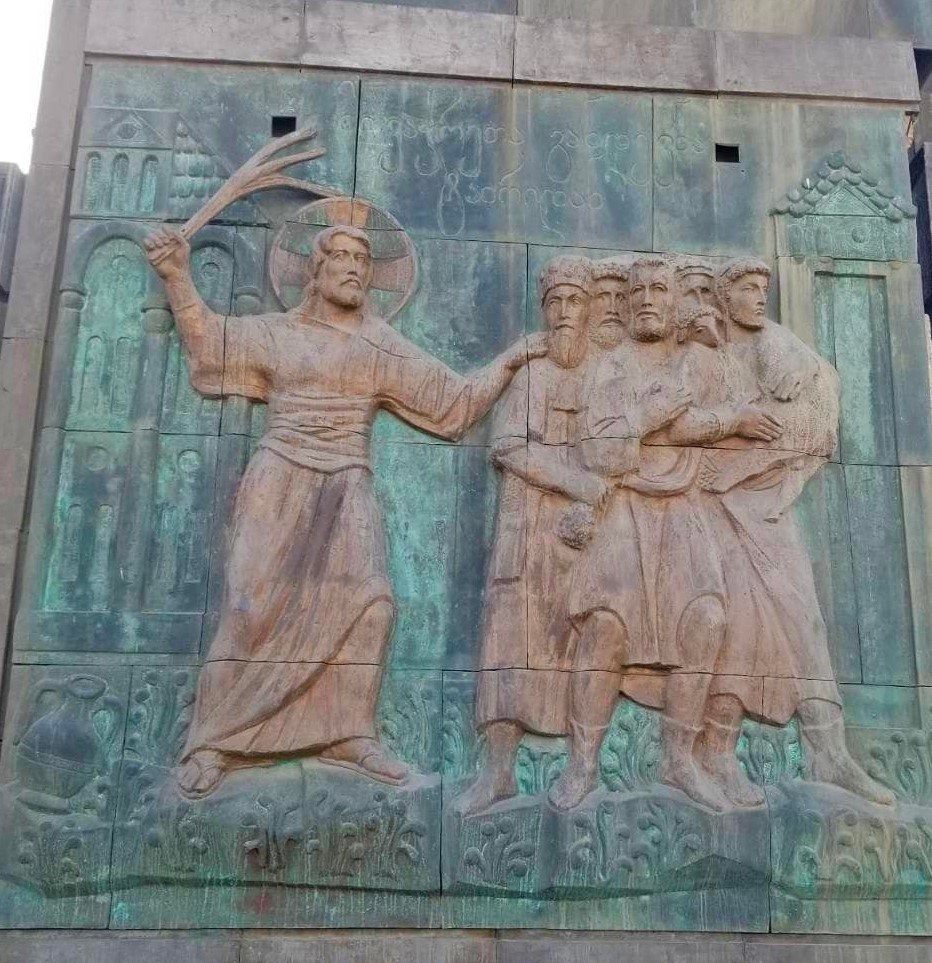
Sixteen large pillars structure the composition. Their reliefs bring together figures from Georgian history and Christian narratives. Do not try to read the entire monument immediately, as though it were a densely printed page. First understand its arrangement. Lower and upper sections offer different scales of experience. Some details invite a closer look; others are intended to be seen from a distance, with your head tilted upward.
The title promises a chronicle, but this is an artistic account rather than a complete and neutral history textbook. A monument of this kind selects its heroes, events and symbols. Its creator decides what should become enormous, which subjects should stand together and what emotional tone the visitor should encounter. Keeping those choices in mind makes the ensemble more interesting. It presents a way of telling history, not history in its entirety.
Follow a permitted passage and notice figures disappearing behind pillars before coming into view again. The structure works through the spaces between images as well as the images themselves. Light alters the apparent depth of the relief, while a person on the steps reveals the real scale. Looking at another visitor can explain size more effectively than reading a measurement in metres.
Weather feels stronger on this open hill than in a sheltered street. Use stable routes on the steps and avoid exposed edges for photographs. Before returning, look towards the water. After the dense sequence of giant images, its open surface can feel like a pause. That alternation between visual intensity and space is one of the stop's most memorable qualities.
Learn more
The word sea can be misleading here. This is a reservoir, not part of the Black Sea. The local name communicates the impression made by a broad stretch of water rather than a precise geographical classification. Compare the two kinds of scale at this stop: the monument and the expanse of water. Both can feel enormous beside a person, but they affect your attention in very different ways.