LISTEN TO THE PLACE
A story worth knowing
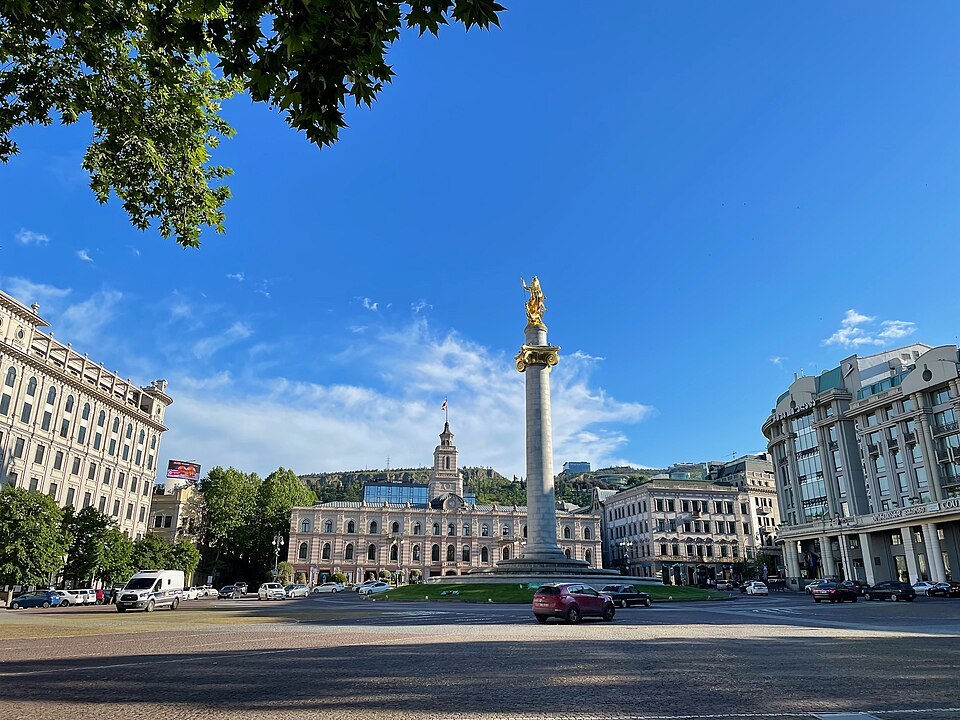
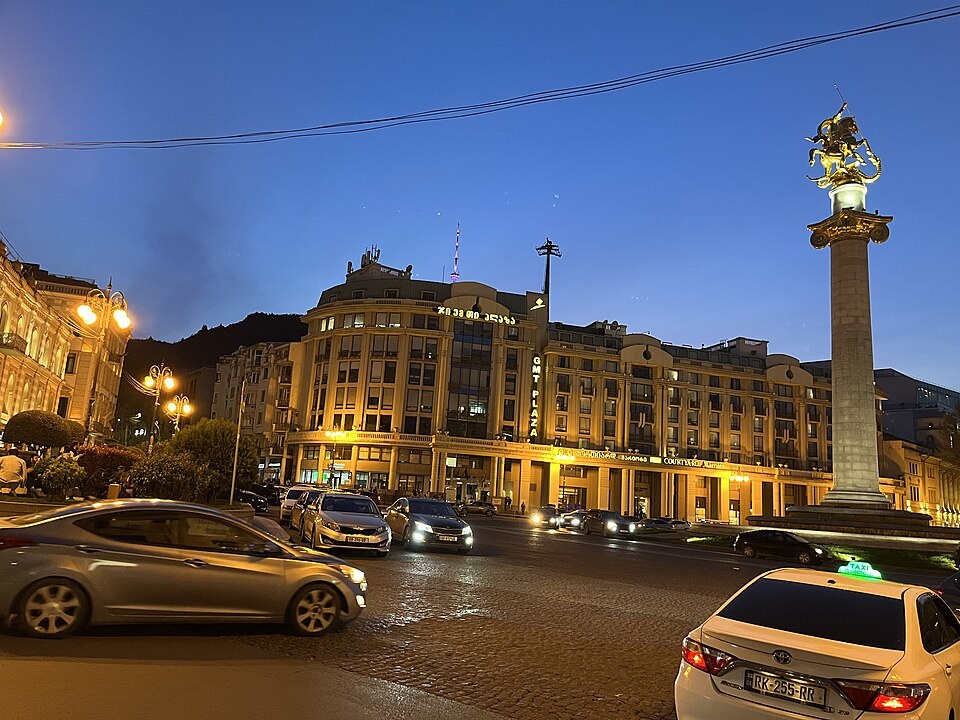
Freedom Square is easy to recognise by its tall column and golden figure of Saint George. But looking only upward can make you miss its main function. This is a major urban junction. Rustaveli Avenue begins here, Sololaki's streets lie nearby, and the route towards the old trading neighbourhoods leads down towards the river. Different versions of Tbilisi start just beyond the next turn.
Its history can be read through its names. During the imperial period it was known as Erivan Square; in the Soviet era it carried Lenin's name. Today's name invokes freedom. Renaming a central square means more than replacing a sign. It reveals which events and figures authorities or society wish to place at the centre of public attention. The successive names of one address can suggest whole changes of political era.
The monument to Saint George, created by Zurab Tsereteli, was installed in two thousand and six. A mounted saint defeats a dragon, a familiar subject in Christian tradition. Raised above everyday activity, the religious image also becomes a civic emblem. It represents a traditional sacred narrative, not a documented battle fought on this particular square.
Notice how your own attention moves. The shining figure at the top first catches your eye, then your gaze descends towards façades, traffic and people. The monument establishes a vertical axis, while movement around it creates a horizontal one. This makes the square difficult to experience as a quiet outdoor room. It is constantly at work. Someone is heading for the metro, someone is meeting friends beside a familiar landmark, and someone has just arrived in the city.
Choose your walking direction deliberately. Rustaveli leads into a broader, more ceremonial urban setting. Sololaki offers residential streets and façades that reward a closer look. Towards the old town, the street network becomes more tightly woven. There is no need to cross the traffic circle for a better photograph; use the accessible pedestrian areas to view the column.
Remember the square as more than a place with a golden horseman. It is a junction of stories. Names have changed and monuments have replaced one another, while the ordinary need to meet people and choose a route has continued. Grand public symbols and everyday journeys occupy the same space, giving the square its particular character.
Learn more
When comparing old photographs of the square, look beyond the monuments to the space around them. Traffic, pedestrian routes and ground-floor uses change how people experience the centre. A square has at least two histories: what a city chooses to commemorate, and how people move through it every day. The second can reveal as much as the first, even though it appears less often in ceremonial descriptions.