LISTEN TO THE PLACE
A story worth knowing
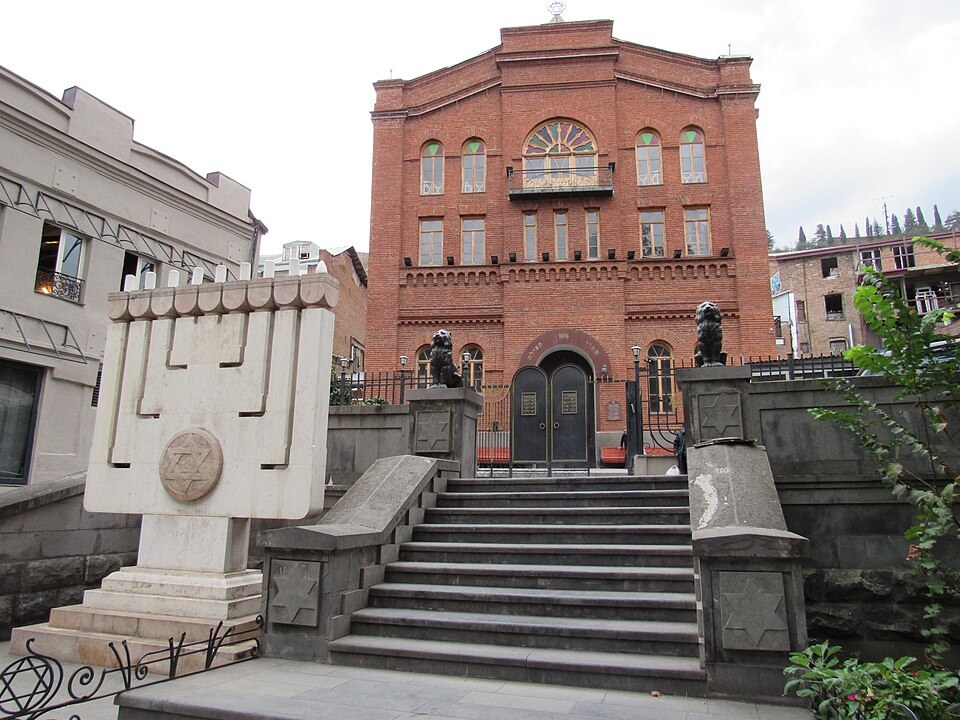
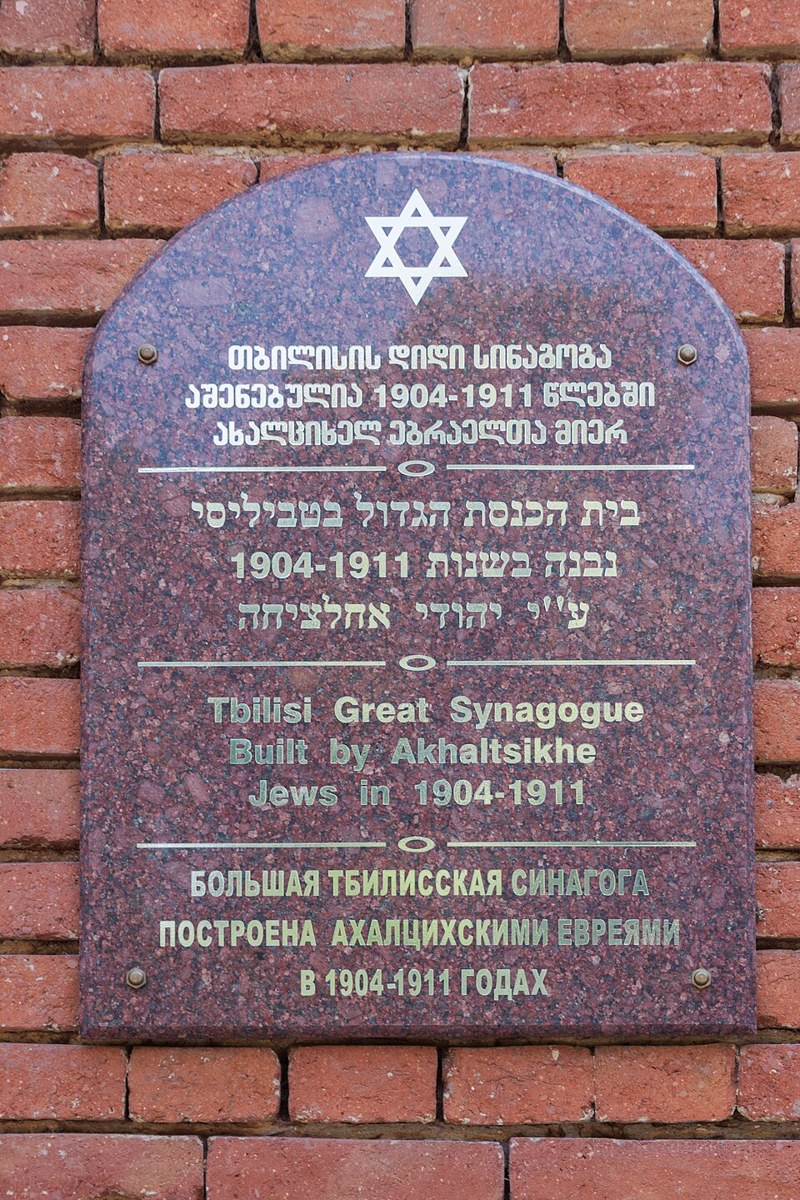
On Kote Abkhazi Street, slow down and look beyond the shop windows. This is the Great Synagogue of Tbilisi, a place used by a living Jewish community. Its red-brick building differs from the tall domed churches you may already have encountered. Its presence depends on other qualities: a compact volume, the rhythm of windows and a clearly marked entrance.
The synagogue was built in the early twentieth century. It is a particular house of prayer, not an abstract monument to the city's different religions. Behind its walls are traditions, communal life and people for whom this address matters independently of any sightseeing route. That simple understanding is a useful starting point for a visit.
Jewish history in Georgia is much older than the present building. The age of a community, the age of an individual synagogue and the age of its surviving decoration are nevertheless different things. During a walk they can easily merge into one attractive phrase about antiquity. Keep them separate. A building makes one stage of a long history visible without containing that history in full.
Outside, notice the relationship between brickwork and decorative detail. Inside, if visiting is permitted, the space is arranged around worship and the reading of the Torah. An important element is the ark where Torah scrolls are kept, known as the Aron ha-Kodesh. This account does not replace the community's own arrangements. Ask locally about entry, appropriate clothing and photography. Open gates do not automatically mean that every area is available to visitors.
Christian churches, a mosque and synagogues stand near one another in the old centre. That proximity helps reveal Tbilisi's many layers. It does not mean that every community had the same experience, or that their histories can be reduced to one convenient slogan. Noticing their differences while showing equal consideration to each place makes for a more thoughtful encounter.
Turn back towards the street and you will see the familiar flow of pedestrians, signs and everyday business. The synagogue exists within that activity, rather than in a separate museum setting. This is why the stop matters. A city consists not only of famous panoramas, but also of enduring communal addresses. Even without entering, you can leave with a more precise understanding of Tbilisi by recognising a living community behind its architecture.
Learn more
Do not confuse the Great Synagogue with the Tbilisi synagogue known as Beit Rachel. Both may appear in the same list of attractions within the old district, but they are different buildings and addresses. When looking for photographs or planning a route, match the name to the map location. That precision matters for religious sites: it avoids transferring the history of one community or interior to another place.