LISTEN TO THE PLACE
A story worth knowing
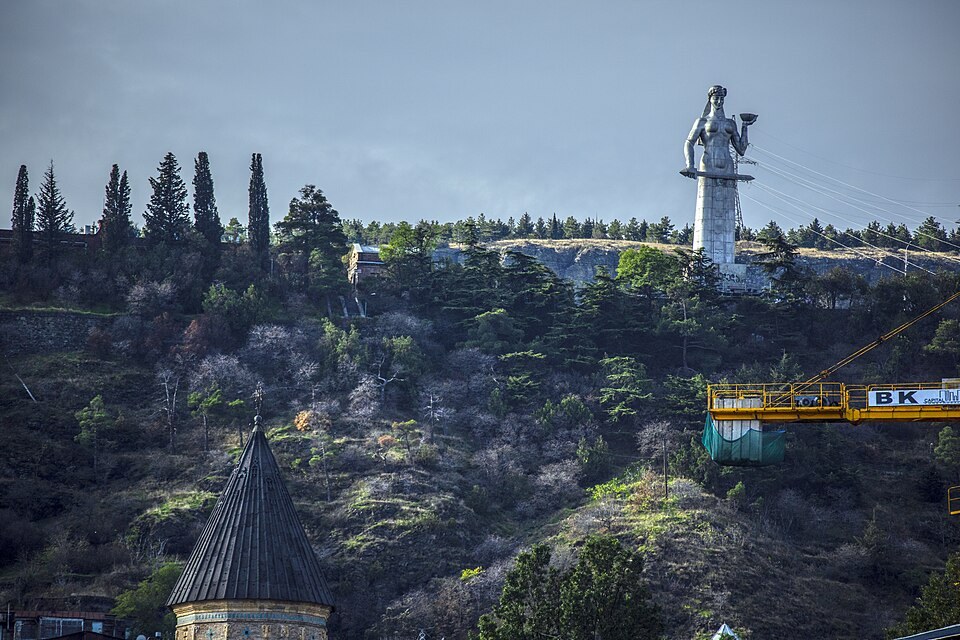
The woman standing above Tbilisi has both hands occupied. One holds a bowl; the other carries a sword. The gesture is readable even without a caption: welcome a guest with a drink, and defend your home against an enemy. This is Kartlis Deda, usually called Mother of Georgia in English. From the Sololaki ridge she looks over a city where hospitality, trade and defensive walls have long existed side by side.
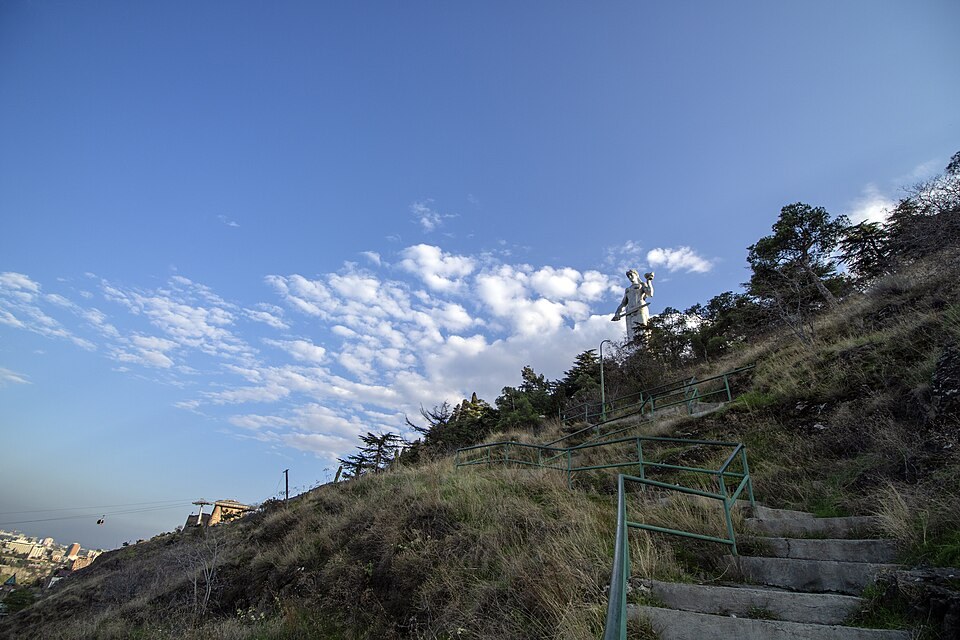
The sculptor was Elguja Amashukeli. The monument was installed in nineteen fifty-eight, when Tbilisi celebrated its fifteen-hundredth anniversary. It is a twentieth-century creation, although the long dress and severe outline can make it feel much older. The figure is around twenty metres tall. Its aluminium surface catches the light, appearing almost white under one sky and cool silver under another.
The bowl and sword are generally interpreted as hospitality and the readiness to defend the country. Remember that this is an artistic symbol, not a literal portrait of every Georgian. The sculpture selects two ideas and makes them readable from a distance. That is its purpose. Tiny facial details matter less than the position of the arms, the straight back and the stable shape of the figure as a whole.
Compare the monument at two scales. Seen from the streets below, it may be only a pale mark on the ridge. Up close, it becomes unexpectedly large, and your eyes cannot take it in quite so easily. The best photograph is not necessarily taken at the base. A few steps along a permitted path may give a clearer outline than looking almost vertically upward.
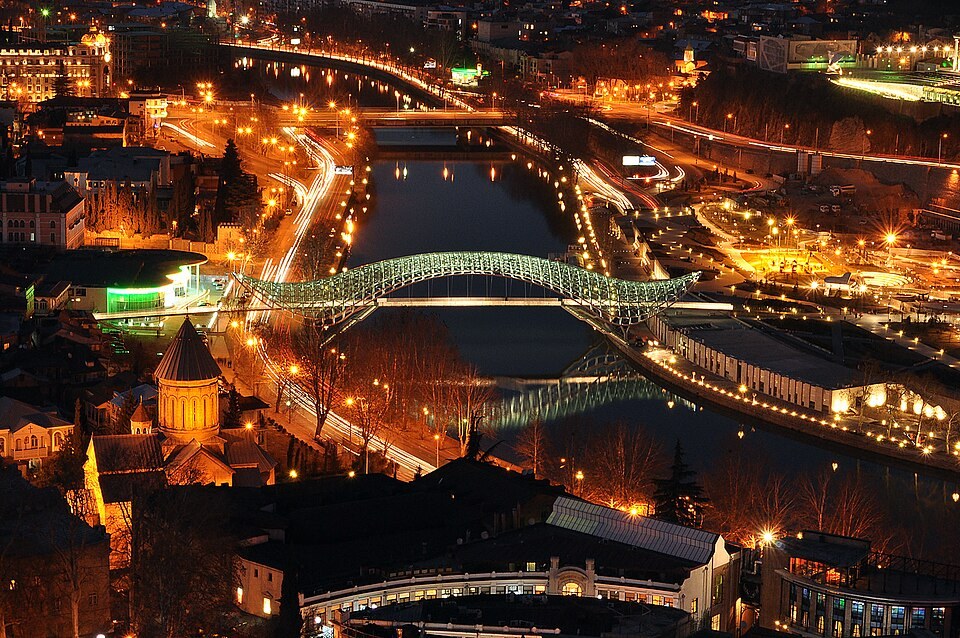
Meanwhile, the city presents the opposite transformation. Roofs become small, and vehicles can look like toys. This makes the choice of a hilltop setting easy to understand. The statue joins many different neighbourhood views with a single recognisable sign. You might lose your bearings among the lanes, then look up and immediately locate the ridge again.
Before moving on, return your attention to the bowl. The sword often attracts the eye first, but the meaning would change without its companion. Together they hold welcome and protection in balance. That simple visual relationship makes Mother of Georgia readable from across the valley, or even when reduced to a tiny symbol on a map.
Learn more
The first version of the monument was wooden and intended to be temporary. It was later clad in aluminium and eventually replaced by a new figure in the nineteen-nineties. A temporary installation had become an essential part of the skyline. People grew used to seeing it above their roofs, while photographs carried its outline abroad. Recognition comes not just from a sculpture's material or size, but from countless everyday encounters with the same image.