LISTEN TO THE PLACE
A story worth knowing
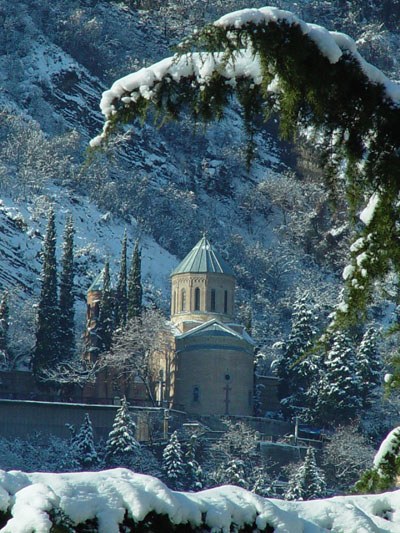
On the slope of Mtatsminda, it is worth taking a different kind of pause. Beside Mamadaviti Church lies the pantheon of writers and public figures. The city continues moving below, while nearby are the graves of people whose names remain part of literature, art and public memory. This is more than a convenient viewpoint or a collection of photographic subjects.
The pantheon was officially established in nineteen twenty-nine, marking the centenary of Alexander Griboyedov's death. Burials here began earlier. The writer and diplomat, known for the play Woe from Wit, is buried beside his wife, Nino Chavchavadze. A family's personal history and the later history of a public memorial overlap. The date on which a pantheon was founded is not necessarily the date of its first grave.
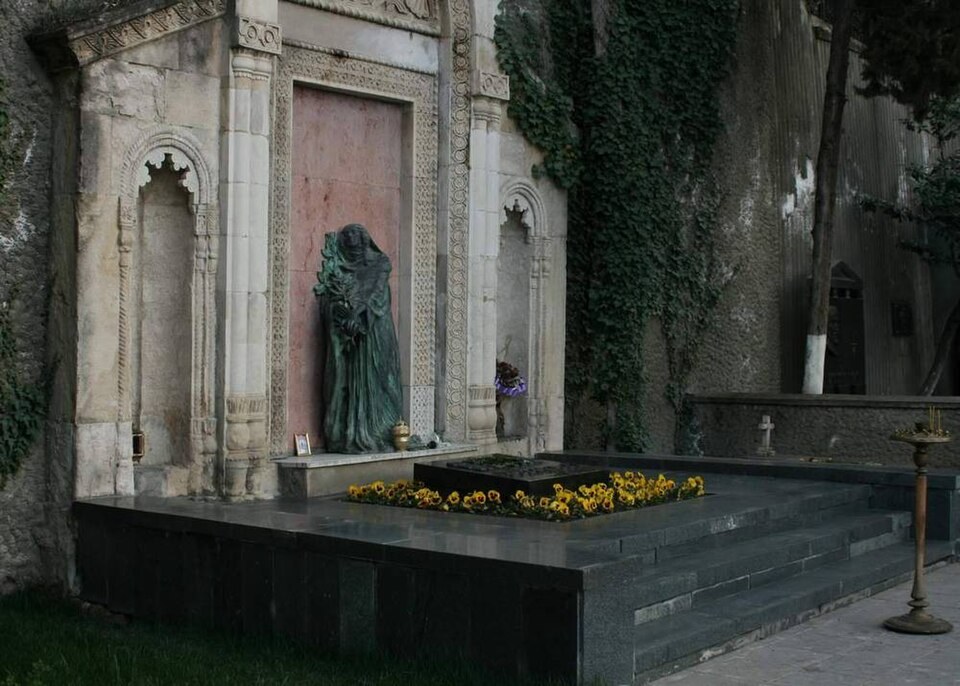
Another central name in Georgian culture is Ilia Chavchavadze, a writer and public figure. The mourning female figure at his grave was created by sculptor Iakob Nikoladze. Rather than rushing to read every inscription, choose one or two and spend time with them. An unfamiliar name does not imply an unimportant life. Such a stop can become the beginning of an interest in the literature of the country you are visiting.
Notice how differently memory can be expressed. One monument relies on a portrait, another on a figure or gesture, another on stone and a written name. Funerary sculpture often speaks more quietly than a monument in a busy square. It does not need to compete with traffic or attract attention from several streets away. It addresses someone who has come close and is willing to stop.
Mamadaviti means Father David and connects the site with the mountain's religious history. Church life, personal remembrance and a sense of national culture exist side by side. They should not be reduced to one meaning. Different visitors will value different aspects of this place, and a thoughtful visit leaves room for those differences.
Keep your voice low, avoid stepping on graves and do not treat memorials as props. The view of Tbilisi can help you consider the city's relationship with people who experienced and described it. Before leaving, remember at least one new name. Later, finding a work, a biography or a poem will let the encounter continue beyond the walking route. That can be a more lasting souvenir than another panorama.
Learn more
A pantheon is not a complete history book. It represents a selection of people whom society has chosen to honour in a particular way. That selection developed over time and cannot include every significant writer or public figure. Someone's absence does not mean an absence of cultural importance. Treat the memorial as an invitation to further discovery, not a final list. Beyond each grave lies a wider world of works, relationships and ideas.