LISTEN TO THE PLACE
A story worth knowing
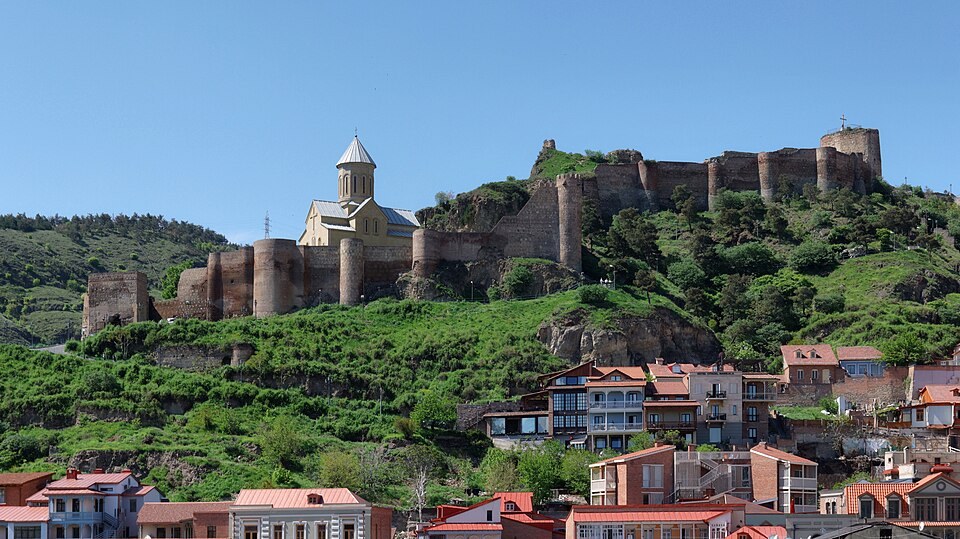
Look at Narikala from below. Its walls seem to grow out of the rock rather than stand on a level platform. This was a useful place for a fortress. Below lay the river, crossings and crowded streets; beyond the ridge lay the valley now occupied by the botanical garden. Whoever held this height could watch several approaches to the city. We come looking for a panorama. Earlier defenders depended on that view for their survival.
Narikala is not the castle of a single ruler or the product of one building campaign. Its fortifications were repeatedly enlarged and repaired. So avoid imagining that everything in front of you was built at the same time. Changes in masonry, the shapes of towers and the course of the walls belong to a stronghold that was adapted as circumstances changed. The city's rulers and boundaries shifted, but the importance of this height endured.
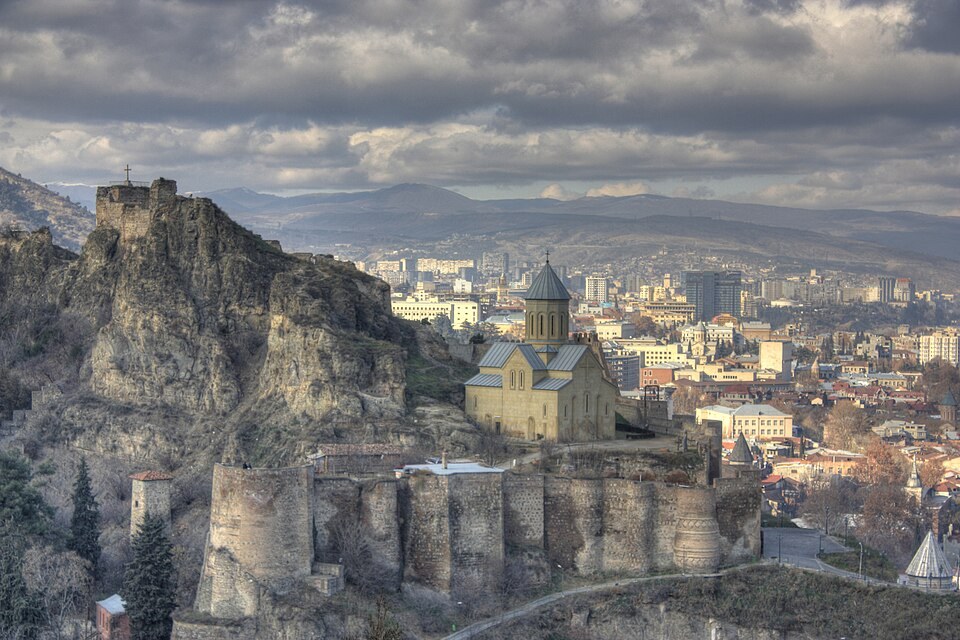
Within the fortifications stands Saint Nicholas Church. It is easy to mistake it for a completely preserved medieval building. In fact, the present church was reconstructed in the late twentieth century on the site of an earlier one. Its predecessor had been used to store ammunition and was devastated by an explosion. Archaeological discoveries later helped return a church to this part of the skyline. The result is a reminder that a historic monument can bring together surviving fabric and the work of modern builders.
From an accessible viewing area, try separating Tbilisi into three layers. First come the water and the bridges. Next are the houses, balconies and church roofs of the old town. Above them rise the hills and their larger landmarks. At street level these may feel like separate destinations. From here they form a readable whole. The river establishes a direction, the slopes restrict space, and the city fills the gaps between them.
Narikala also explains why a short line on your phone can turn into a demanding walk. A few nearby streets may involve a considerable climb. Follow permitted paths rather than cutting across the hillside, and stay away from closed sections of wall. You do not need a risky viewpoint to understand the fortress. Before leaving, notice its uneven outline once more: a long stone border above the roofs, still giving the city the appearance of sheltering beneath an ancient defensive shoulder.
Learn more
A useful distinction at Narikala is between the age of the site and the age of a particular structure. A fortified hill can remain important for centuries while individual walls are rebuilt and a church is almost completely reconstructed. The words ancient fortress do not mean that every visible stone belongs to its first construction. Changes in the masonry are part of its history: evidence of damage, repair and continued use rather than an interruption of the story.