LISTEN TO THE PLACE
A story worth knowing
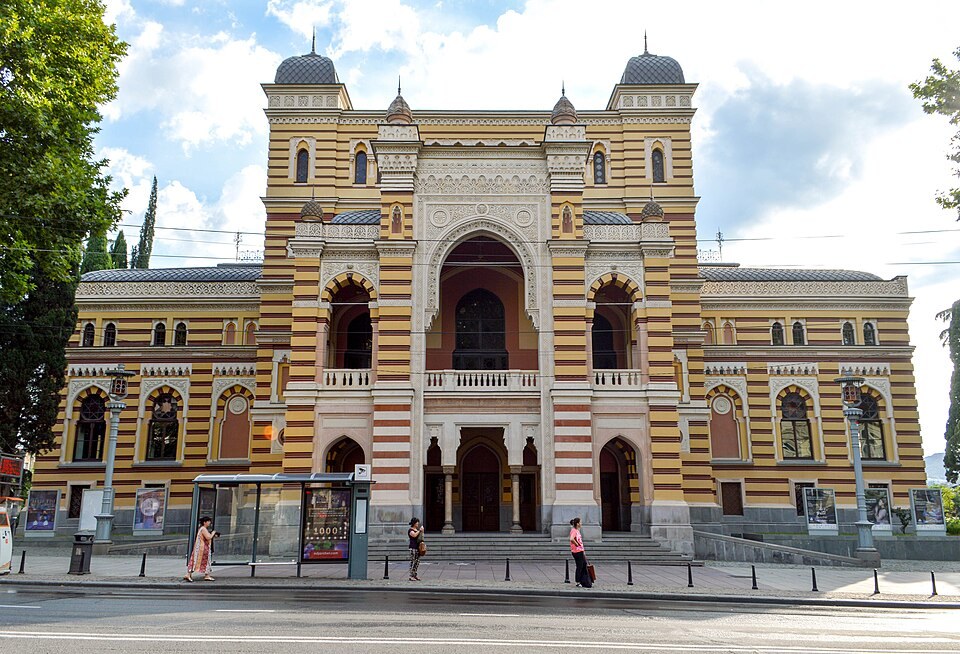
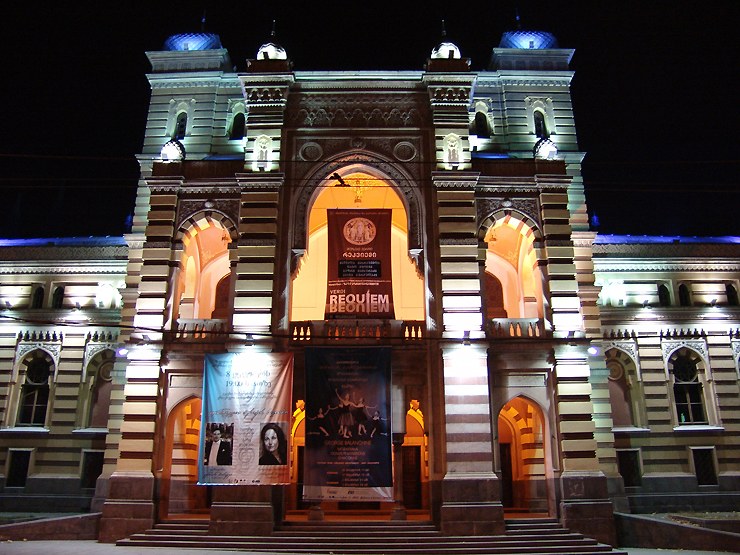
On Rustaveli Avenue, this theatre is difficult to confuse with its neighbours. Coloured bands, arches and ornament suggest an eastern palace. Behind that striking exterior, however, is an opera house organised around a European theatrical arrangement of stage, auditorium and foyers. The combination suits Tbilisi, where different artistic languages often stand close together.
The city's operatic history began in the middle of the nineteenth century. The present building opened later, in eighteen ninety-six, to a design by architect Victor Schröter. Its Moorish Revival decoration uses motifs that European architecture of the period associated with the East. This is an artistic interpretation, not a genuine medieval palace transported to Georgia.
The theatre now bears the name of composer Zakaria Paliashvili. The name suggests more than an individual biography: it points towards the development of a local musical voice. Opera travelled between countries as an international genre, while different cultures filled it with their own subjects, sounds and characters. An opera house can therefore connect Tbilisi with other capitals while also expressing what makes it distinctive.
Read the façade in two stages. First notice the larger rhythm: repeated arches, alternating horizontal bands and the overall outline. Then select one detail and examine it more closely. There is plenty of decoration, but it is not scattered randomly. Repetition holds the variety together, much as rhythm can connect different sounds in music. The comparison does not explain the whole design, but it makes the surface easier to understand.
The building's history includes fires and restoration. Its attractive appearance today should not suggest a life without damage. Stage equipment, working spaces and decorative surfaces all demand continuing care. An audience experiences a few hours of performance; behind those hours stands the labour of many people who cannot be seen from the street.
If you would like to return in the evening, consult the current programme. Opera and ballet can produce quite different experiences of the same auditorium. Yet a daytime stop already reveals something of the building's character. The exterior addresses a passer-by almost like an overture, promising a richer world inside. Before leaving, imagine the façade without its ornament. You will notice how much of its identity comes from decorative pattern, rather than simply from size or height.
Learn more
The term Moorish Revival is useful because it signals interpretation. Nineteenth-century architects borrowed freely from different historical traditions, selecting arches, patterns and colour combinations for new buildings. Such a façade does not automatically reveal a building's religious purpose or the nationality of its designer. Here, decoration associated with the East serves a secular musical theatre. A recognisable artistic language has moved into a different setting and acquired a new role.