LISTEN TO THE PLACE
A story worth knowing
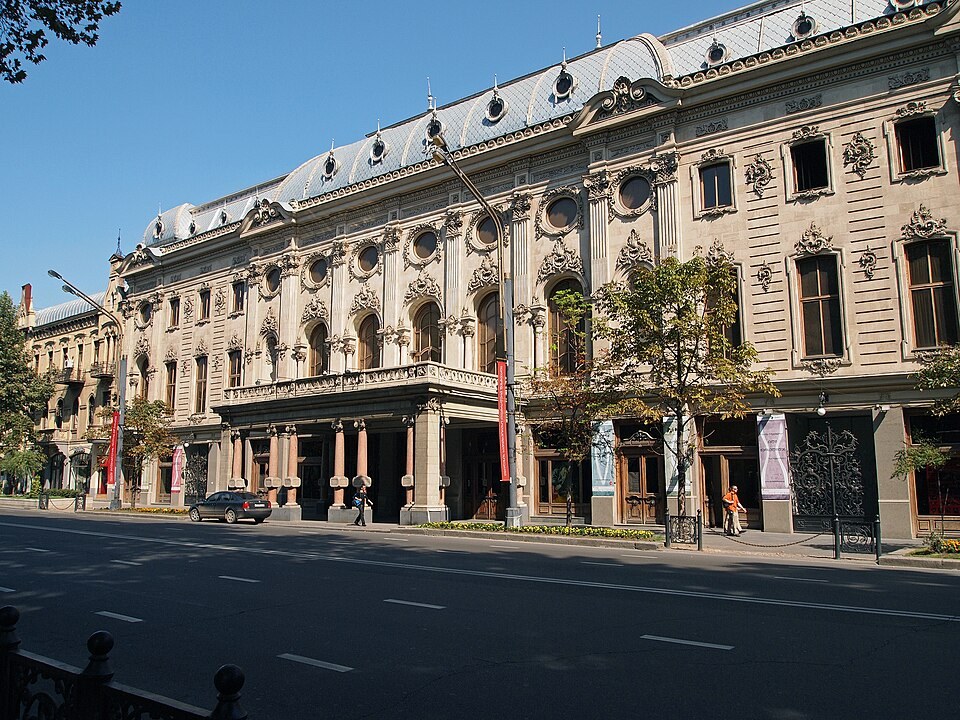
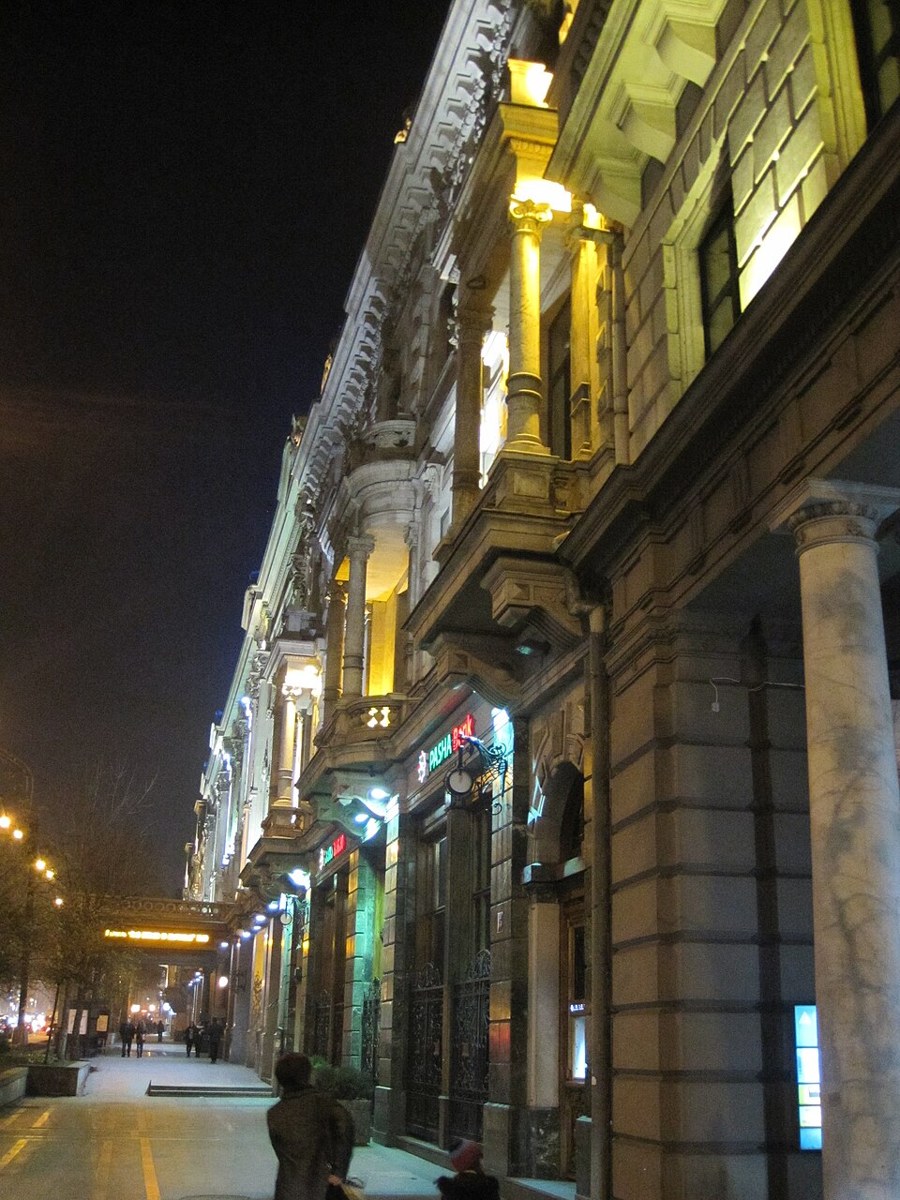
At the Rustaveli Theatre, the performance begins on the pavement. The projecting entrance portico reaches over the space in front of the doors, while the façade is filled with ornament. An ordinary pedestrian briefly becomes part of an architectural stage. Even without a theatre ticket, the building invites you to stop and change the pace of your walk along the avenue.
It was built around the turn of the twentieth century for the Tiflis Artistic Society. The design is associated with architects Korneli Tatishchev and Alexander Shimkevich. Its rich decoration includes Rococo motifs: curved lines, ornamental lightness and a desire to make the surface a spectacle in its own right. This belongs to the cultural world of a growing modern city, rather than to Georgia's medieval church architecture.
The theatre received the name of Shota Rustaveli in nineteen twenty-one. The poet associated with the celebrated epic The Knight in the Panther's Skin lived centuries earlier. The name therefore links a modern theatrical institution with a literary classic. Entering the theatre becomes, symbolically, an encounter with a much longer cultural tradition.
The building also has a separate artistic story. In nineteen nineteen, the Kimerioni café opened here and became associated with Tbilisi's circle of artists and writers. Lado Gudiashvili and David Kakabadze were among the artists who contributed to the building's painted decoration. Performance, painting, conversation and literary life could meet under one roof. Not every historic interior is accessible during a casual visit, so check arrangements separately if you hope to see inside.
From outside, try locating the boundary between structure and decoration. A support must carry weight, an entrance must admit people, while an ornamental detail may exist principally to establish a mood. Here those functions deliberately overlap. The building aims to look more festive than everyday surroundings, even when its doors are closed and the auditorium is empty.
Now imagine the approach before an evening performance: people slowing down, finding tickets and greeting friends. You do not need to invent a specific historical event to understand the façade's purpose. It prepares a change of role, from passer-by to spectator. That is the theatre's small piece of urban magic. A performance does not always begin at the moment the curtain rises.
Learn more
Do not confuse the age of a theatre company, the construction date of its building and the moment it received its name. Cultural institutions often have three different dates. A company may move, a building may change ownership, and a name may arrive decades later. At Rustaveli, keeping these histories separate helps: the façade speaks of architecture around the turn of the century, the name of literary memory, and the programme of the stage's present life.