LISTEN TO THE PLACE
A story worth knowing
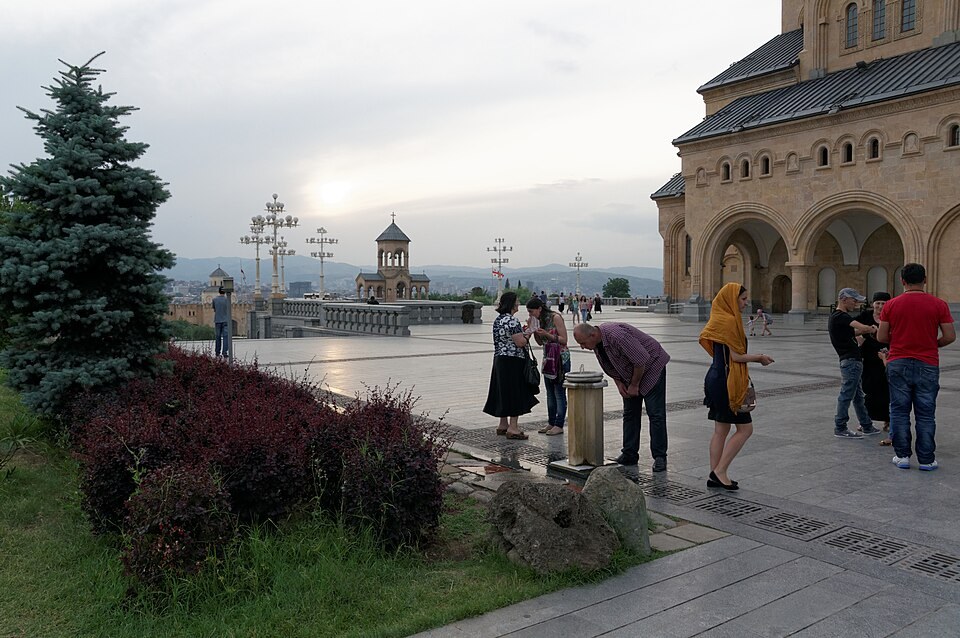
You see Sameba before you reach it. Its pale mass and high dome rise above the eastern side of Tbilisi. Once you arrive, the open setting and long approach make the impression stronger. The architecture prepares you gradually for the main building. Even before entering, you can see that this cathedral was conceived on the scale of an entire city.
Its full dedication is to the Holy Trinity, and Sameba means Trinity in Georgian. Although its forms recall older Georgian churches, this is a modern building. Construction took place between nineteen ninety-five and two thousand and four. That distinction matters. A traditional outline does not necessarily imply a medieval date. Architects can deliberately use the language of the past to address the concerns of their own time.
Read the building from bottom to top. Its broad base gives way to progressively narrower volumes, ending in the dome. Each stage strengthens the upward movement. Looking only at the summit makes it easy to miss how much the effect depends on the lower levels and the surrounding open ground. People walking towards the entrance almost unintentionally become measures of the cathedral's size.
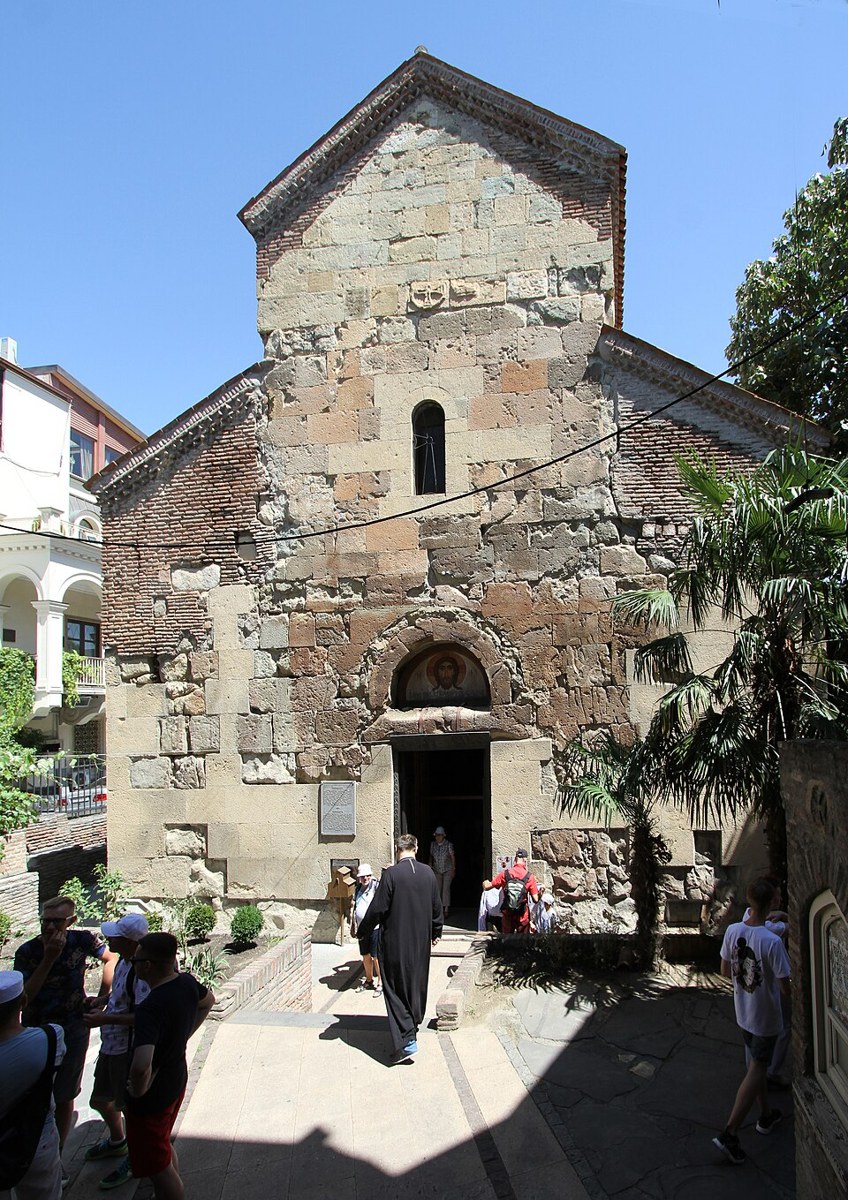
After its consecration, Sameba became the principal cathedral of the Georgian Orthodox Church. Sioni, in the old town, had previously held that role. The change produced an interesting pair. One church is embedded in a dense historic neighbourhood; the other is positioned to be recognised from far away. They represent different relationships between religious buildings and urban space, rather than simply small and large versions of the same design.
If you go inside, do not rush to inspect every detail. First experience the volume itself: the amount of space above a person, the distance your gaze travels and the direction of the light. Individual images and decoration can come afterwards. In a working church, quiet and consideration for worshippers matter more than completing a photographic checklist.
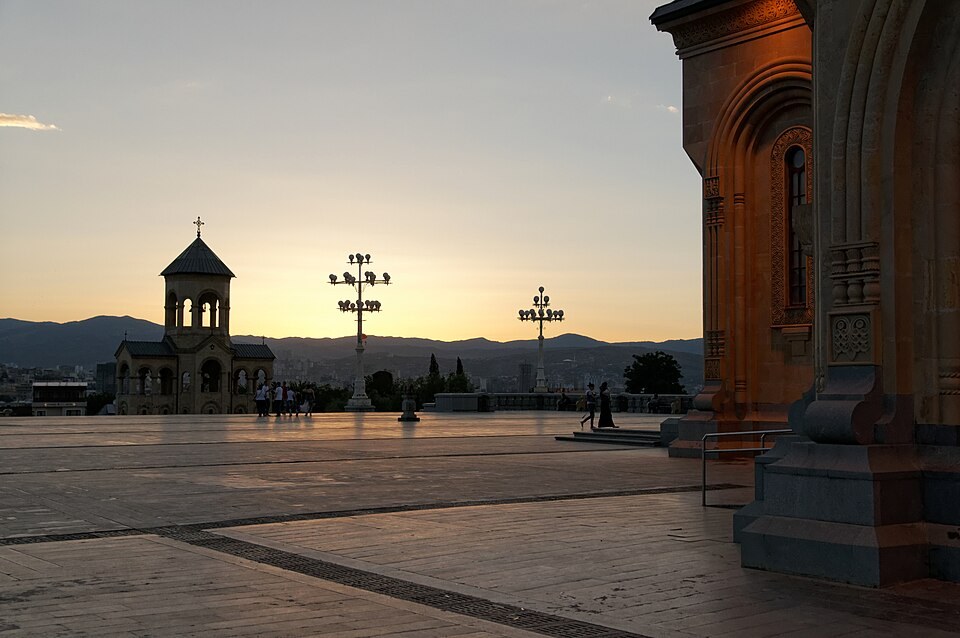
On leaving, turn towards the city. The cathedral is now behind you, while Tbilisi becomes the panorama in front. It reverses your earlier experience: from far away you searched for Sameba among the roofs; from here you search for familiar places below. This stop shows how a major new building can change the way people find their bearings in an old city.
Learn more
Sameba is a useful reminder not to date a building by style alone. A dome, stone facing and familiar church proportions can belong to a very recent structure. Architecture often uses established forms to express continuity. A modern society chooses shapes that already carry cultural meaning. On your next walk, separate two questions: when was this building constructed, and which earlier period does it refer to? The answers may be very different.