LISTEN TO THE PLACE
A story worth knowing
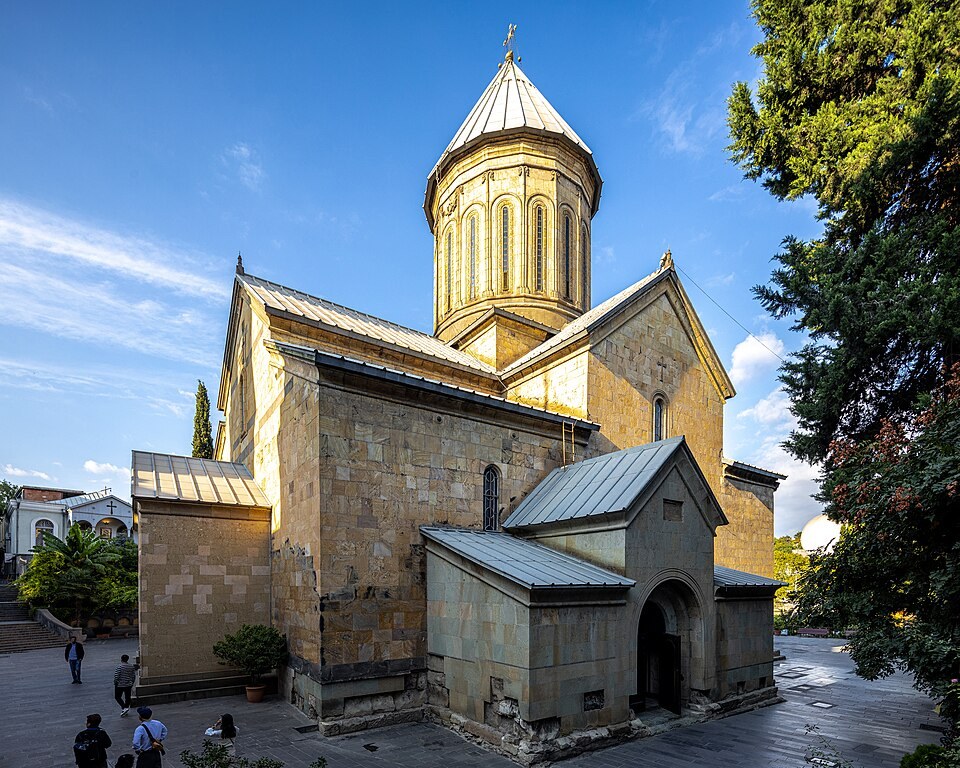
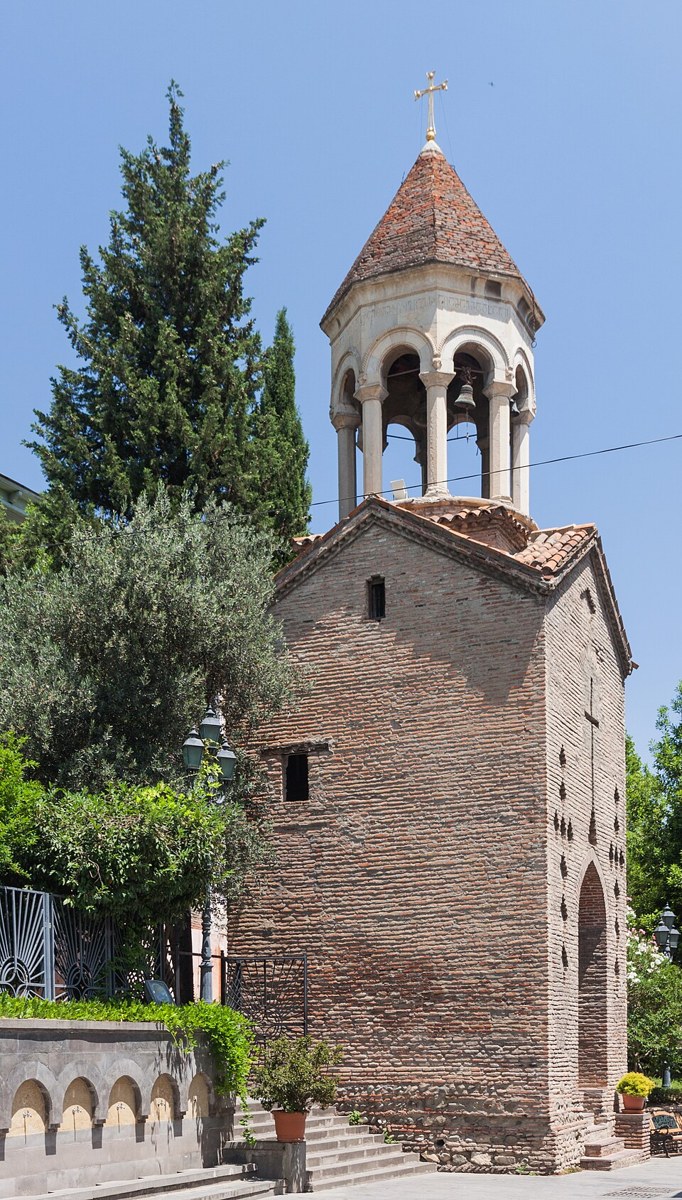
Sioni Cathedral does not try to rise above everything around it. It stands among the streets of the old town, and you can approach almost without noticing the transition from cafés and shop windows to a quieter religious space. That is one of its important qualities. For a long time, the country's principal cathedral remained embedded in the daily life of a compact urban neighbourhood.
Its name refers to Mount Zion in Jerusalem. Several Georgian churches share that name, which is why this one is often called Tbilisi Sioni. The name places a local church within the wider geography of Christianity. A connection with the Holy Land does not require copying its buildings. Sometimes a familiar name is enough.
The cathedral's early history reaches back to the sixth and seventh centuries, but it was repeatedly damaged and rebuilt. What you see is not a single untouched construction. Its appearance, decoration and interior developed over different periods. Sioni remained the principal cathedral of the Georgian Orthodox Church until Holy Trinity Cathedral, commonly called Sameba, was consecrated in two thousand and four. Its importance did not simply disappear when a larger cathedral opened across the river.
Sioni is associated with one of Georgia's most revered religious objects, the cross of Saint Nino. Church tradition says that it was made from grapevine branches and bound with her hair. This is a religious tradition meaningful to believers, rather than a claim that can be verified like a construction date. The cross with downward-sloping arms appears widely in Georgian Christian imagery. When you encounter it again, you will be able to connect that shape with this stop.
If you enter, allow your eyes to adjust before trying to inspect every icon or painted surface. Notice the direction of the interior, where people gather and how sound differs from the street outside. To one visitor this is an architectural monument; to another it is a place of personal prayer. Both experiences happen in the same space.
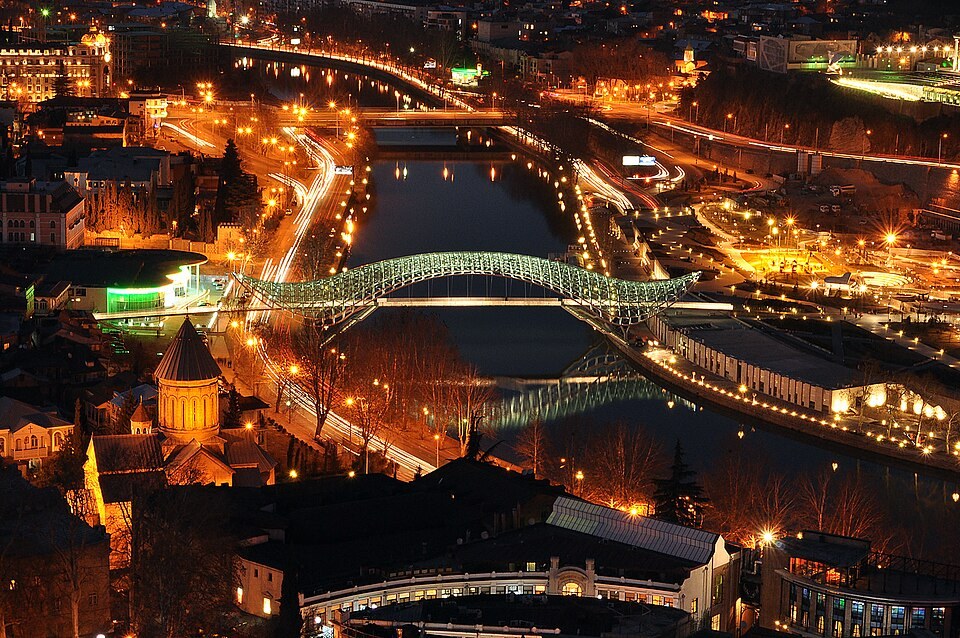
Back outside, compare Sioni with the distant image of Sameba on its hill. There, a cathedral commands a broad open setting. Here, the city comes close to the walls. Sioni offers a different scale of sacred presence: woven into houses and everyday routes rather than dominating the skyline. That is why it can be easy to pass, and rewarding to stop.
Learn more
Church names can contain a map of their own. Sioni points towards Jerusalem, although the building stands in Tbilisi and has a distinctly Georgian history. Such a name allowed worshippers to feel connected with distant holy places. There is no need to look for an architectural copy of a particular building in Israel. The connection is primarily symbolic, reminding us that a medieval city could reach a much wider world through prayer, pilgrimage, books and names.