LISTEN TO THE PLACE
A story worth knowing
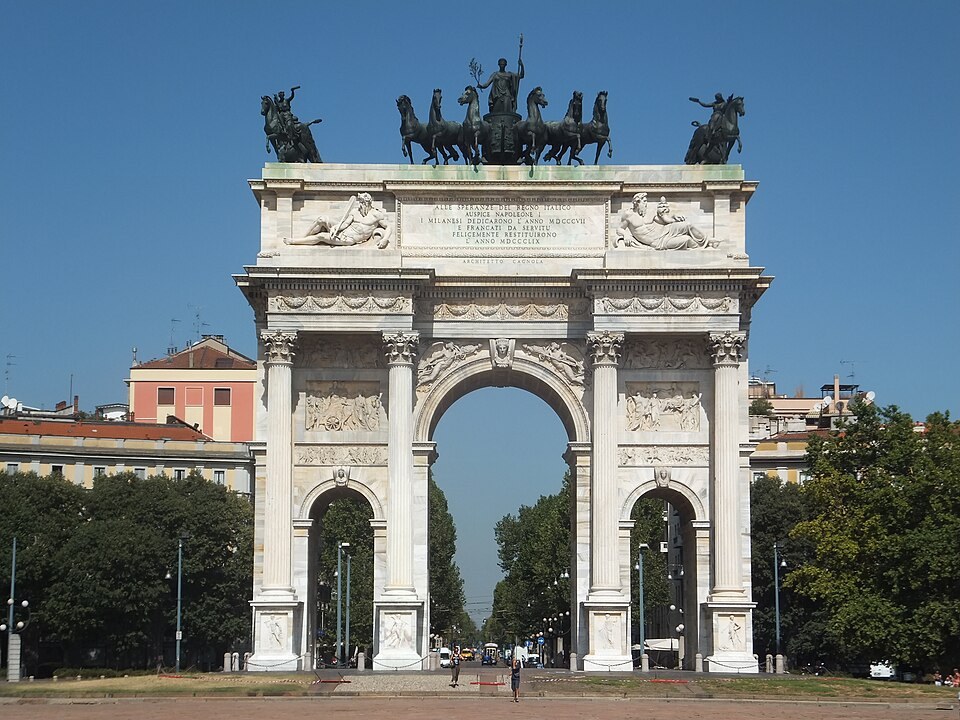
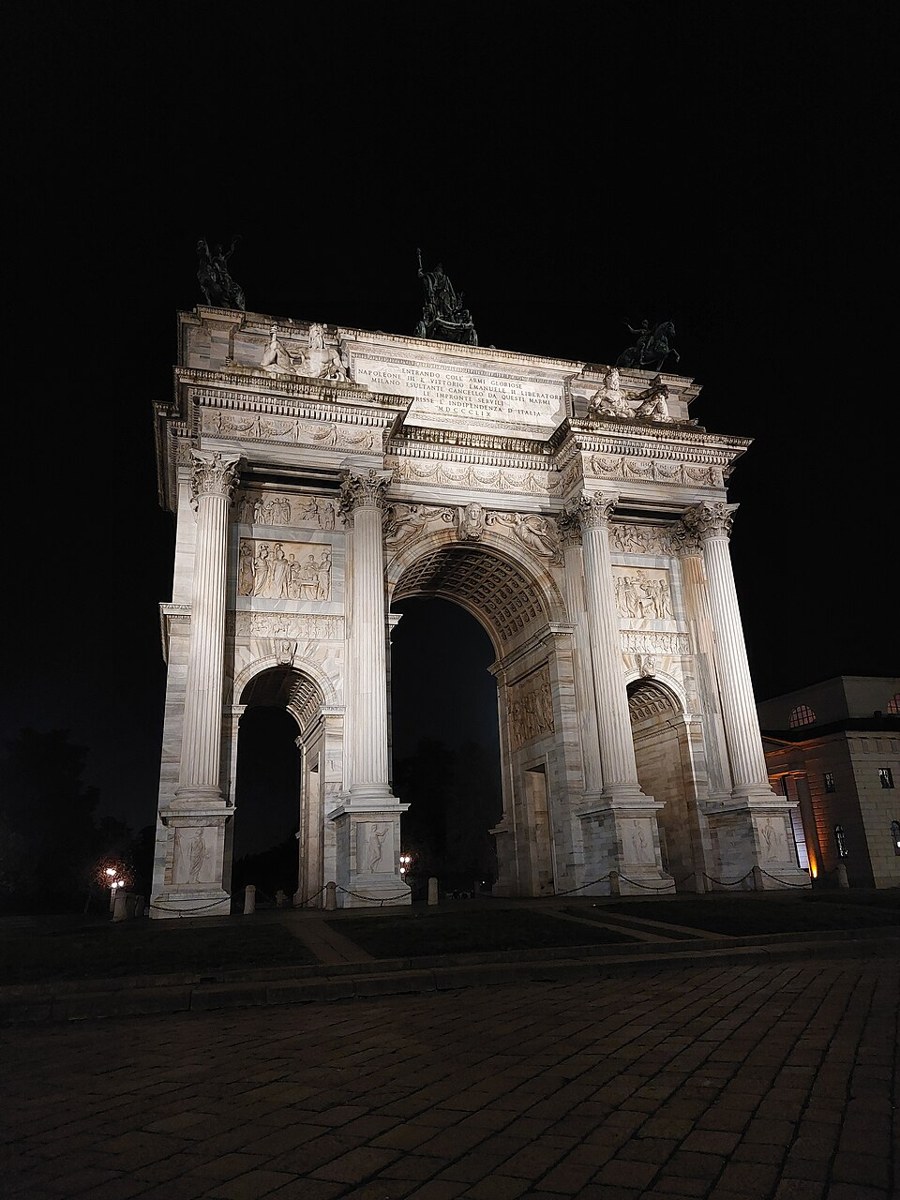
The Arch of Peace stands as though a road were about to pass directly through history. Its broad central opening, smaller side passages and heavy upper section recall the triumphal arches of ancient Rome. This monument is much later, however, and its history shows how quickly an official architectural message can change.
Construction began in eighteen oh-seven, when Milan formed part of Napoleon’s political world. Architect Luigi Cagnola designed the monument in a neoclassical language. Roman forms suited the ambitions of the period: they could suggest victory, imperial authority and historical continuity without needing a lengthy explanation.
Politics moved faster than the building work. Napoleon’s order collapsed, construction stopped, and Milan returned to Habsburg rule. Work resumed under a different government, and the completed monument was dedicated to peace. It was inaugurated in eighteen thirty-eight. The same architectural project had survived a change of rulers and a change of public meaning.
Look towards the summit. A bronze chariot drawn by six horses crowns the arch. Even if you cannot make out every detail, the overall contrast is clear. A heavy, stationary structure ends in an image of movement. Sculpture, reliefs and inscriptions turn the architecture into a statement about events and the political order its patrons wished to celebrate.
It is worth remembering that a triumphal monument is not a neutral history book. Someone chooses the events, symbols and people to be represented. Here, the changing dedication is particularly revealing. A structure begun within one system of power proved capable of speaking on behalf of another.
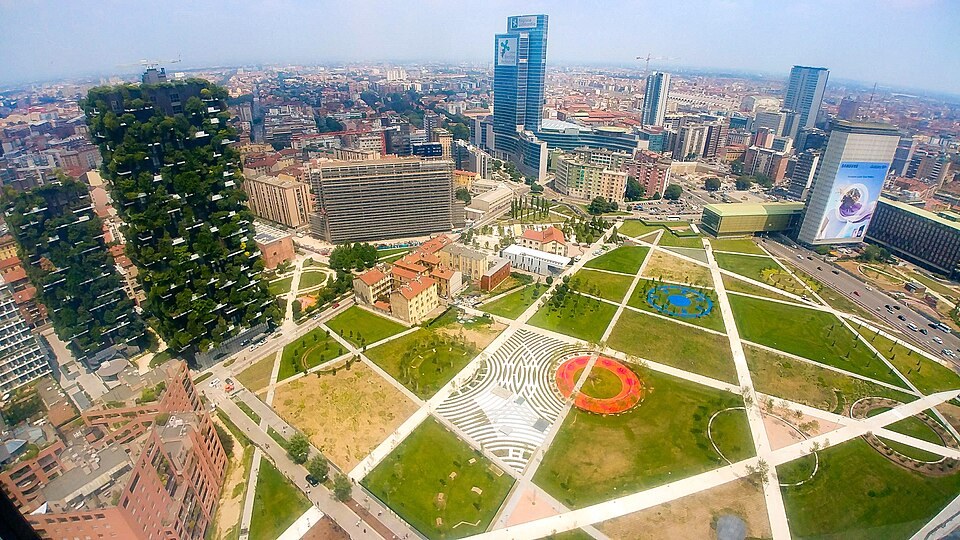
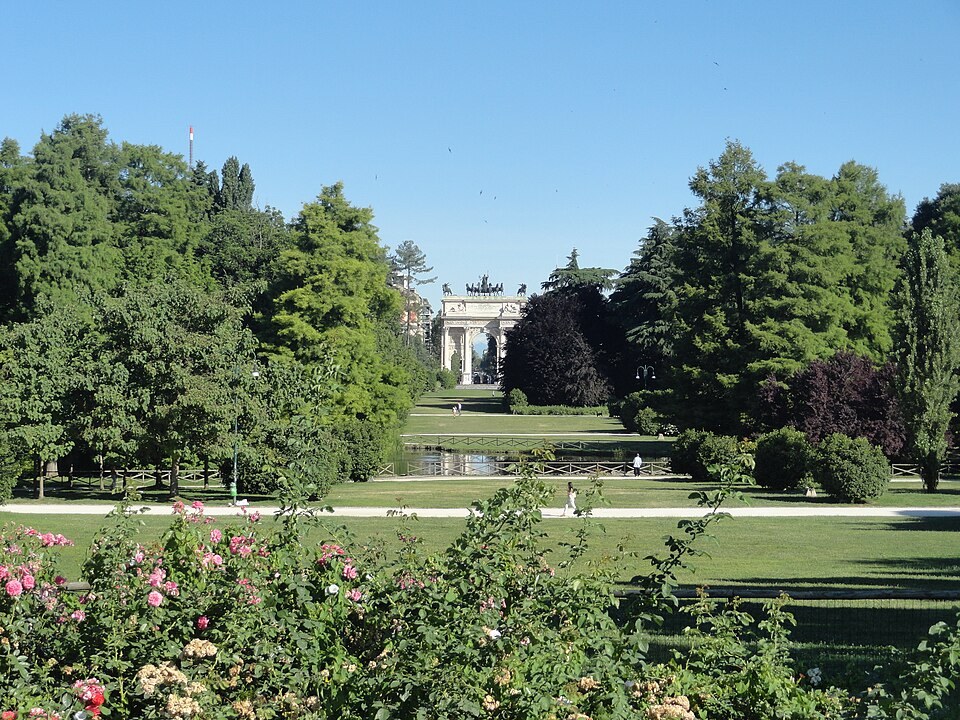
Compare the arch with the park on one side and the city streets on the other. The greenery softens lines and disperses attention; the monument restores a strong central focus and a sense of symmetry. It marks a transition between different urban experiences. You can use it as a landmark without knowing a single date in its history.
You do not have to stand directly underneath it to appreciate the composition. From a little farther away, the whole structure and the movement of people around it become easier to see together. People meet here, cross the square and take photographs. The arch was conceived for major public narratives, but the city has gradually surrounded it with thousands of smaller personal journeys. Both kinds of history now occupy the same space.
Learn more
The six horses on the summit provide a useful identifying detail. A six-horse chariot is called a sestiga, unlike the more familiar four-horse quadriga. You do not need to remember the terminology. Once you have examined the silhouette, the monument becomes more individual than simply a large white arch near a park. Specific features are often easier to remember than general labels such as grand or impressive. Try finding one more distinguishing feature for yourself: the columns, the arrangement of openings, or a figure at one of the corners.