LISTEN TO THE PLACE
A story worth knowing
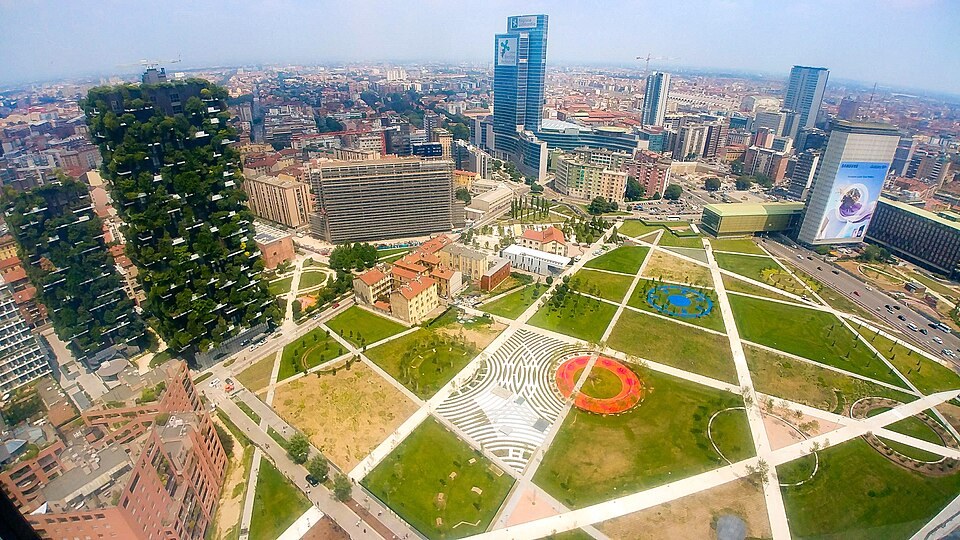
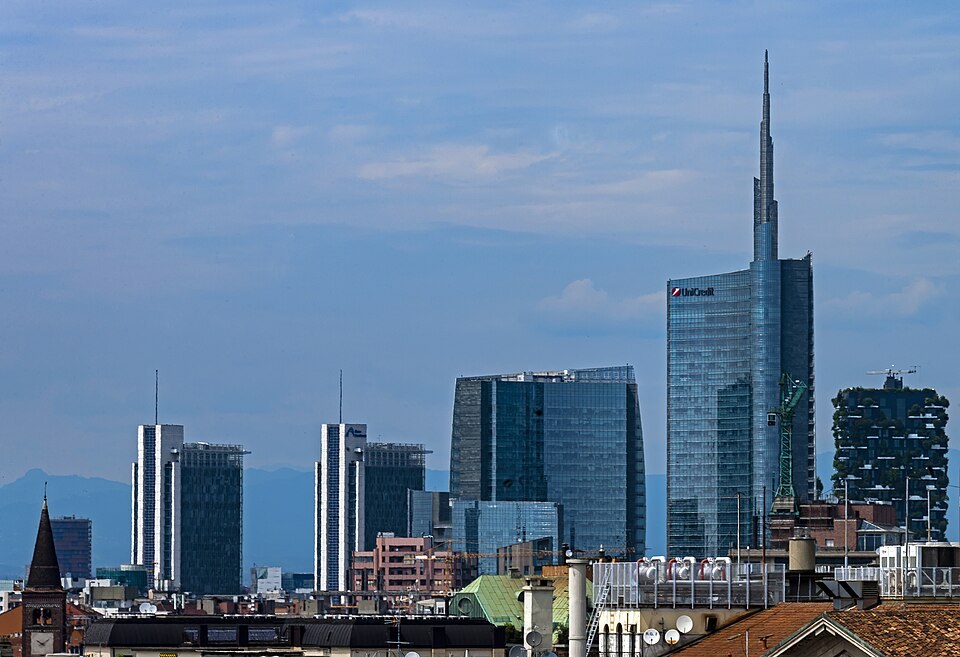
These towers usually make the eye move twice: first upwards, as with any tall building, and then sideways towards the trees growing on the balconies. Bosco Verticale, or Vertical Forest, brings together two familiar things in an unfamiliar arrangement. Planting does not form a separate garden beside the homes. It becomes part of their external living surface.
The two towers were completed in twenty fourteen. They were designed by Boeri Studio: Stefano Boeri, Gianandrea Barreca and Giovanni La Varra. The complex became one of the best-known images associated with the transformation of Isola and Porta Nuova.
Study the balconies from a public viewpoint. Their projections vary, while the planting changes in height, density and shape. Behind the overall green appearance lie many separate decisions: which species can tolerate wind, how much root space is needed, how water reaches the plants, and how maintenance can be carried out.
The project is therefore not simply a conventional block to which residents have added flowerpots. Vegetation was considered alongside soil loads, containers and servicing during the design process. The living elements require continuing work. That makes them different from a decorative surface which can be installed once and expected to remain largely unchanged.
The architects connect the project with an idea of urban biodiversity, making room for plants and other living organisms alongside people. That ambition should be distinguished from a much broader claim that two buildings could solve a metropolis’s environmental problems by themselves. The towers demonstrate a particular experiment in housing rather than a universal answer to every urban difficulty.
They can be appreciated without entering the buildings. These are private homes, and the balconies are not a public botanical garden. Use the surrounding public paths and green spaces to look at them. From there, you can compare vegetation at ground level with the planting carried upwards along the facades.
Notice how much the appearance depends on distance and season. From farther away, the trees combine into a larger silhouette. Closer by, individual crowns and the spaces between them become visible. Bosco Verticale has no single permanently finished appearance. Leaves grow, change colour and fall. The structure remains, but part of its facade follows a living seasonal calendar. That changing relationship between a fixed building and growing plants is the most useful thing to watch here.
Learn more
Try taking two different photographs: a wider view including the surrounding district and a closer view of several balconies. The first shows the towers’ place in the skyline; the second explains their name. One attractive angle cannot describe the whole project. The same caution is useful when judging its performance. Photographs reveal architectural form, but they do not by themselves establish how easy the planting is to maintain or measure an environmental benefit. Those questions require separate evidence and observation of how the buildings operate over time.