LISTEN TO THE PLACE
A story worth knowing
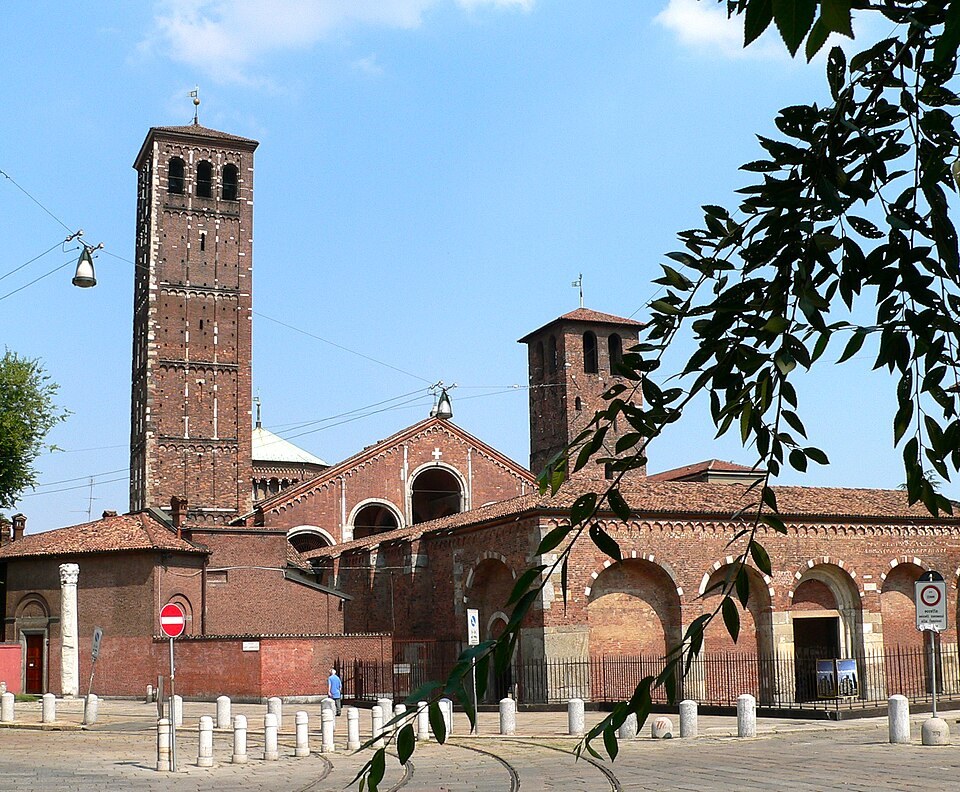
Milan is often remembered through the pale marble of the Duomo, but the city has another important colour: warm red brick. At the Basilica of Sant’Ambrogio, that material shapes the whole experience. Instead of height and countless spires, the building offers a courtyard, repeated arches and the reassuring weight of its walls.
Ambrose was Milan’s bishop in the fourth century and became its patron saint. A basilica was founded here at his initiative and consecrated in the year three hundred and eighty-six. It was originally dedicated to the martyrs. Ambrose himself later became connected with the place as a revered saint whose remains are preserved within the church.
The building visible today does not belong entirely to that early period. Its familiar appearance developed mainly during the Romanesque era. Many centuries separate the original foundation from the architecture encountered by a modern visitor. In an old city, the age of a site, the age of its walls and the age of a particular detail are often different things.
Notice the courtyard in front of the church, known as the atrium. It creates a gradual transition from the open city square to the place of worship. First you enter a setting of columns and arches; only afterwards do you approach the church door. The architecture provides a pause before the threshold is crossed.
The two bell towers are noticeably unequal. This is not simply a failure of symmetry. They recall the different religious communities associated with the basilica: monks and canons. The neighbouring towers suggest that one sacred place could accommodate more than one institution and way of life.
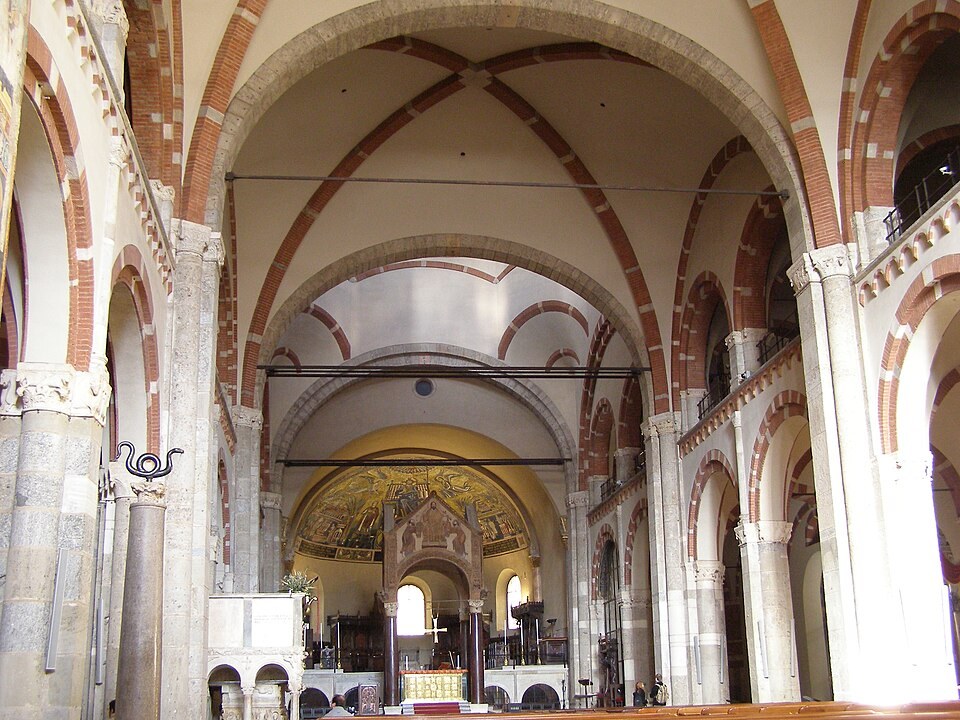
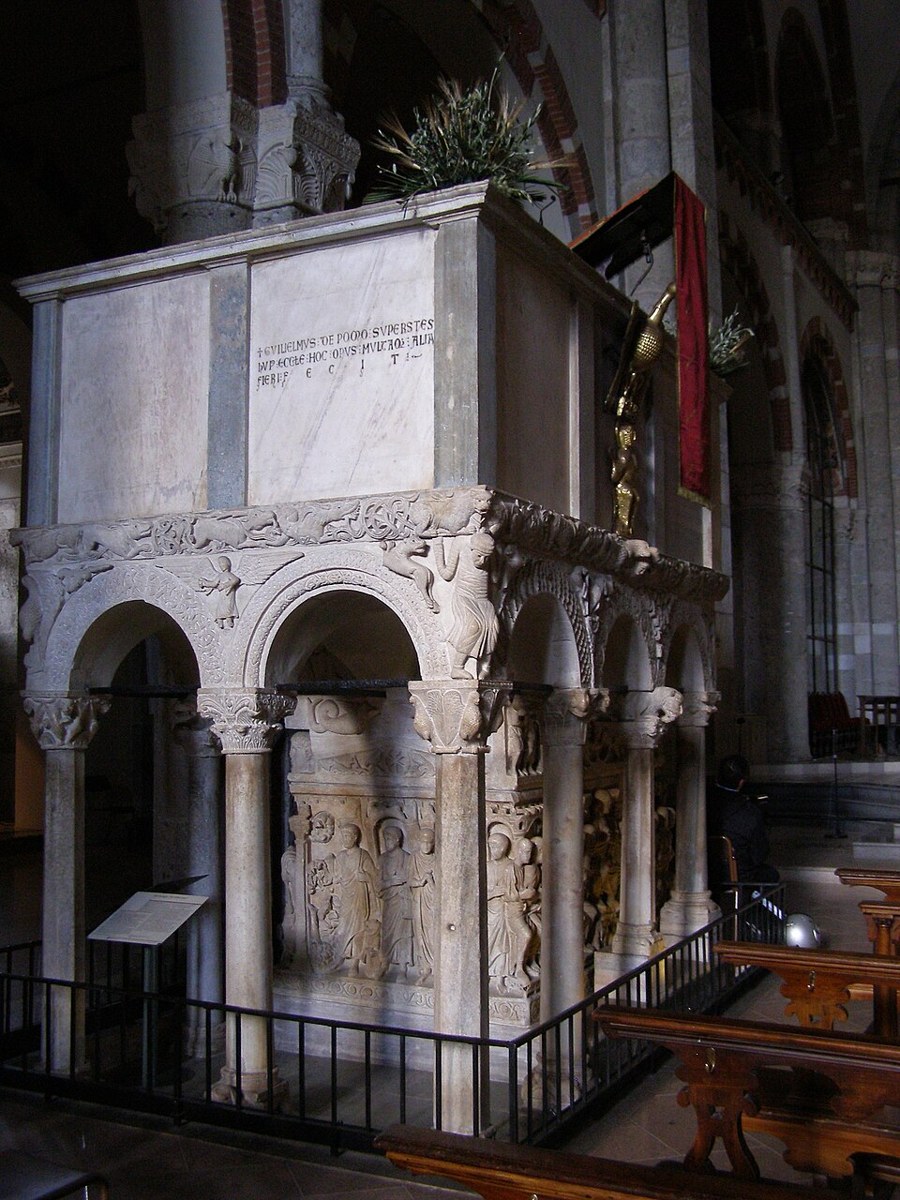
If you choose to go inside, look at the substantial supports and the rhythm of the interior. Unlike the upward emphasis of Gothic architecture, the Romanesque building often communicates steadiness and clearly structured space. The church also contains the precious Golden Altar, mosaics and works from other periods. They deserve a visit of their own rather than a hurried attempt to register everything at once.
Even a short pause in the courtyard helps explain why Ambrose remains so closely associated with Milan. The basilica preserves a continuing relationship between the city and its origins. Listen to footsteps under the arcades and compare them with the sound of the square. Sometimes only a few rows of brick arches separate the hurry of the street from a more concentrated kind of attention.
Learn more
Outside the basilica stands a column with two holes, known as the Devil’s Column. A local legend says that Ambrose confronted the Devil here, and the Devil’s horns struck the stone. The tale explains the unusual marks, but it is folklore rather than an established account of how the holes were made. Milan’s official guide records the story. It shows how a small physical detail can become part of a city’s character: even in legend, Milan’s patron saint proves capable of resisting a particularly determined opponent.