LISTEN TO THE PLACE
A story worth knowing
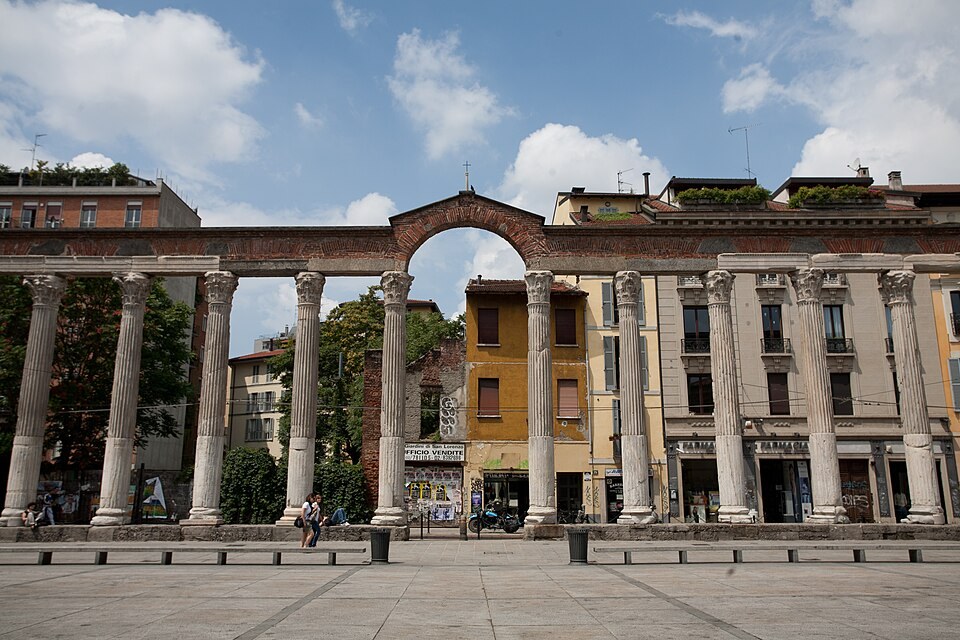
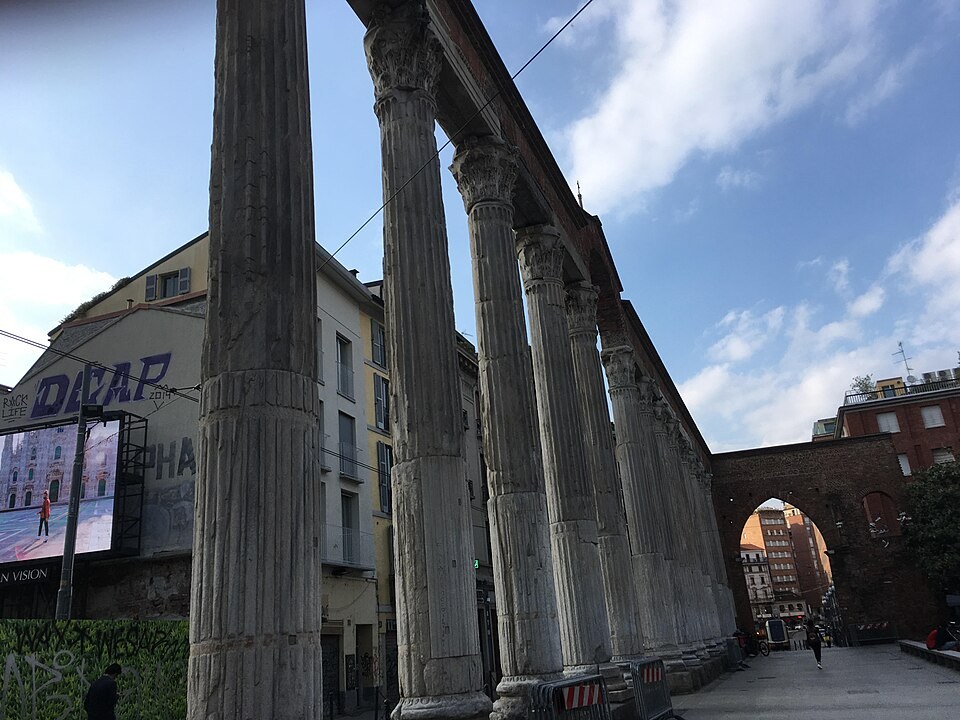
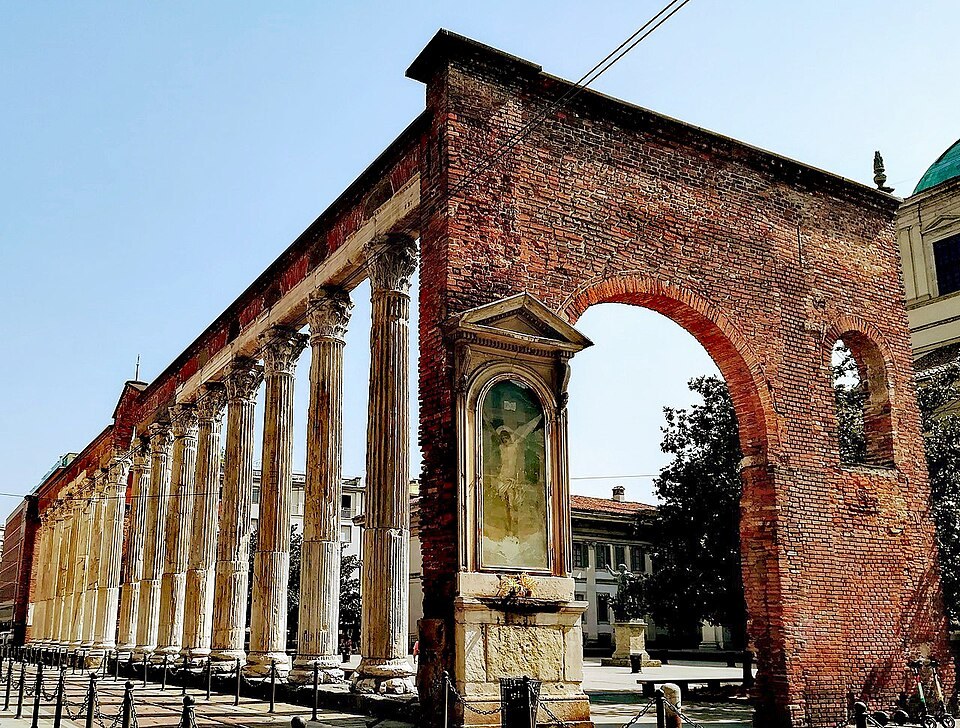
In Milan, antiquity sometimes appears in the middle of thoroughly contemporary street life. Sixteen marble columns stand before the Basilica of San Lorenzo. People pass, conversations overlap and the surrounding city keeps moving. The colonnade has not been separated completely from the present. It remains part of a place that people use.
This is one of Milan’s most visible Roman fragments, a reminder of the city once known as Mediolanum. During the later Roman Empire, Milan became an important political centre. Ancient architecture here is therefore not an unexpected decorative import. It belongs to the history of a major city that existed long before the Duomo, fashion houses or modern towers.
The columns do not necessarily occupy the position for which they were first made. They are associated with earlier Roman buildings and were later incorporated into the setting of the Christian basilica. Their precise original function remains a subject of discussion. Presenting them confidently as the remains of one specifically identified temple would go beyond the evidence.
Reusing older architectural elements was common in historic cities. Valuable materials and ready-made components were not automatically discarded when rulers, religions or building functions changed. They could be given another role. Here Roman columns became part of a Christian setting and, eventually, a familiar modern gathering place.
Look at the capitals at the top of the columns. Their Corinthian plant-like ornament contrasts with the comparatively simple vertical shafts. From a distance the colonnade reads as one repeated rhythm. Closer by, attention moves towards individual details and the condition of the marble. Shifting between those two scales is a good way to look without rushing.
From a position slightly to the side, the sequence of openings becomes especially clear. The columns make a boundary without forming a solid wall. People, buildings and movement remain visible through them. That openness helps explain how naturally the structure has become part of the square’s daily life.
Try spending a moment without searching for an ancient-looking photograph stripped of every modern object. Tram wires, contemporary clothing and passing conversations do not spoil the history. They show its continuation. The interest of San Lorenzo is not that time stopped here, but that older forms have survived many changes and still belong to a city where someone today has simply arranged to meet a friend beside the columns.
Learn more
Architectural elements reused from earlier buildings are often called spolia. The term helps reveal a city’s history of adaptation as well as construction. A column could be valued for its material, useful dimensions, beauty or association with a prestigious past. Those motives need not exclude one another. At San Lorenzo, imagine the labour required to move and re-erect substantial pieces of marble. These are not simply fragments that happened to survive. Their presence also records decisions by people who considered older material appropriate for a new public setting.