LISTEN TO THE PLACE
A story worth knowing
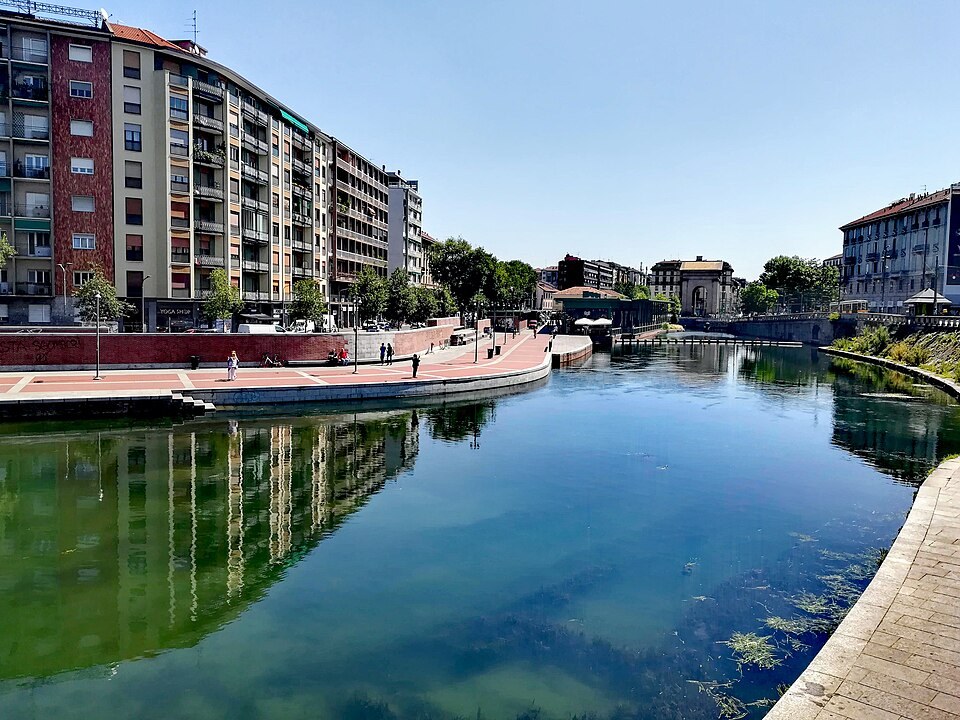
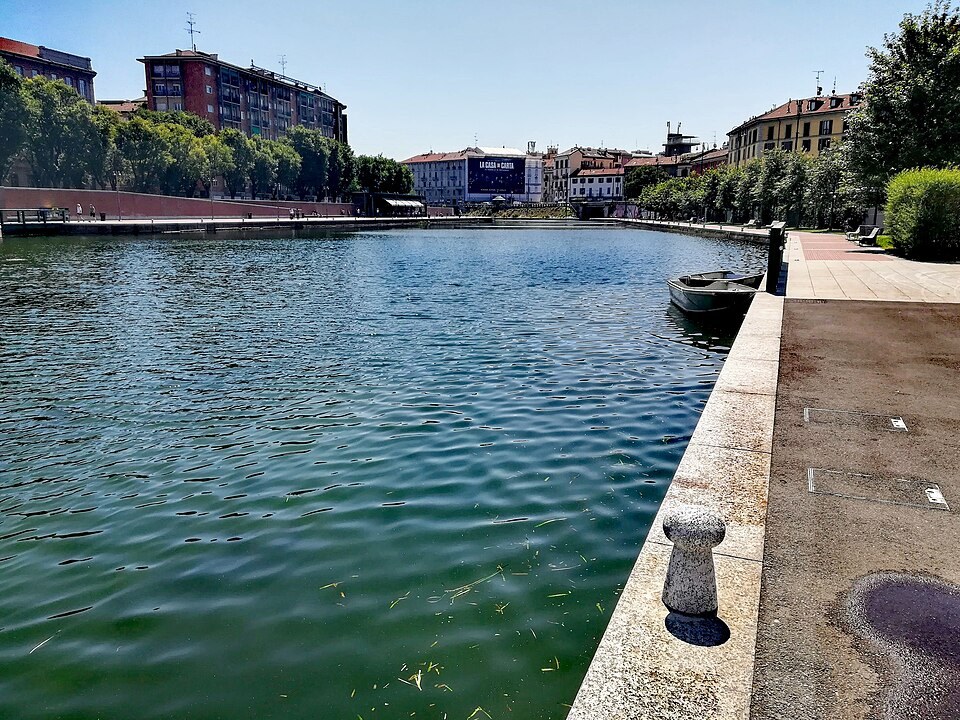
Looking across the Darsena, it is useful to set aside Milan’s usual image of business streets and stone squares. This was a harbour. Water functioned as a road, and the bank was a workplace. Boats arrived, cargo had to be unloaded, and goods needed to be sorted and moved onwards.
The basin belongs to the wider Navigli system, the canals that connected Milan with surrounding areas. For an inland city, waterways offered a considerable advantage. They could carry heavy building materials and substantial quantities of goods that were much harder to transport overland.
Think of the marble used for the Duomo. Its journey into Milan also depended on rivers and canals. That does not mean every block was unloaded at the exact stretch of waterfront beside you. The wider connection is what matters: the ceremonial cathedral and the practical transport network belong to the same urban history.
Naviglio Grande and Naviglio Pavese form a recognisable water junction around the Darsena. The entire canal system should not be credited to Leonardo da Vinci. It was created and altered over many generations. Leonardo studied hydraulic engineering and contributed to the technical culture of his time, but the network’s history is much larger than the biography of one famous individual.
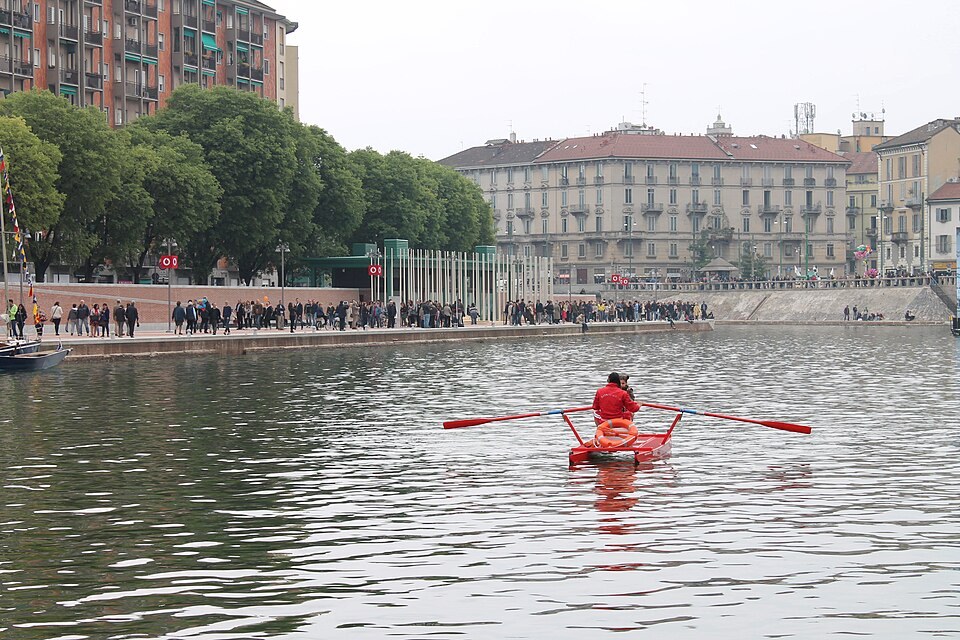
During the twentieth century, waterborne freight gradually lost its former importance. The old harbour’s working role diminished, and the site eventually found another purpose. Following redevelopment completed for twenty fifteen, its waterfront became an important public space. People now meet, stroll and look across water that once formed part of a demanding commercial routine.
Find a comfortable place on the pedestrian side and compare two directions of view. Along the bank, buildings and city movement remain prominent. Across the basin, distance opens differently. Reflections form a shifting second facade, while the broad surface brings more sky into view than a narrow central street usually permits.
There is no need for an elaborate programme here. A passing boat, someone on the opposite bank or a change of light can provide enough to watch. Yet the present atmosphere of leisure rests on the memory of heavy loads and carefully organised transport. Milan’s water was not always a background for relaxation. It first helped the city build, trade and connect different parts of its daily life.
Learn more
Darsena is a word for a sheltered dock basin. Milan’s Darsena is therefore not simply another canal: it provided room for boats to wait and for harbour work to take place. During your walk, distinguish those functions. A narrow canal directs movement, while a wider basin can gather vessels and support loading and unloading. Imagine the waterfront occupied again by cargo and working crews. That comparison makes today’s promenade easier to understand as an adapted piece of urban infrastructure rather than a picturesque decoration suggesting old Italy.