LISTEN TO THE PLACE
A story worth knowing
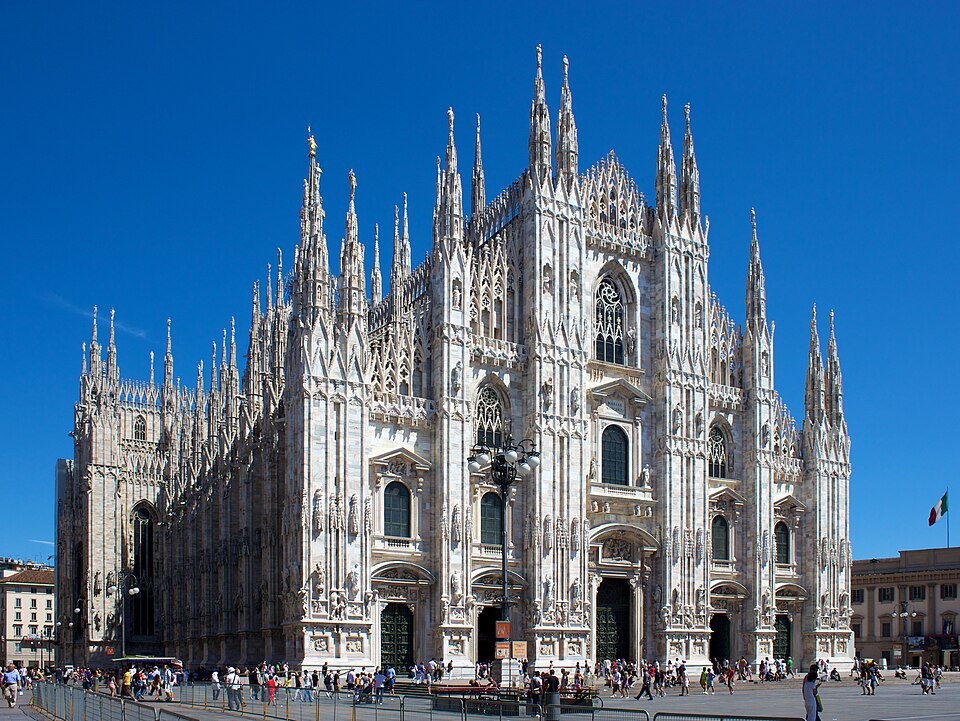
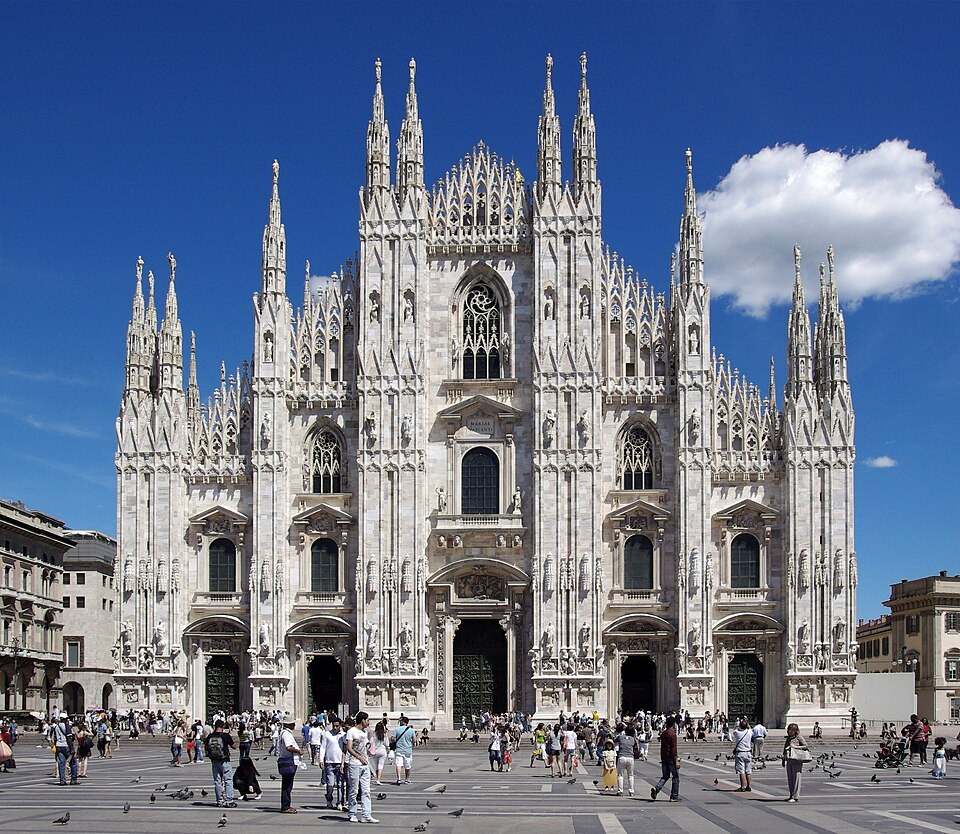
Before looking for the perfect photograph, try taking in the cathedral as a whole. It is surprisingly difficult. Your eye catches a carved window, then a statue, then another spire. The Duomo seems to offer several buildings at once: a solid church below and an almost weightless city of stone above.
Construction began in thirteen eighty-six, long before Milan belonged to a united Italy. Its Visconti rulers wanted a cathedral worthy of an ambitious city. Gian Galeazzo Visconti supported an important change of material: instead of the brick familiar in Lombardy, the builders would use marble from Candoglia. Its pale surface, threaded with pink, helps explain why the building looks different under clear sunshine and an overcast sky.
That decision required an entire transport network. Marble travelled from the quarry area to Lake Maggiore, down the Ticino and through canals towards Milan. The cathedral is therefore closely connected with the Navigli district, even though the two places feel very different today. The stone also records the work of boat crews, quarry workers, masons and engineers who maintained those routes.
The building grew over centuries. What you see is not a single architect’s complete design delivered in one lifetime. The facade, doors and many decorative elements belong to much later stages than the medieval beginning. Craftspeople arrived from different parts of Europe, making the cathedral a long conversation between skills, tastes and generations.
Look towards the tallest spire. The golden figure at its summit is the Madonnina, the Virgin Mary who became one of Milan’s most familiar symbols. She was placed there in seventeen seventy-four. From the square she appears tiny, yet her place in the city’s identity has little to do with physical size.
If you choose to visit the rooftop terraces, the forest of pinnacles and sculpture comes much closer. From ground level, however, you can already notice how little stone has been left visually silent. Windows, figures and decorative edges keep breaking up the surfaces. A building that might have felt like a massive wall instead offers thousands of smaller encounters.
Move away from the busiest line of pedestrians and compare the entrances with the skyline. Below, the cathedral belongs firmly to the square. Above, it seems to dissolve into the air. Between those impressions lies the Duomo’s remarkable achievement: generations of heavy physical work transformed into an appearance of lightness.
Learn more
The Madonnina is not made from solid gold. Her outer surface consists of gilded copper sheets supported by an internal framework. For a figure standing high above the city, the weight of the material matters as much as its appearance. During the Second World War she was covered with cloth to reduce her visibility. Both the statue and the marble cathedral need continuing conservation. Scaffolding therefore belongs to the ongoing life of the monument: maintaining the building is part of the achievement, rather than an interruption to an otherwise finished story.