LISTEN TO THE PLACE
A story worth knowing
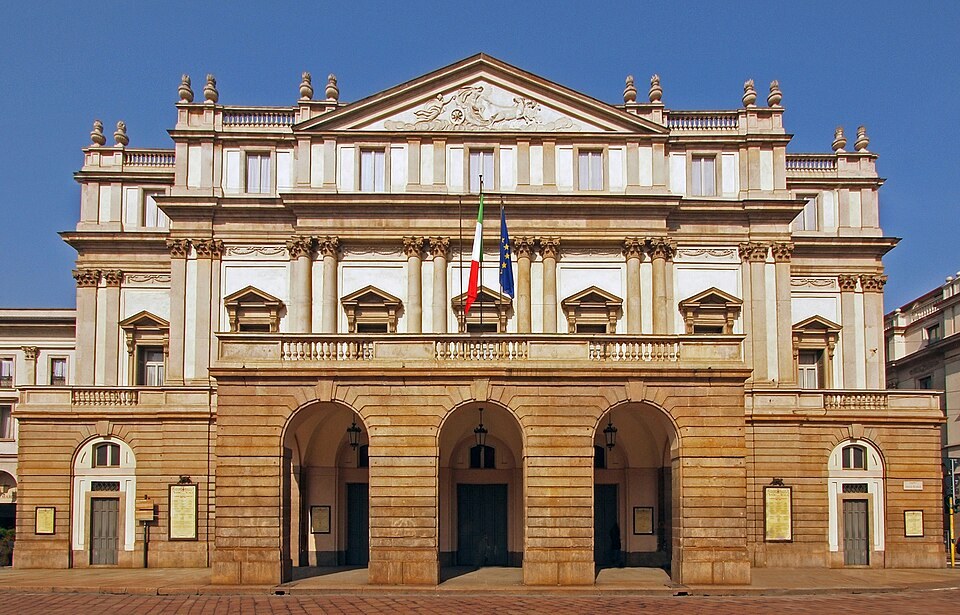
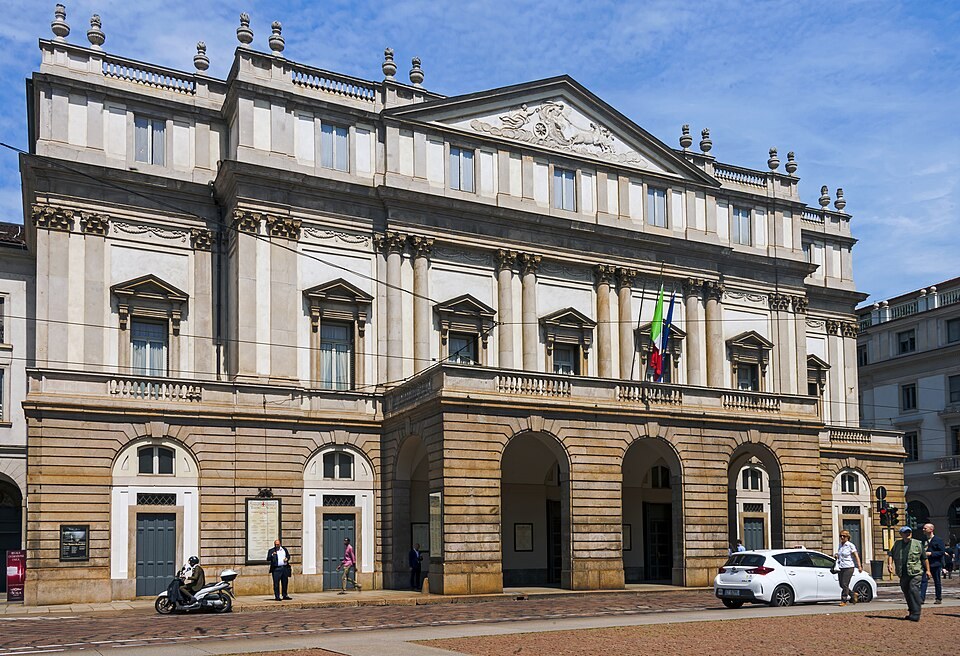
La Scala can surprise you before a performance begins. If you expect an opera palace with an enormous ceremonial staircase outside, its restrained facade may seem unexpected. Much of the theatre’s splendour is reserved for the interior. From the street, the building belongs to the city rather than standing apart from it.
The theatre opened in seventeen seventy-eight. Its architect, Giuseppe Piermarini, designed a replacement for Milan’s earlier court theatre, which had been destroyed by fire. Empress Maria Theresa supported the project during the period when Milan was governed by the Austrian Habsburgs.
The name has nothing to do with a musical scale or a particular staircase. The new theatre occupied the site of the church of Santa Maria alla Scala and inherited its name. It is a small example of how cities remember: a building disappears, but its name continues in an entirely different role.
The opening production was Antonio Salieri’s opera Europa riconosciuta. Later, the stage became closely associated with composers including Rossini, Bellini, Donizetti, Verdi and Puccini. Yet a list of famous names explains only part of the place. La Scala also helped form an audience with strong expectations, ready to compare singers, argue about performances and judge new work.
Look at the regular windows and the measured composition of the facade. They express the clarity of eighteenth-century neoclassical design. Behind that relatively quiet exterior lies a much more complicated world: boxes, rehearsal rooms, orchestral parts, costumes and stage machinery. The performance heard in a single evening depends on people whose names may never appear above the entrance.
The history of the boxes reveals another side of the theatre. Owners of boxes in the old court theatre helped finance the replacement. Their new boxes were not simply seats with a view. They became places of family presence and social identity. Listening to opera and being visible to other members of the audience were closely connected activities.
Even without a performance ticket, you can appreciate the theatre’s position in Milan. The Galleria brings people here from the cathedral, while everyday traffic and pedestrians continue around the square. Imagine the shift before an evening performance: the same streets and walls remain, but people’s attention gradually gathers around a stage that cannot be seen from outside. The building’s quiet facade begins to feel less modest and more like a closed curtain.
Learn more
Early opera-going was not identical to the modern convention of sitting silently and facing the stage all evening. The boxes also supported the owners’ social lives. La Scala’s official history explains their role in financing the building and the rights attached to their boxes. This helps make sense of the auditorium: audience members could see one another as well as the performers. In a photograph or during an interior visit, notice those lines of sight. The architecture arranged music, conversation and social status within the same room.