LISTEN TO THE PLACE
A story worth knowing
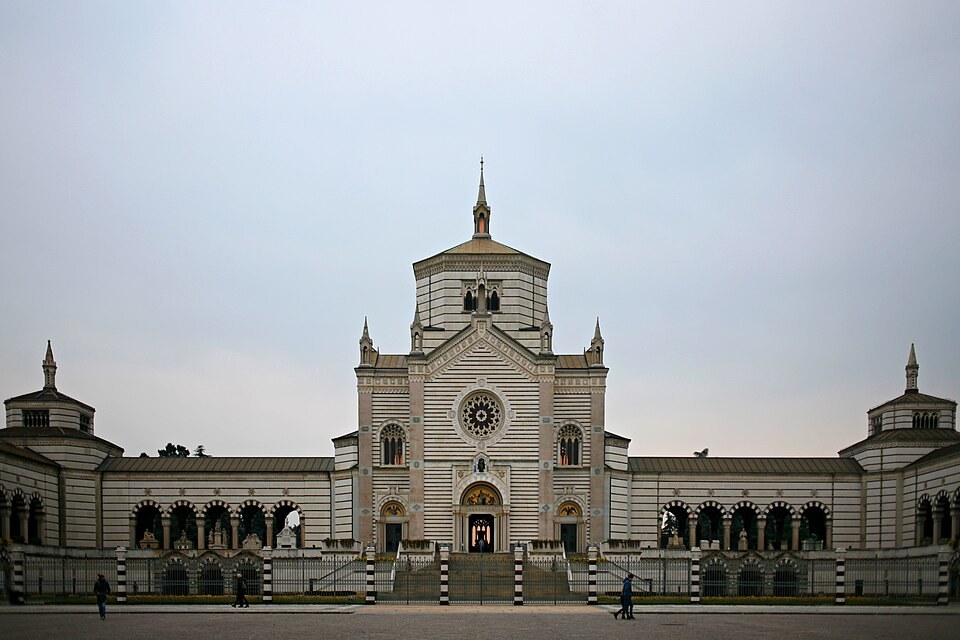
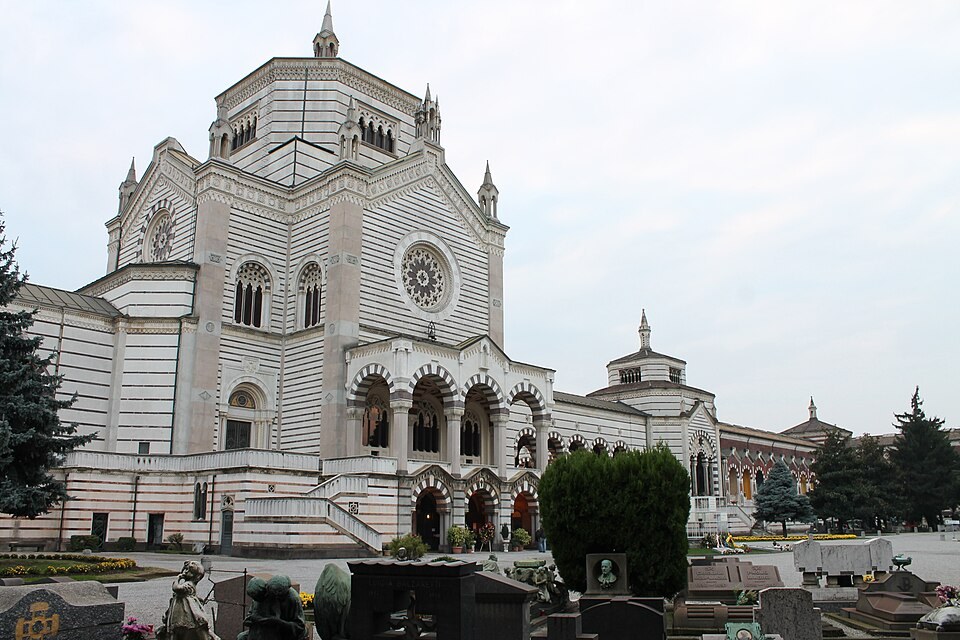
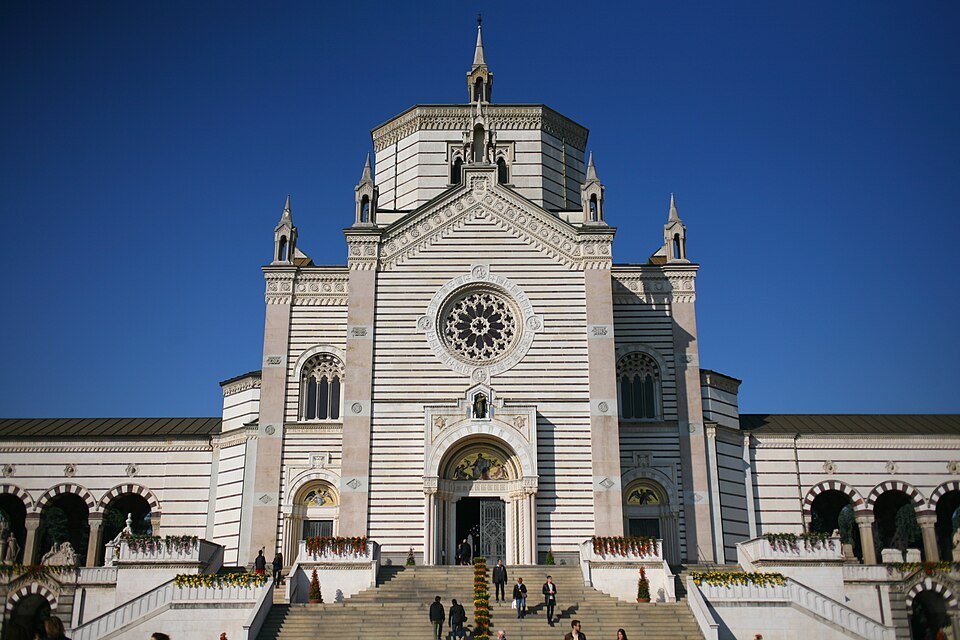
Approaching Milan’s Monumental Cemetery, you might initially think you have reached a grand civic palace. The central building, arcades, contrasting bands of stone and strong symmetry are intended to make an impression. That architectural ambition serves a particular urban purpose: remembering the dead while also telling a story about Milan itself.
The cemetery opened in eighteen sixty-six. Carlo Maciachini’s design brought together different historical styles, including Romanesque and Gothic references. This kind of combination is described as eclectic. Rather than following a single model from the past, the architect used several architectural languages to create a new ensemble.
The principal entrance building is the Famedio, a hall of fame honouring people whose contributions the city considers significant. The writer Alessandro Manzoni is buried here. An inscription with someone’s name does not, however, necessarily mean that their remains lie directly beneath it. The Famedio combines actual burials with a wider form of civic recognition.
Beyond it lies something like a city within the city. Family chapels, sculptures, modest graves and elaborate monuments express changing tastes. Through them, you can follow different ideas about dignity, work, achievement, faith and mourning. Some use classical forms; others adopt Symbolism or more modern approaches to the human figure.
It is important to remember that this is an active cemetery as well as a place of art. A calm pace and consideration for people visiting their loved ones help make the experience more accurate, not merely more polite. Public appearance and private memory are closely connected here, and a visitor cannot expect to read every personal story from the outside.
If you have limited time, resist trying to cover every path. Choose a small area and compare a few neighbouring monuments. How do they differ in scale? Where does the emphasis fall on a figure, a building-like form or an inscription? Such attention can reveal more than a hurried search for the most recognisable surname.
The Monumentale offers an unexpected view of Milan. A city associated with business, production and forward movement pauses here to decide what deserves remembrance. Art history meets family history and wider social ideas about the traces a life can leave. The imposing entrance announces a public monument, but the experience becomes richer when you allow room for the smaller and quieter memories beyond it.
Learn more
The Famedio should not be treated simply as a directory of graves. Civic honour and an actual burial location are different things. The cemetery’s official information explains that someone may be commemorated in the Famedio while being buried elsewhere in the grounds. If you are looking for a particular grave, consult a plan rather than relying only on a commemorative inscription. The distinction also reveals the purpose of the place: it preserves physical remains, but it also maintains a public account of the people Milan chooses to remember.