LISTEN TO THE PLACE
A story worth knowing
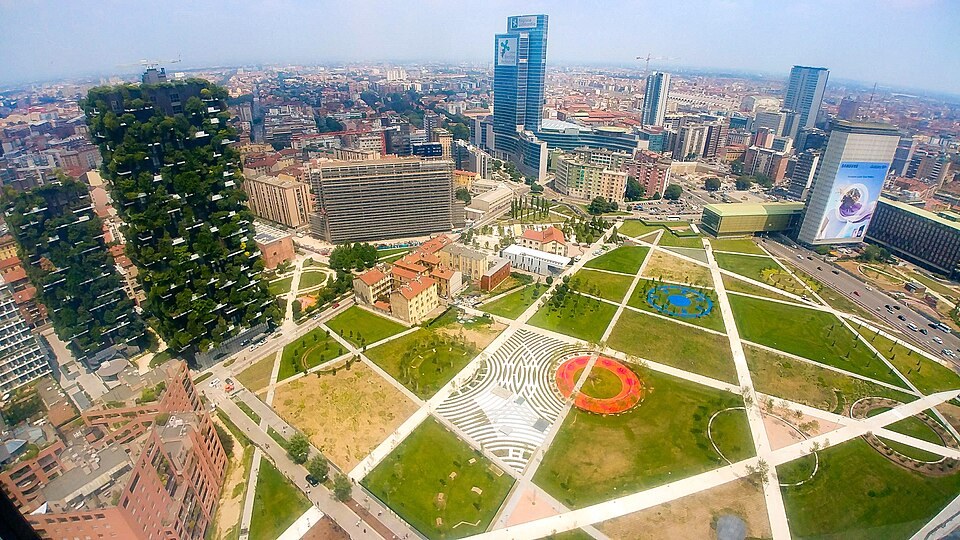
In central Milan, the eye often pauses over carved stone. Here it travels across glass, water and reflections. Piazza Gae Aulenti represents another chapter of the city’s history. It is not an old square accidentally surrounded by towers, but part of the large-scale redevelopment of Porta Nuova.
The square opened in December twenty twelve and was named after the Italian architect and designer Gae Aulenti. It is important to distinguish dedication from authorship. The square is associated with Cesar Pelli’s development, rather than being a design by Aulenti herself. Her name commemorates her contribution to architecture.
Aulenti is known internationally for work including the transformation of the former Orsay railway station in Paris into a museum. That makes the dedication particularly interesting. A new business district honours an architect celebrated for giving older buildings another life. The city’s idea of modernity therefore involves more than replacing everything with something new.
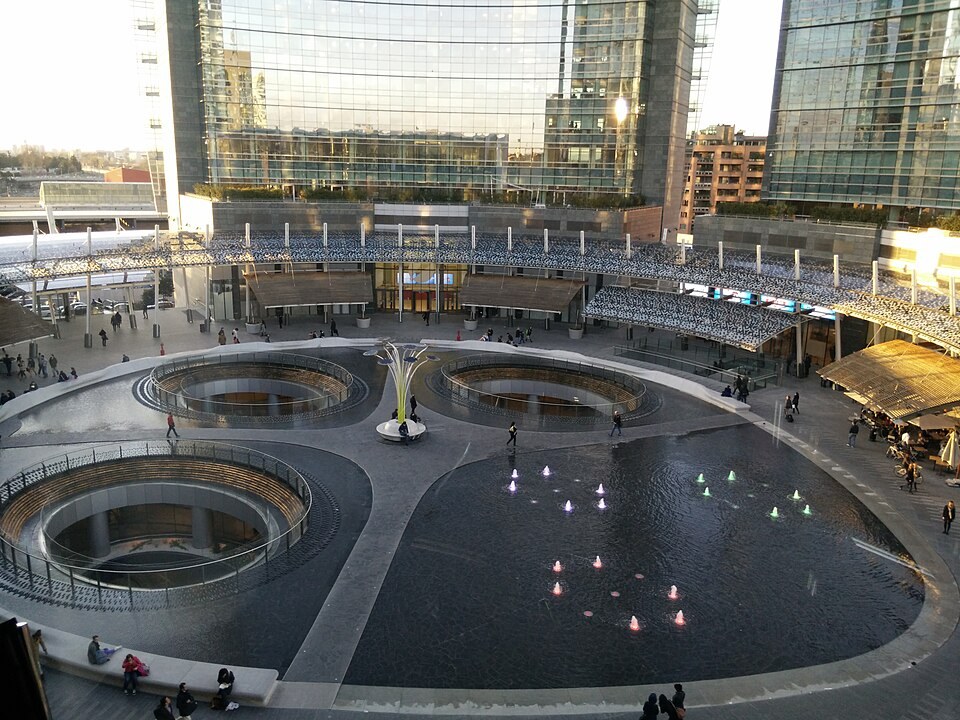
Notice the level on which you are walking. The pedestrian space is raised above surrounding streets and connected with lower levels by routes, stairs and lifts. Much of the urban organisation lies beneath your feet. The apparent ease of the square depends on a more complicated arrangement of transport, shops and service spaces.
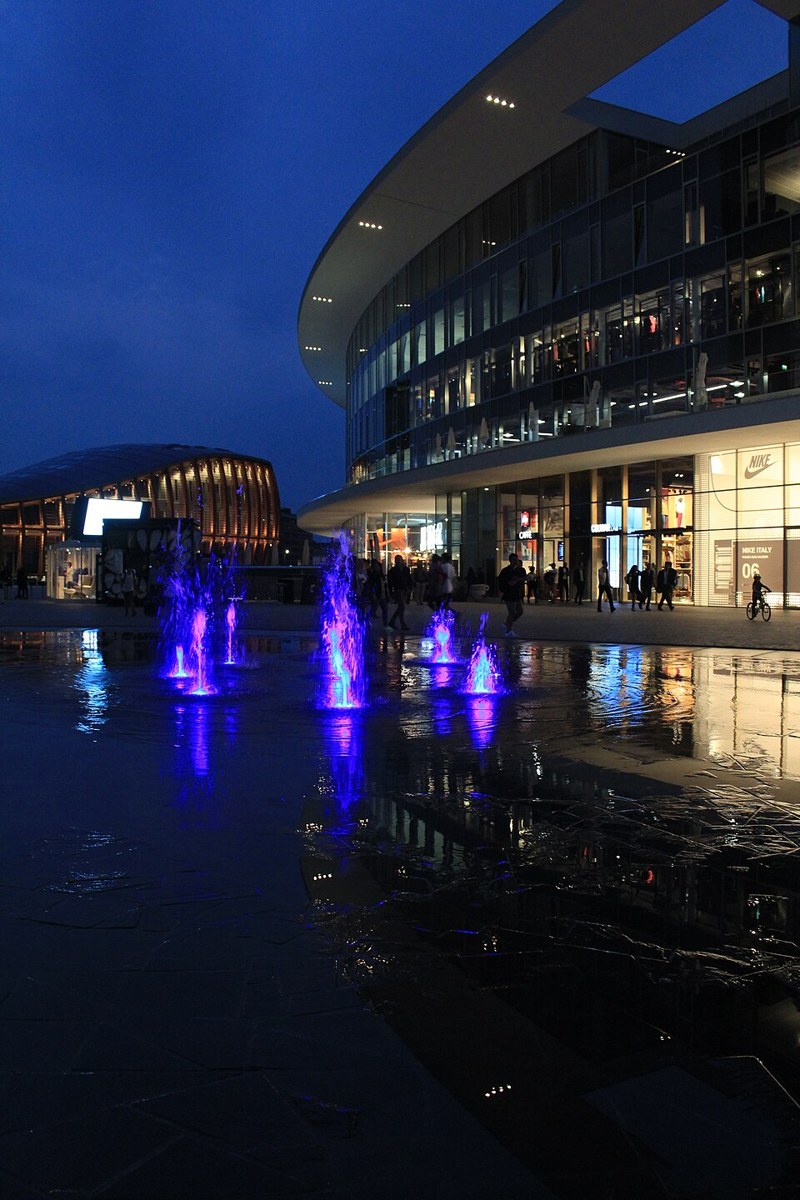
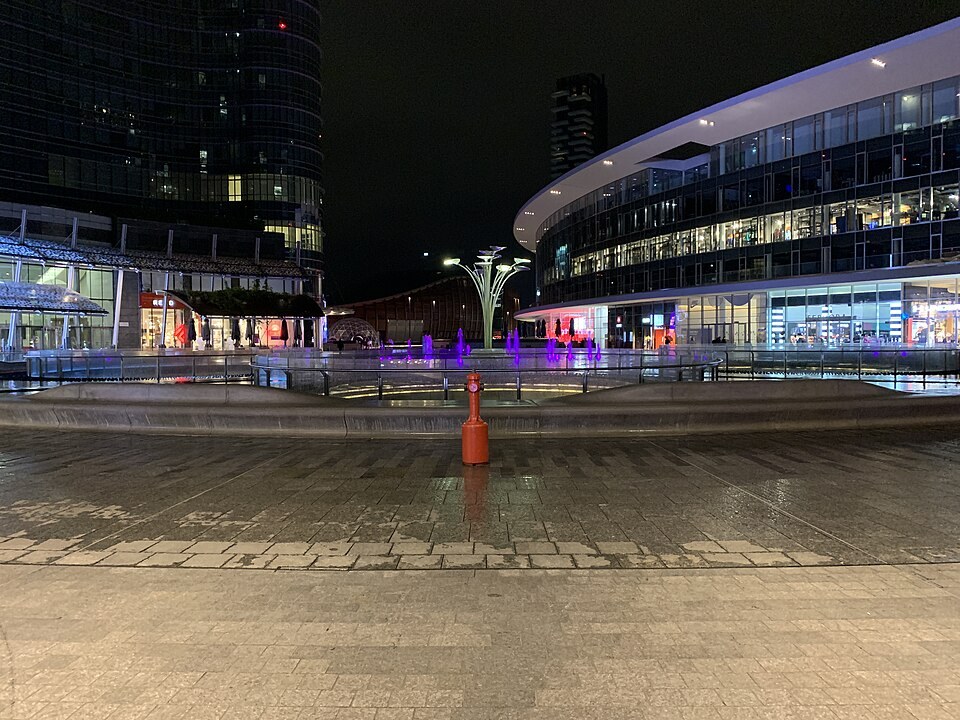
The UniCredit Tower and neighbouring buildings produce an immediately recognisable skyline. For a moment, however, try looking at ground level rather than only upwards. Water surfaces, reflected facades and curving pedestrian routes make the large ensemble approachable at the scale of a person. A dramatic outline is not enough: people still need places to walk, pause and find one another.
This is a good setting in which to observe how a city makes new landmarks. A meeting place does not have to be medieval before it can become familiar. Repeated use gives it that role. Someone arrives from the station, someone waits for a friend, and someone encounters Milan’s towers for the first time.
Compare the atmosphere with the Duomo or Piazza Mercanti if your walk has taken you there. Materials, heights and building ages differ, but an underlying task remains similar: gathering people in a recognisable shared space. Piazza Gae Aulenti shows a Milan that looked different quite recently and continues to negotiate its future, through design decisions and through the ordinary journeys made across the square every day.
Learn more
On a map, the square may resemble a straightforward open circle between buildings. Its vertical arrangement matters just as much. Before continuing your walk, notice which pedestrian route actually connects with the next destination rather than relying only on a short straight-line distance. This is a feature of the district’s architecture, not simply a navigation issue. The square illustrates how urban distance can depend on a staircase, an available lift, a crossing and the point at which different levels genuinely meet.