LISTEN TO THE PLACE
A story worth knowing
Piazza Mercanti is only a short distance from the large cathedral square, yet the atmosphere changes noticeably. Buildings stand closer together, walls feel nearer and individual passages become more important. This is a useful place to imagine Milan as a medieval city of trade and civic administration, rather than only a modern centre of shops and display.
The square’s name refers to merchants. Commerce in a historic city, however, was never entirely separate from rules, courts and public authority. Transactions required trust, agreements needed recognition and disputes needed resolution. Such a place gathered not only goods and money but also the institutions that allowed urban life to function.
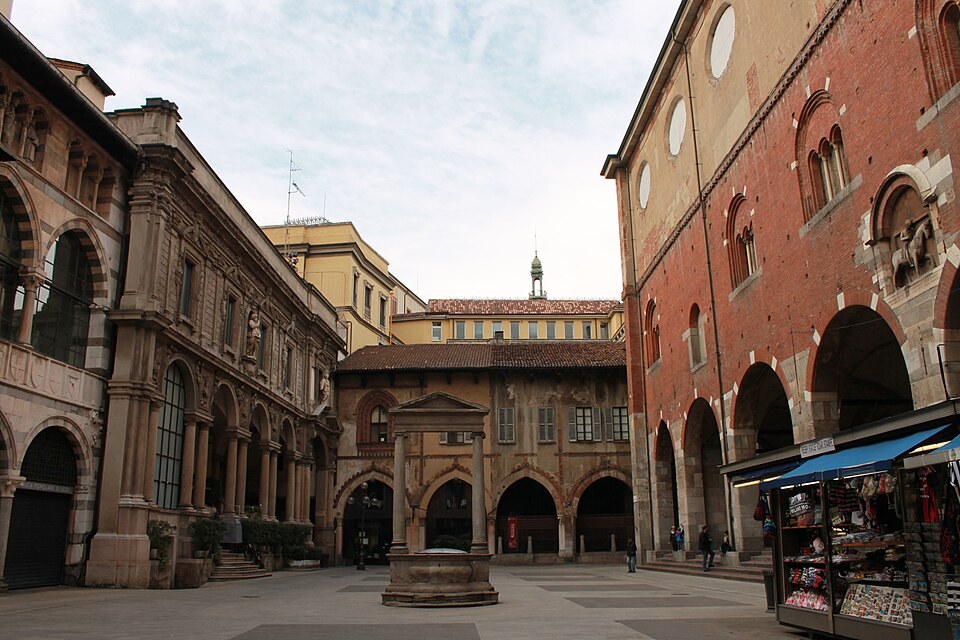
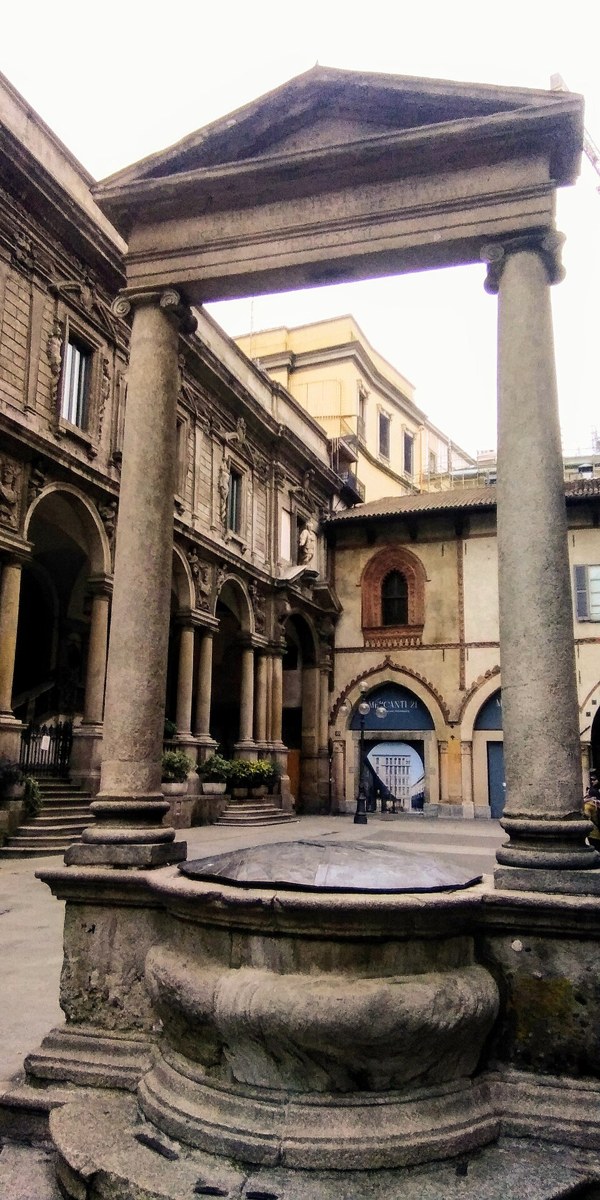
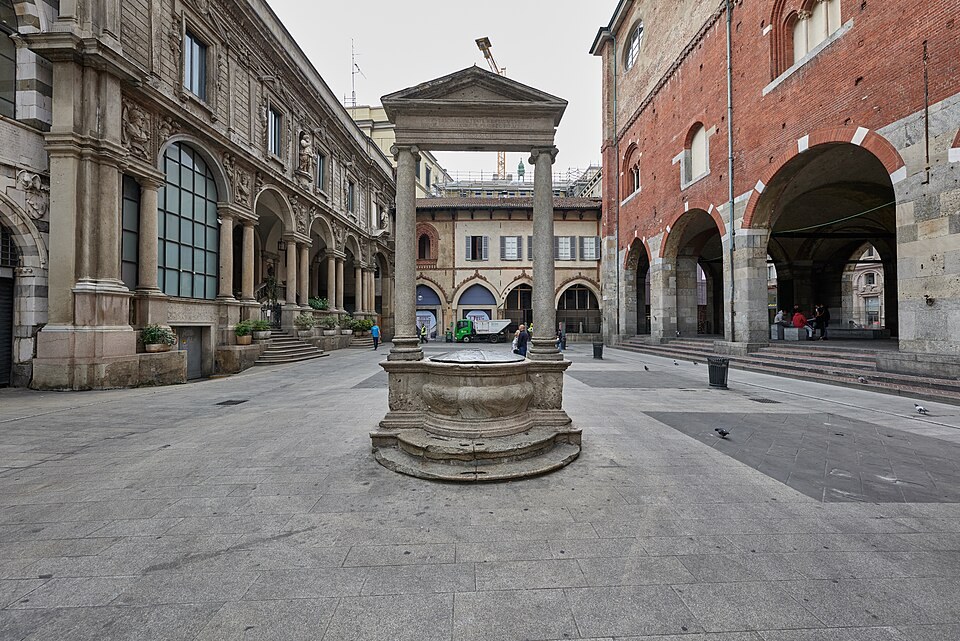
The principal landmark is the Palazzo della Ragione, also known as the New Broletto. It originated in the thirteenth century as a civic building. In Milan, broletto became associated with the place of municipal government. Look at the open arcades and the larger hall above them. The arrangement combines a space for passing through and gathering at ground level with a more enclosed volume overhead.
There is no need to imagine that everything around you has survived unchanged from one particular medieval day. Buildings were altered, boundaries shifted and connections with neighbouring streets evolved. The surrounding facades bring different periods together. That makes Mercanti a genuine urban junction rather than a theatrical reconstruction of the Middle Ages.
Find the loggias, windows, columns and stone well. Each element relates to a different scale of human activity. An arch allows passage or a pause in the shade; a window overlooks the square; an inscription asks you to come closer. Broad historical ideas become easier to understand when connected with actions that still feel familiar.
For a better view, make a small circuit rather than remaining at the point where you entered. The facades will overlap and separate, and the space may seem less straightforward than it first appeared. You do not need to identify every building by name to appreciate the density of its organisation.
Mercanti is especially rewarding after the Duomo. At the cathedral, Milan demonstrates its capacity for an enormous shared undertaking. Here the city’s everyday organisational side becomes more visible. Milan grew through monuments, but also through meetings, agreements and decisions. This square tells a quieter story about people assembling, discussing practical affairs and giving those affairs a public architectural setting.
Learn more
The medieval word broletto originally referred to an enclosed area, but in Milan it became associated with municipal government. The New Broletto here should not be confused with the Old Broletto connected with the site of today’s Royal Palace. These names record the movement of public functions as well as the relative ages of buildings. Even a short map label can therefore conceal a sequence of urban changes: an institution moves, its former site acquires another purpose, and an older name remains as a clue linking different layers of the city.