LISTEN TO THE PLACE
A story worth knowing
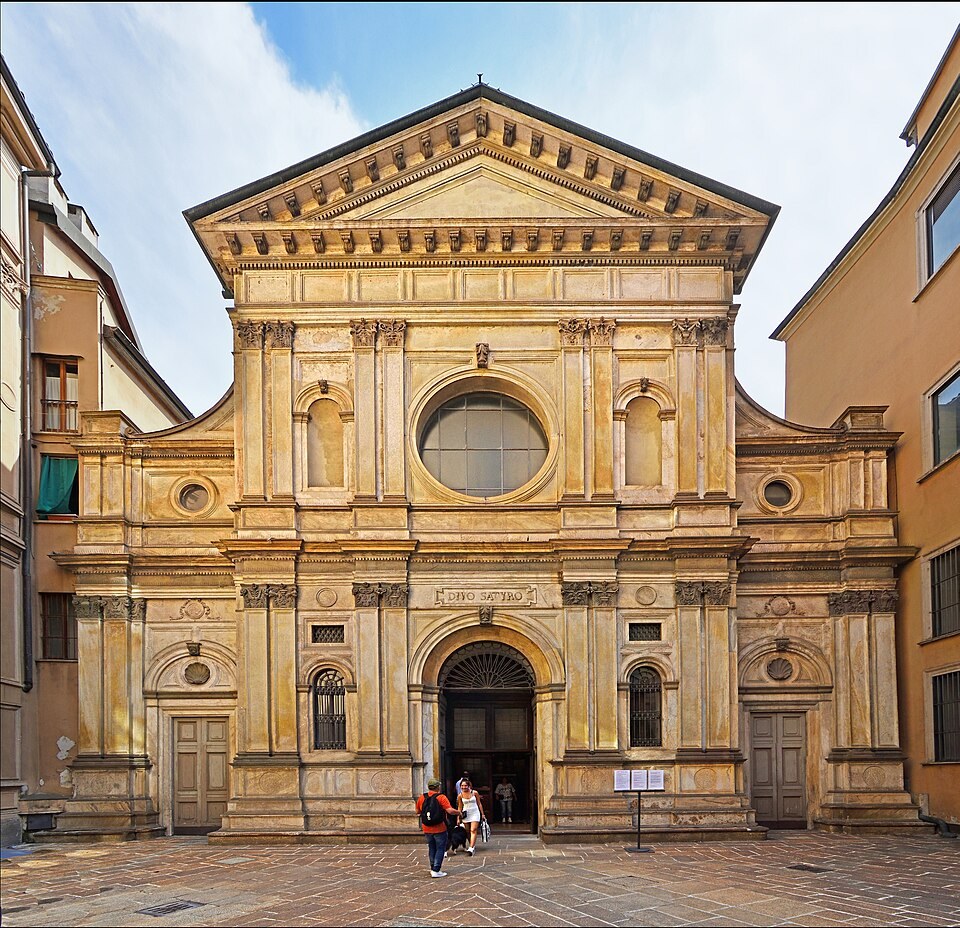
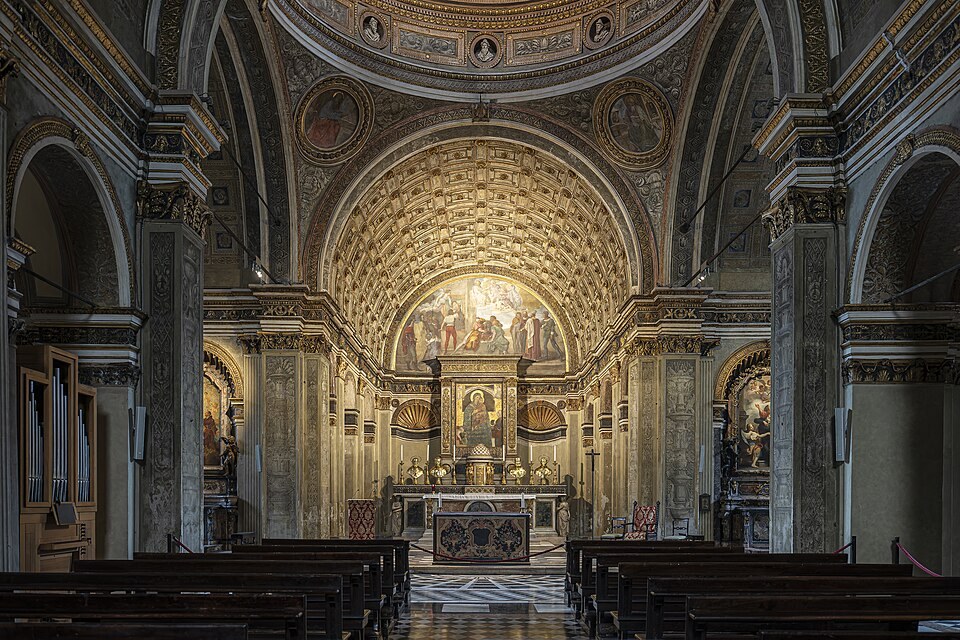
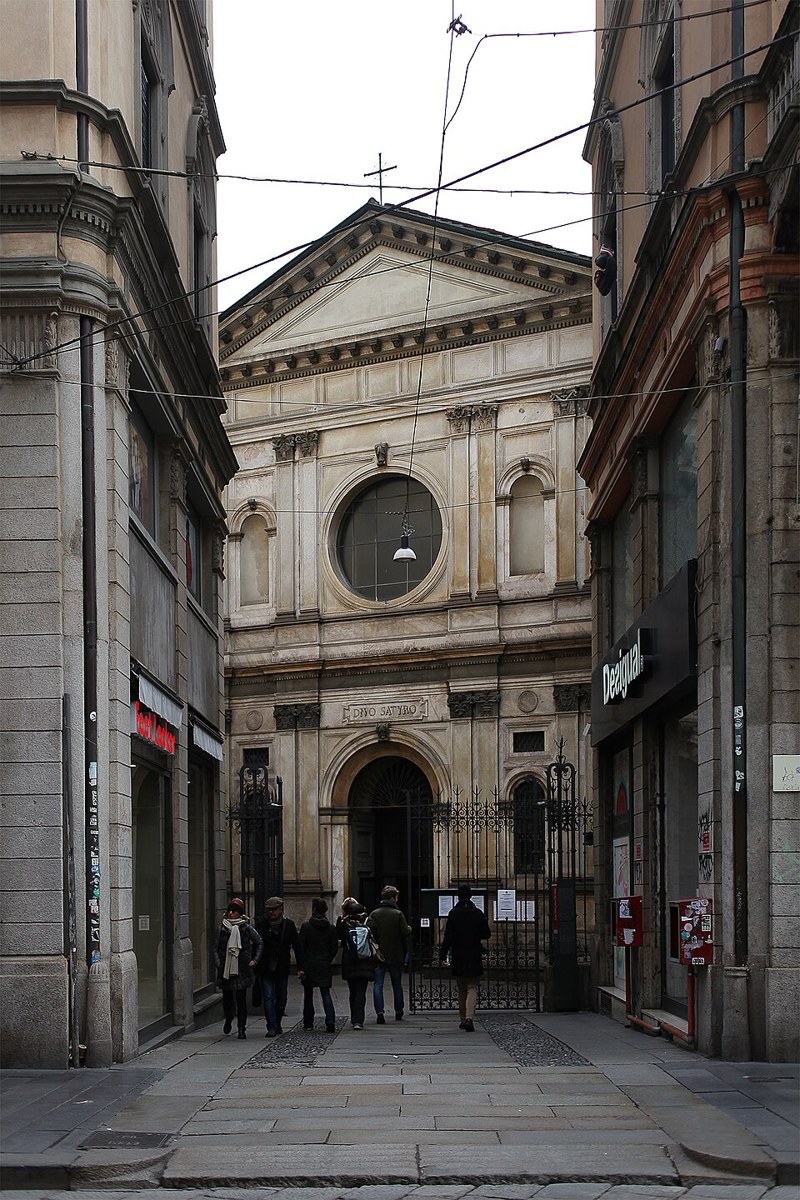
This small church has an ingenious way of unsettling a first impression. From Via Torino, it does not appear especially large. Enter and look along its main axis, however, and the space behind the altar seems unexpectedly deep. Nothing supernatural is involved. This is a carefully calculated use of vision.
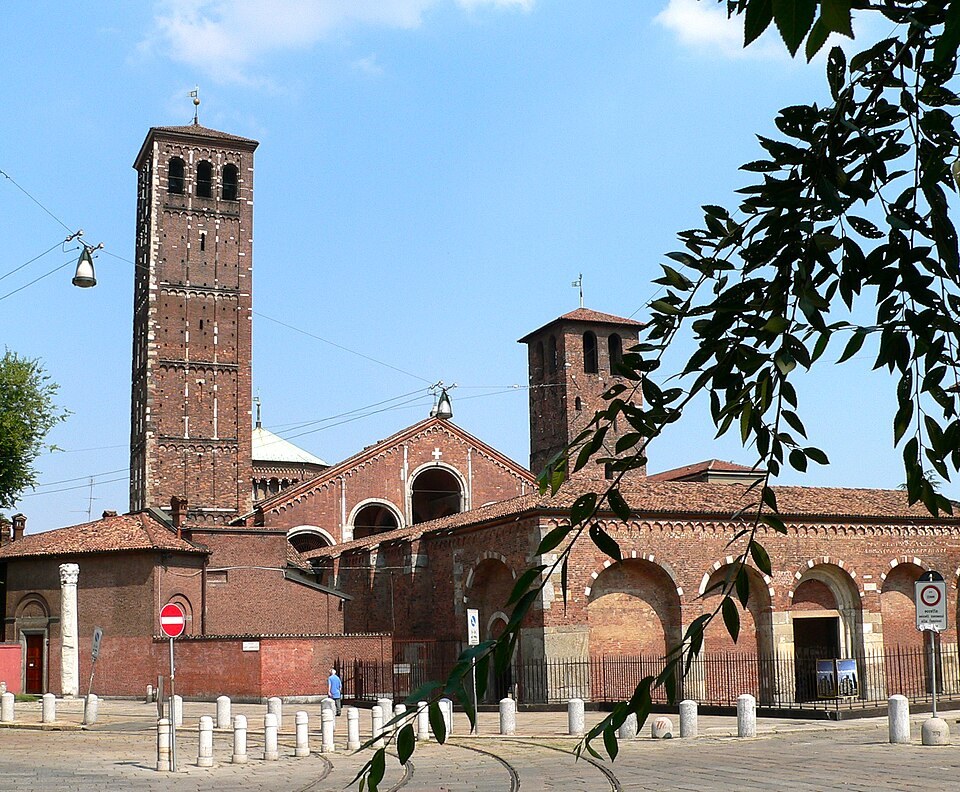
Santa Maria presso San Satiro means Saint Mary beside San Satiro. The name points to different historical layers sharing one site. The earlier sanctuary was dedicated to Satyrus, the brother of Saint Ambrose. The Renaissance church developed beside it during the second half of the fifteenth century.
Donato Bramante is associated with the building’s remarkable solution to a practical problem. There was not enough space behind the high altar for the deep choir that the composition seemed to require. Rather than simply accepting a visibly cramped ending, he used perspective. Shallow relief and paint suggest a much longer space covered by a coffered vault.
The effect does more than provide an entertaining trick. It helps the building appear balanced and complete where the surrounding city did not allow its imagined form to be built in full. A restricted urban site became an opportunity for architectural invention.
If the church is open and you decide to enter, first study the altar area from a central position. Allow your eyes to accept the apparent distance. Then, while respecting worship and other visitors, shift your viewpoint a little. From the side, the illusion becomes less convincing, revealing how little physical depth is needed to create a much larger visual impression.
There is no need to approach this as a contest in catching an artist out. It is more interesting to notice why the mind is willing to complete the image. Diminishing forms, converging lines, light and shade provide familiar evidence of distance. We ordinarily trust those clues, and Bramante makes use of that everyday confidence in what we see.
Afterwards, the street outside may look slightly different too. A shop window, mirror, narrow passage or painted architectural feature can also alter your sense of space. San Satiro offers a useful reminder that a building’s size is not experienced only through measurements. It also depends on where you stand and on the skill of someone who thought carefully about that position before you ever arrived.
Learn more
Milan’s official guide contrasts an apparent choir depth of almost ten metres with a real depth of less than one metre. Remembering the exact ratio matters less than noticing the change yourself. Try a small experiment: look straight ahead, shift slightly to one side, then return to the main axis. Watch for the point at which the image stops feeling like a real continuation of the building. It becomes a practical lesson in perspective, with your own eyes, rather than a camera, providing the most useful instrument.