LISTEN TO THE PLACE
A story worth knowing
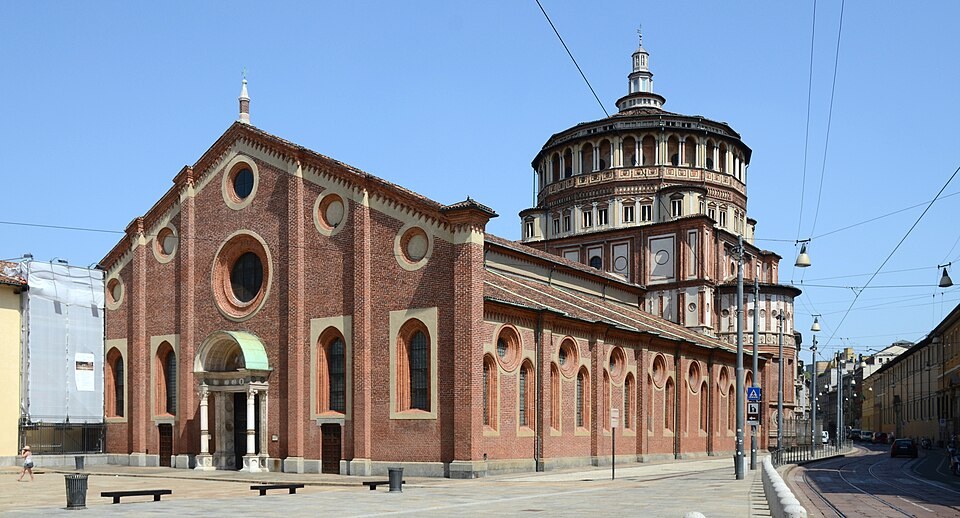
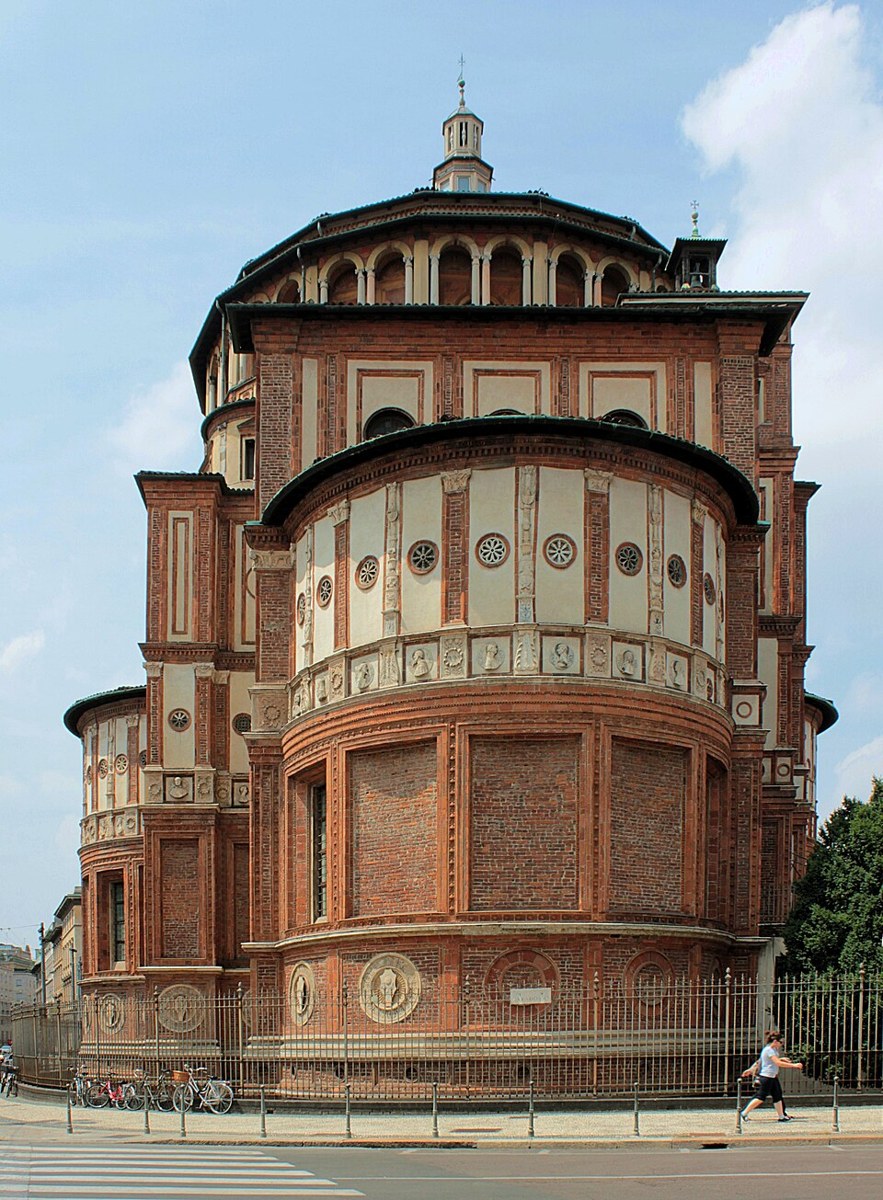
It helps to distinguish two related but separate visits here. The church in front of you is Santa Maria delle Grazie. Leonardo’s Last Supper is not in its main worship space, but in the refectory of the former Dominican convent. Seeing the painting requires a separately planned museum visit; entering the church does not automatically bring you to it.
The complex introduces the Milan of the late fifteenth century. Its architecture combines a local brick Gothic tradition with the language of the Renaissance. Compare the long body of the church with the larger forms towards its eastern end. The building seems to change scale and architectural voice. Work on the complex was connected with the ambitions of Ludovico Sforza’s court.
This was the world in which Leonardo worked. His Last Supper was completed by the end of the fourteen nineties for a room in which the friars ate their meals. The painted gathering around a table accompanied the community’s actual daily dining. It was not a portable picture placed wherever a wall happened to be available, but a work made for a particular surface and setting.
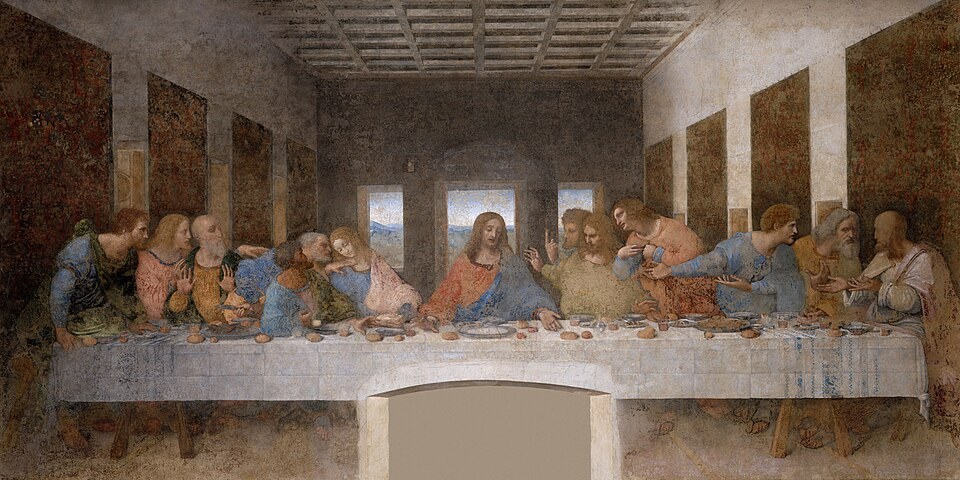
Leonardo represented the moment when Christ tells the disciples that one of them will betray him. The event unfolds through human reactions: hands, turning heads, leaning bodies and expressions. The apostles do not behave like identical symbols. Each responds differently, giving a familiar religious subject the urgency of a conversation in progress.
The work should not be described simply as an ordinary fresco. Leonardo used an experimental technique on a dry surface. This allowed him to pursue subtle effects and return to details, but the resulting painting was exceptionally vulnerable. Its survival became a long story of damage, investigation and conservation.
If you are looking at photographs before a visit, take in the composition first, then follow one small group of disciples. There is no need to solve every detail immediately. Watch how a gesture answers another gesture and how the movement gathers around the stillness of the central figure.
From the street, the convent may seem like a quiet stop among Milan’s buildings. Its significance, however, involves a very active question: how do you show the instant when a group of familiar people hears something that changes everything? Leonardo explored perspective and painting materials here, but also the way thought and emotion become visible in the movement of a human body.
Learn more
Try reading the composition as a scene without sound. Leonardo gathers the apostles into groups of three while giving individuals different directions of movement. Hands connect neighbours or suggest uncertainty and withdrawal. The room’s perspective lines direct attention towards Christ. This helps explain why the image remains readable even in a small reproduction: a strong overall order holds together many dramatic reactions. That approach is more useful than treating every detail as a secret code. Popular theories about hidden meanings are not all supported by historical evidence.