LISTEN TO THE PLACE
A story worth knowing
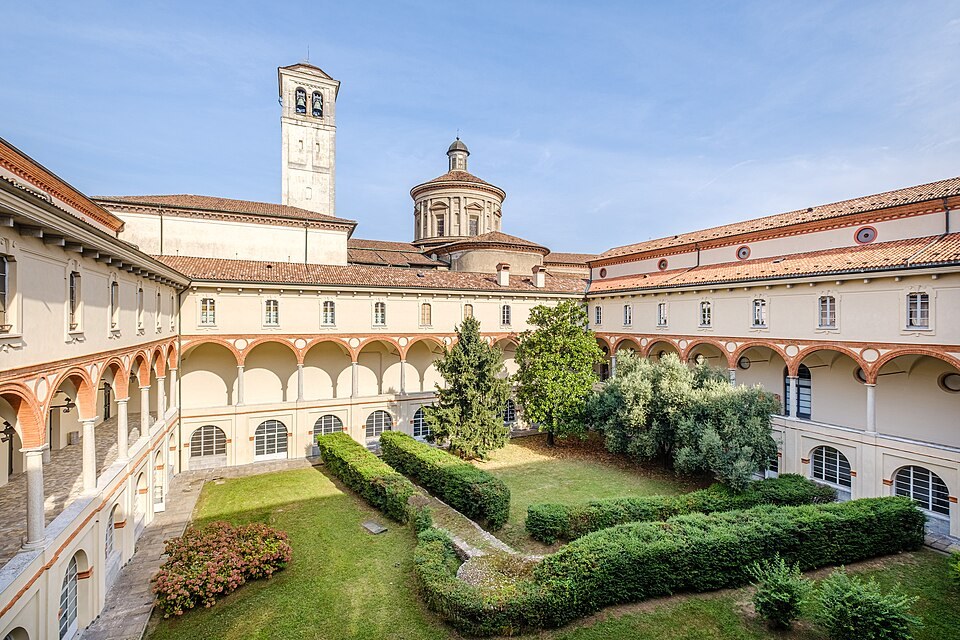
At the Leonardo da Vinci Museum of Science and Technology, different periods meet in a particularly visible way. Historic monastic courtyards form a setting for engineering, transport, industry and scientific investigation. It is a recognisably Milanese combination: the city values art while also taking a strong interest in how useful things work.
The museum opened in nineteen fifty-three. Its creation was closely associated with engineer Guido Ucelli and support from industrialists and public institutions. In the years after the war, such a project meant more than preserving old machinery. It offered a way to discuss knowledge and practical skills within a society rebuilding its everyday life.
An early-sixteenth-century Olivetan monastery became the historic core of the complex. If you can see a courtyard with arcades, notice its measured rhythm. The space was made for another pattern of living, yet proved capable of accommodating a new purpose. The building itself demonstrates the adaptation of an existing structure to different work.
Leonardo’s name was a deliberate choice. He combined artistic observation with an interest in mechanisms, water, movement and the human body. The museum develops that connection rather than presenting scientific culture simply as a dry list of inventions. Drawings and models can also be ways of asking questions about the world.
There is an important distinction to keep in mind. A model based on Leonardo’s drawings is not automatically a machine that he personally built and successfully tested. Many models were made much later as interpretations of his notes. They help make an idea visible, but moving from a sketch to a working mechanism still involves the choices of researchers and engineers.
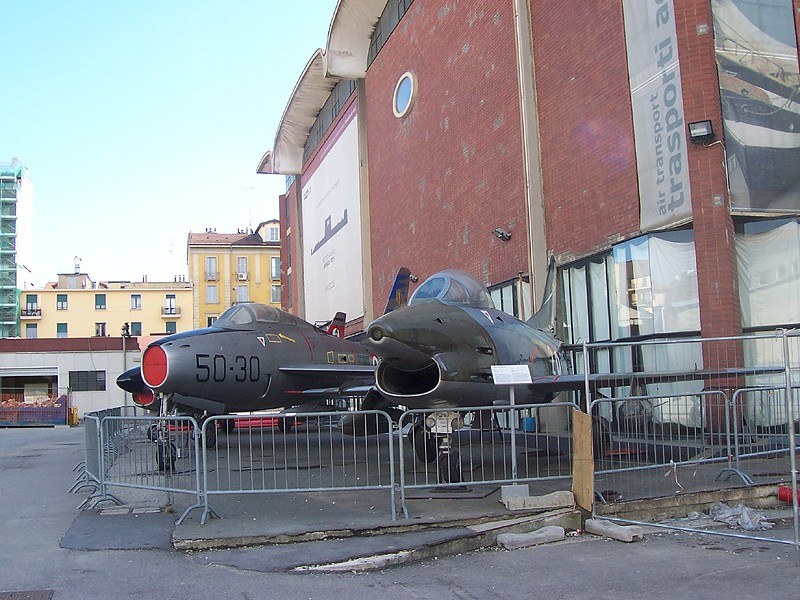
The collections cover many areas of technology, including transport, energy and communication. A large vessel, a locomotive and a small measuring instrument tell stories at very different scales. A useful question remains the same: what problem did the device address, and what did its use change for people?
Allow separate time for an interior visit. A brief outdoor stop cannot replace the museum’s galleries and pavilions. Even here, however, it is possible to change the way you see Milan. Behind celebrated facades and attractive objects lie production, calculation and experiment. This museum invites attention to the people who imagined, tested and made things work before those things became part of someone else’s ordinary day.
Learn more
Engineering models can serve different purposes. One demonstrates a movement, another tests a calculation, and a third explains an idea that is difficult to read from an old drawing. Similar appearances do not mean identical functions. In the Leonardo galleries, ask whether you are looking at a reconstruction, an educational explanation or a historical object. The question does not reduce an exhibit’s value. It clarifies what the object can demonstrate and which parts of its story depend on a later researcher’s interpretation of an earlier idea.