LISTEN TO THE PLACE
A story worth knowing
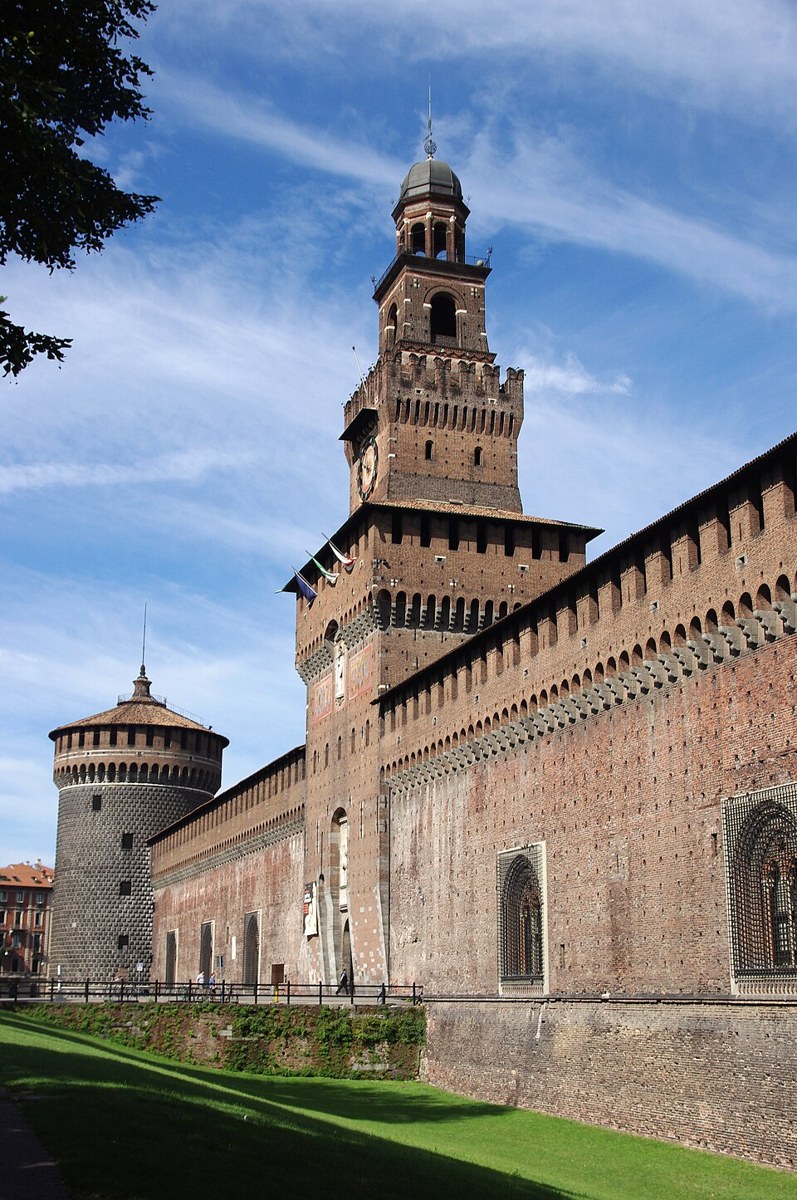
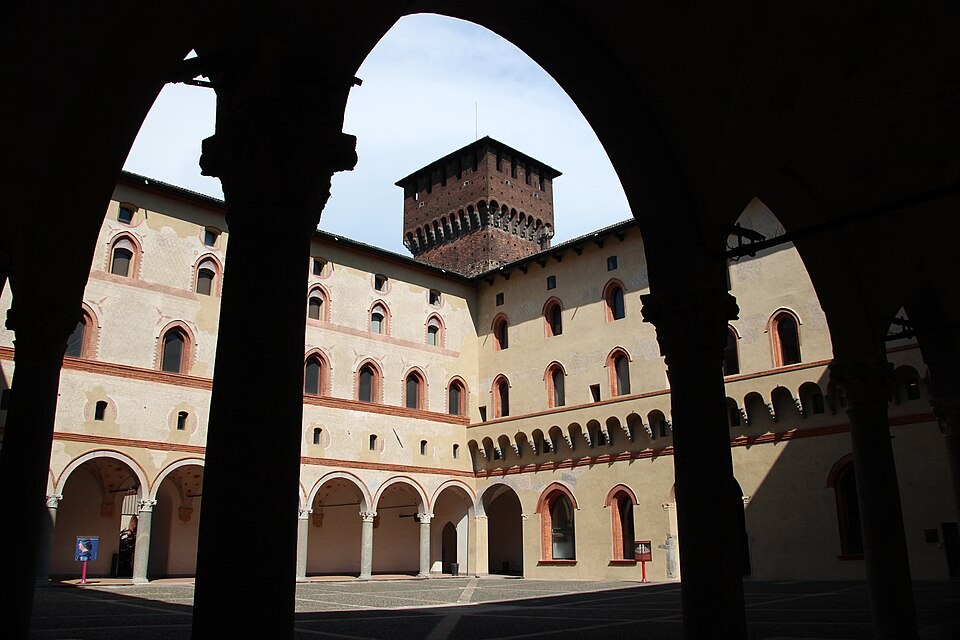
At Sforza Castle, it is easy to imagine a city boundary, even though modern Milan has expanded far beyond it. Towers, a moat and thick walls speak about defence. Look into the courtyards, however, and the fortress also begins to resemble a palace. Its rulers needed to display power as well as protect it.
The earliest fortress here belonged to the Visconti dynasty. Political upheaval in the middle of the fifteenth century brought partial demolition. After taking control of Milan, Francesco Sforza rebuilt the stronghold. The name of his dynasty became the name by which the castle is known today.
Later rulers developed it into a prestigious court residence. Ludovico Sforza, known as Il Moro, is especially associated with that period. Leonardo da Vinci and Bramante worked in his Milan. Behind the military walls were not only soldiers and stores, but artists, court ceremonies and ambitious decorative projects.
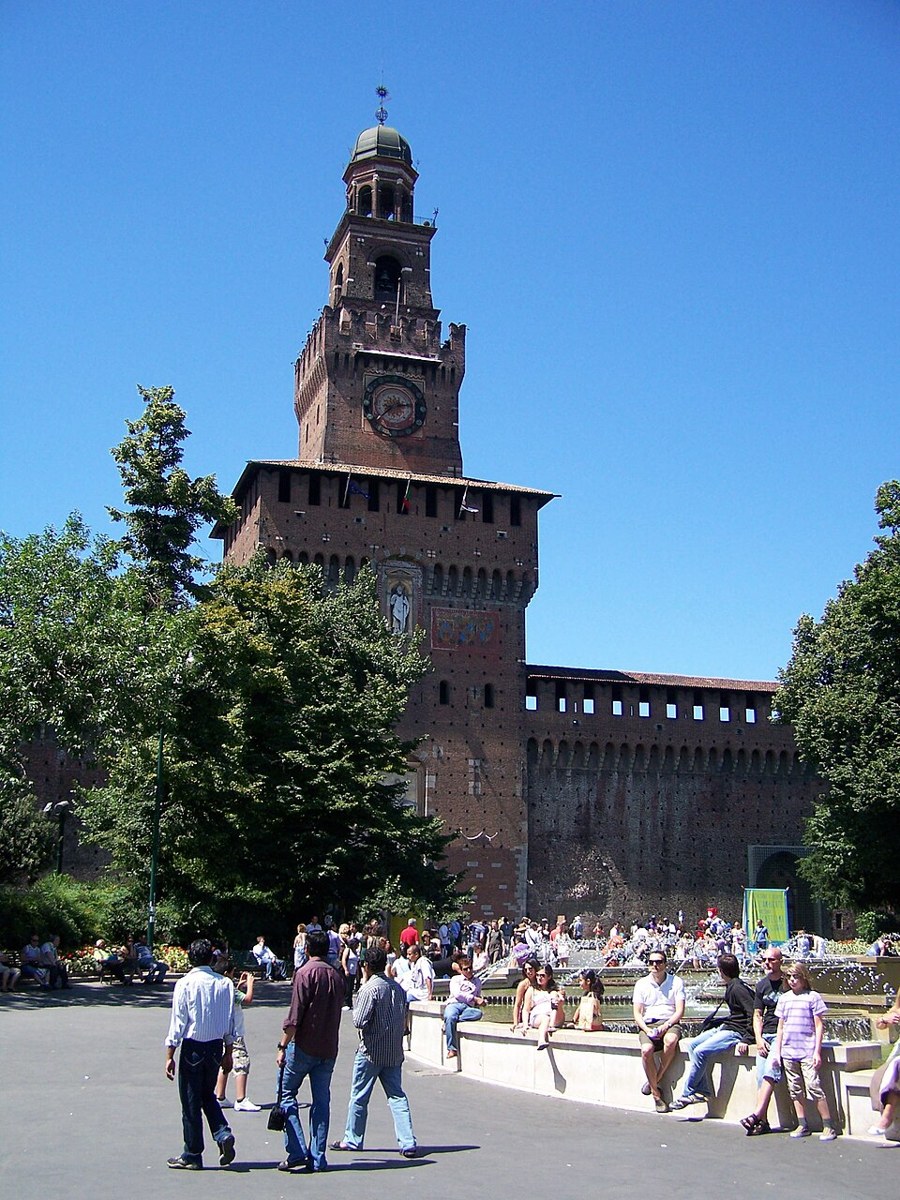
Find the tall central entrance tower. It is called the Filarete Tower after the architect who designed its Renaissance predecessor. The structure in front of you is not, however, an untouched survival from his lifetime. An explosion destroyed the earlier tower in the sixteenth century. The familiar skyline was recreated in a restoration led by Luca Beltrami around the turn of the twentieth century.
That detail changes the way the whole ensemble can be read. The castle is both an old monument and the result of a deliberate effort to preserve civic memory. Restorers studied documents and images, investigated later alterations and made choices about which historical appearance to recover. What looks like a naturally surviving past may have required considerable research and interpretation.
After its time as a ducal residence, the castle served for centuries as barracks under foreign rulers. In a united Italy, it gradually became a museum complex. A place once designed to separate the ruler from the population acquired a public cultural purpose.
During your walk, compare the exterior with the spaces beyond the entrance. Outside, the architecture emphasises barriers and control. Inside, courtyards, arcades and windows organise a succession of places in which people can pause. You do not have to visit every collection to notice that change of atmosphere. Sforza Castle tells the story of its dukes, but also of a city finding a new use for a place that once represented distant, exclusive or unwelcome authority.
Learn more
Filarete was the professional name of the Florentine architect Antonio Averlino. His name remained attached to the tower, although Luca Beltrami designed the structure seen today much later. Historic images, including details preserved in works of art, informed the reconstruction. The tower therefore offers a useful question about authenticity. Do we mean original material, an earlier silhouette, or a documented design? There is no single easy answer. The important distinction is between surviving fabric and later reconstruction, while recognising the wider work that saved the castle for the city.