LISTEN TO THE PLACE
A story worth knowing
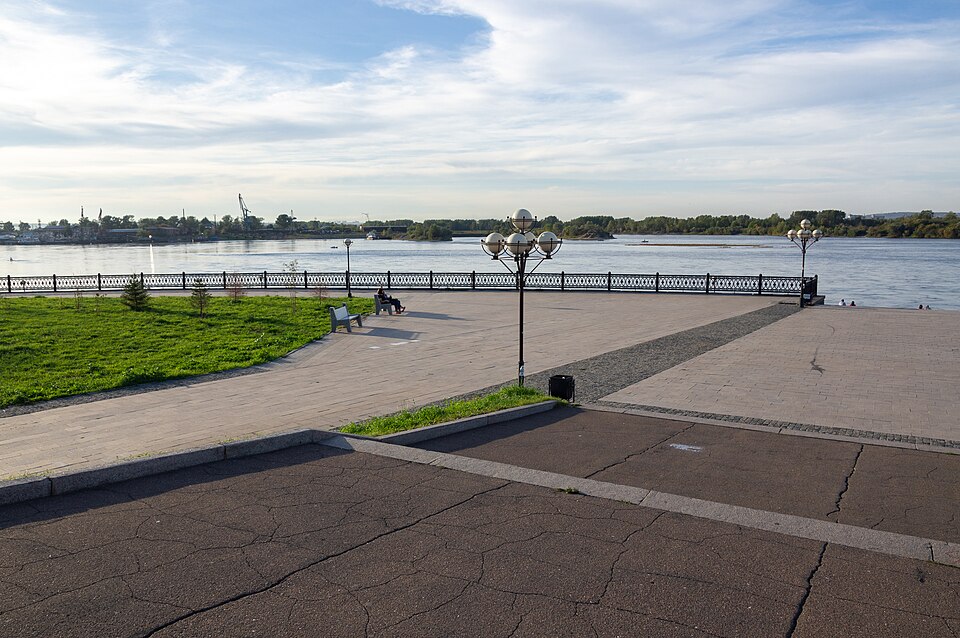
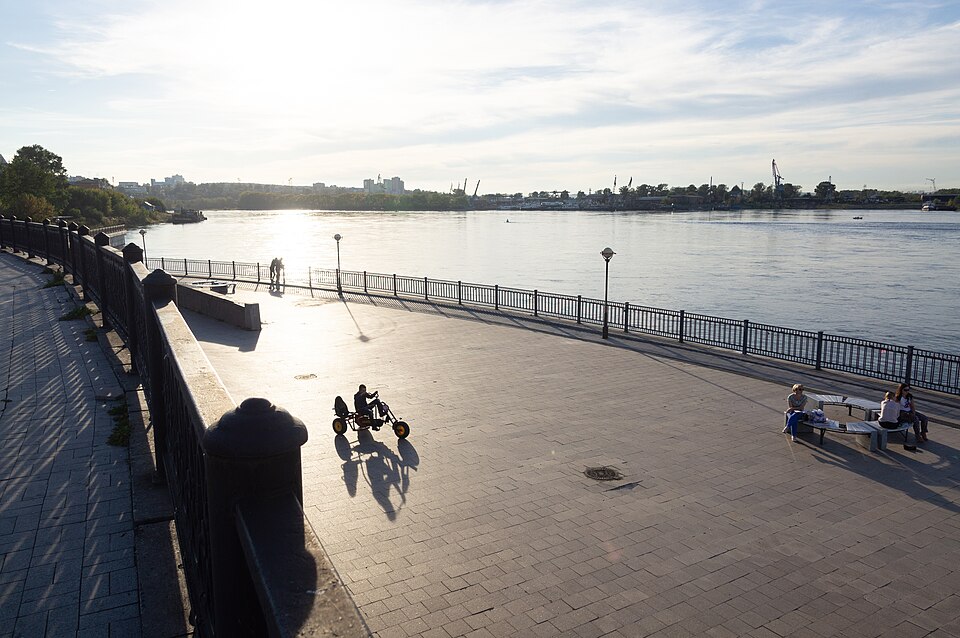
The river in front of you is the Angara. Even if you have not yet travelled from Irkutsk to Lake Baikal, you have already encountered its water: the Angara is the only river flowing out of the lake. It eventually joins the Yenisei. Here on the city waterfront, that large geographical connection becomes immediate and visible.
The Lower Embankment runs beside the area where Irkutsk began. A wooden fortified settlement was established here in 1661, and a town developed around it. The fort itself has not survived. Today's landscaped riverfront is therefore not an unchanged seventeenth-century scene. Its earlier history must be read through surviving buildings, plans and later memorials.
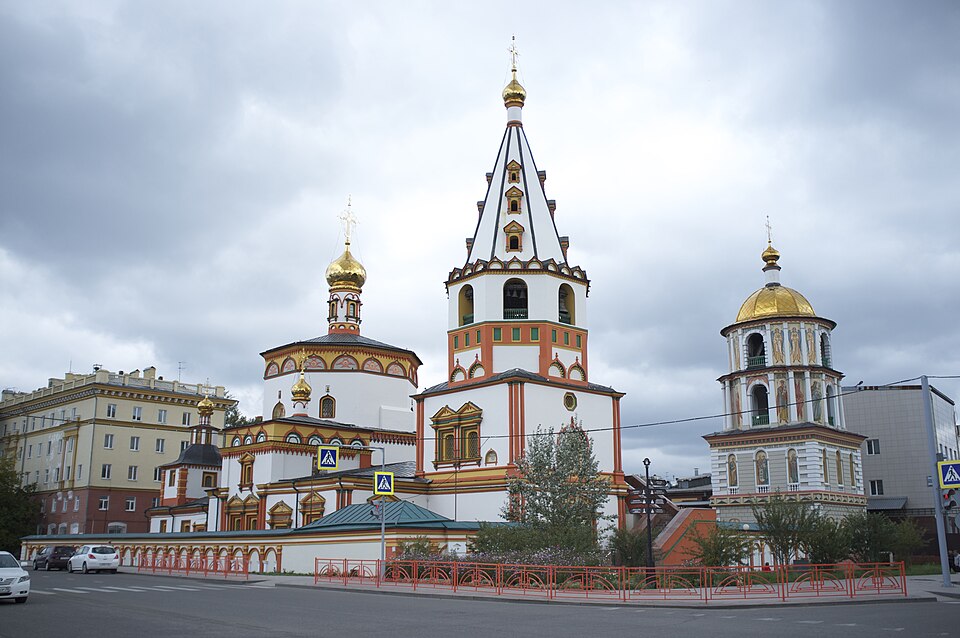
The Saviour Church and Epiphany Cathedral are important landmarks nearby. They help suggest the old city's relationship with the river. Look beyond their architecture to the space between the buildings and the water. For an early settlement, the shore meant arriving people and cargo, communications and everyday work. What we enjoy as a view once had an immediate practical role.
The word “Lower” distinguishes this stretch from other embankments in Irkutsk. They do not form one small space where every attraction is visible at once. Check the map when choosing your next stop: an address on an embankment may still be some distance away.
One conspicuous feature here is the Moscow Gate. The present arch was recreated in 2011 using historical material. It restores a lost architectural image to the city, but it is not an entirely surviving old structure. Once again, a walk through Irkutsk involves distinguishing what endured from what was reconstructed to commemorate it.
Beside the water, the city feels different from its closely built streets. A longer horizon opens, revealing the opposite bank and movement on the river. For a moment, stop searching for separate sights and think of Irkutsk as a settlement beside a major waterway. The Angara links it to Baikal while also leading onwards into Siberia's vast river network.
From a comfortable spot, follow the direction of the current with your eyes, then turn towards the city. Between those two views lies the embankment's central story: a natural route and the human effort to make a lasting home beside it. Buildings and streets changed, while the river remained a reference point for understanding the place.
Learn more
The Angara also has a famous life in legend. In one widely told version, old Father Baikal tries to keep his daughter Angara with him. She loves the Yenisei and escapes, so her angry father throws a rock after her. The story is associated with Shaman Rock at the Angara's source near Listvyanka.
This is folklore, rather than a geological explanation. It turns the relationship between lake and rivers into a story of separation and choice. The Angara really does flow from Baikal towards the Yenisei; the legend gives that geography human emotions.
Do not look for Shaman Rock beside this embankment in Irkutsk. It stands at the river's exit from the lake, and it is also distinct from Shamanka Rock on Olkhon Island. Similar names refer to different places. Here, the river itself carries Baikal's water onwards, accompanied by stories people have attached to it.