LISTEN TO THE PLACE
A story worth knowing
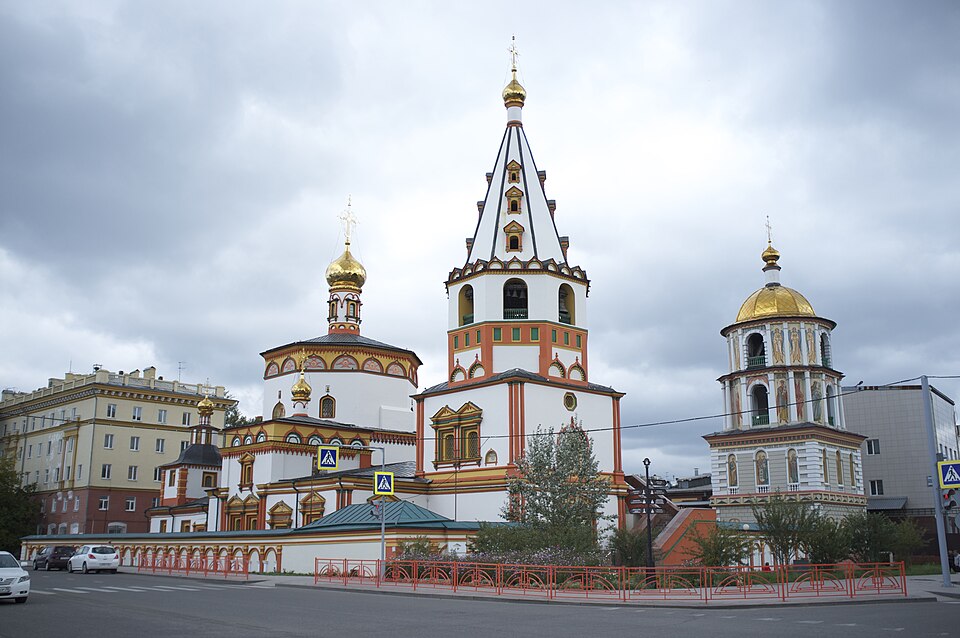
At the Epiphany Cathedral, you may want to examine the decoration before asking about dates. Coloured details, window surrounds and ornamental bands stand out against pale walls. The open space of the Angara helps reveal the building's outline. Behind this cheerful appearance, however, lies a complicated history of prolonged construction, earthquakes and even bakery production.
Work on the stone church began in 1718, following the fire that destroyed its wooden predecessor. Different parts were completed and consecrated at different times. A single date in a guidebook therefore cannot describe the creation of the whole ensemble. The cathedral developed over centuries rather than appearing in its present form all at once.
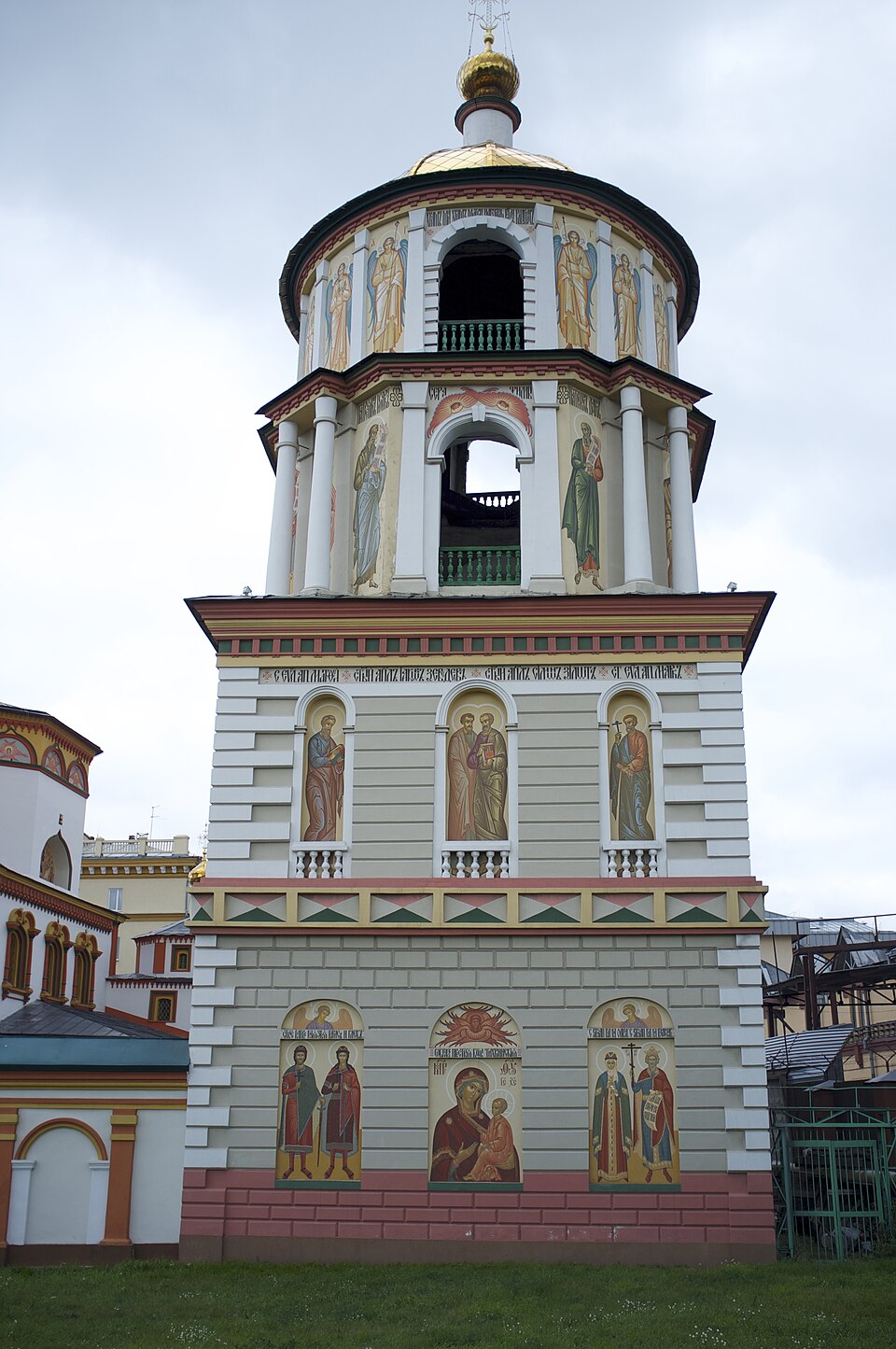
Try separating its components with your eyes. The main church, additions and bell towers form a varied composition. Traditional Russian church forms meet a local enthusiasm for elaborate decoration. Choose one window and follow its entire surround: ornament here changes the character of the wall, instead of acting as an isolated picture attached to it.
Glazed ceramic tiles make a particularly distinctive contribution. Their sheen and relief differ from painted plaster. Yet not every decorative feature has survived unchanged from the eighteenth century. Restoration played a major role in the appearance we see, replacing lost elements through research and surviving examples.
Earthquakes also altered the cathedral. The tent-shaped top of the older bell tower, lost in the eighteenth century, was reconstructed during restoration. Its familiar outline is therefore evidence of investigation and rebuilding, rather than the uninterrupted survival of every original component.
During the Soviet period, the building accommodated confectionery production and residential space. That use may be difficult to imagine when looking at the church today, but it belongs to the same history. A major restoration campaign ran from the late 1960s into the mid-1980s. Architect Galina Oranskaya was an important figure in the preservation of Irkutsk's monuments.
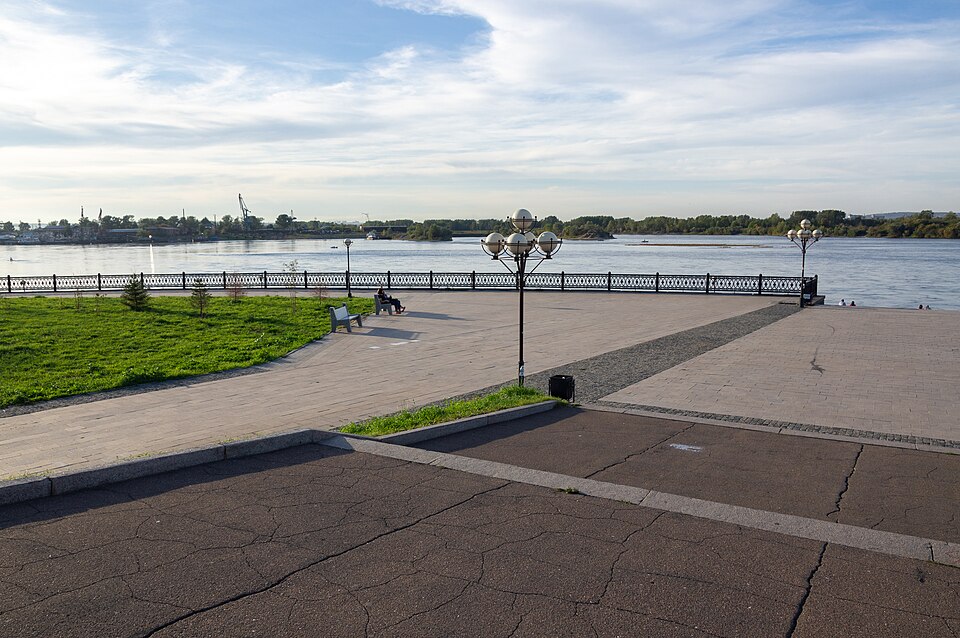
The cathedral is again an active church. From the embankment, try holding two impressions together: the beauty of the present building and the labour involved in its survival. Its history includes people who altered, reused, studied and repaired it. Even a small coloured detail on the façade can lead into that much longer story.
Learn more
Traditional Russian architectural tiles are more than flat pieces of coloured decoration. They have a box-like structure on the back that helps anchor them into masonry. From outside, we see only the face, which may be moulded in relief and covered in glaze.
Artist Alexey Shtanko contributed substantially to restoring the cathedral's ceramic decoration. Replacing missing pieces required more than painting a convincing pattern: forms had to be recreated, tiles manufactured and the firing process controlled.
Look at a repeated ornamental band. Repetition appears effortless, but each component represents a sequence of skilled operations. An incorrect size could interrupt the pattern, while a different glaze could alter its colour. The decoration thus records two kinds of work: the original makers' design and the later effort to recover the damaged building's character.