LISTEN TO THE PLACE
A story worth knowing
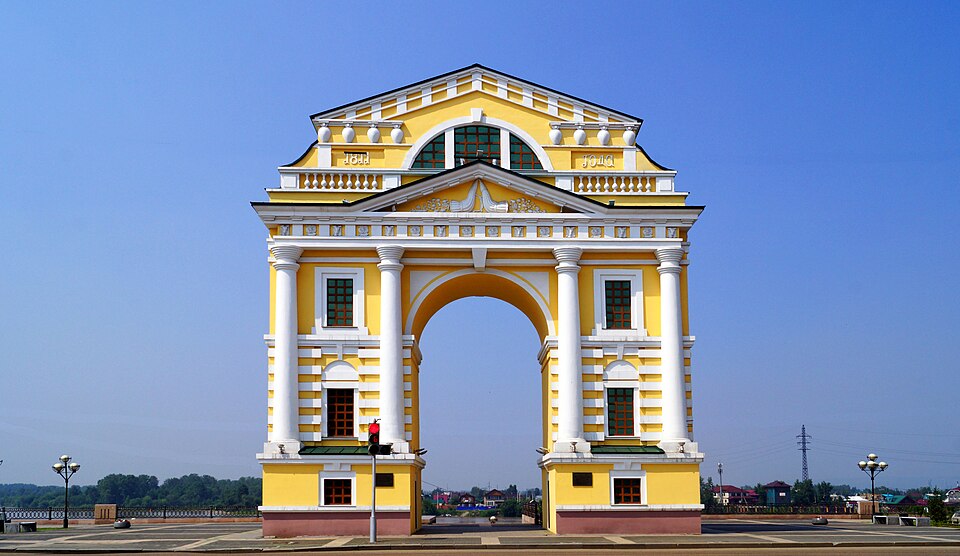
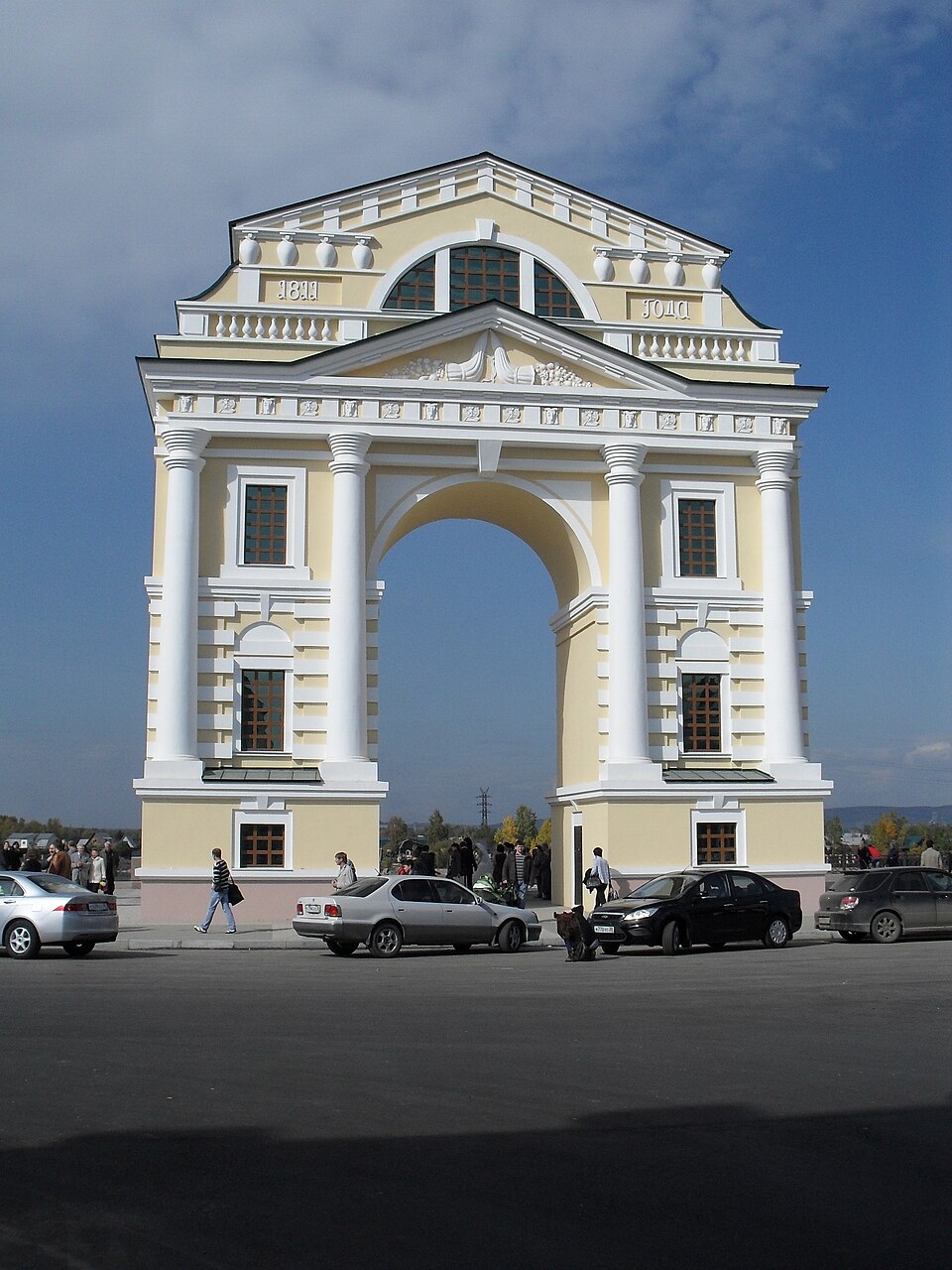
Why does Irkutsk have a Moscow Gate? The name refers to the direction of travel. This was an exit towards European Russia along the Moscow road, preserving the memory of a city where long-distance journeys were part of everyday life.
The original arch was begun in 1811 to mark ten years of Alexander the First's reign and opened in 1813. It combined ceremony with practical rooms. It was not a flat stage decoration: people worked inside, including staff associated with the city checkpoint, and it later housed an archive.
As the structure deteriorated, a debate over preservation developed in the early twentieth century. The old arch was eventually lost. What you see today is a reconstruction completed for Irkutsk's anniversary in 2011. The age of the historical story and the age of the present walls are two centuries apart.
Look at the proportions and the large opening. The arch marked a transition between the city and the long road beyond. The transport environment has changed, but the idea of a city threshold remains understandable.
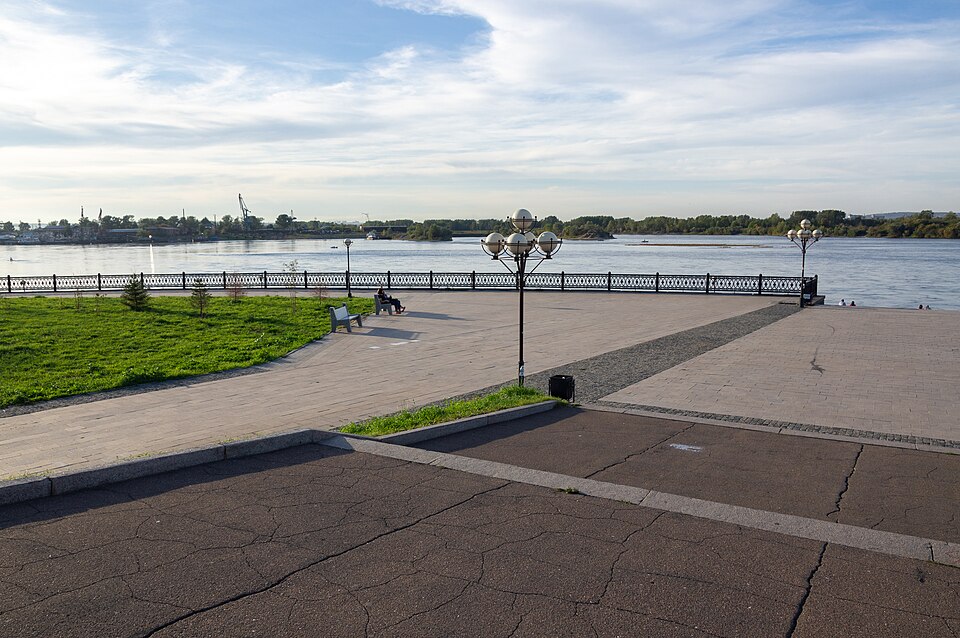
The Angara is nearby. River and road together recall the movements that shaped Irkutsk: trade, administration, migration and exile. Some people travelled by choice; others did not.
Imagine an ordinary homecoming rather than the ceremonial opening. After a long journey, a recognisable arch signalled arrival. The modern reconstruction restored that kind of landmark even though the old network of roads and checkpoints had disappeared.
Learn more
A reconstructed monument is best appreciated with its status clearly understood. It can restore a silhouette, a view and a historical theme without becoming original nineteenth-century masonry. Moscow Gate is significant both as a reminder of the imperial period and as evidence of what present-day Irkutsk chose to recover within its urban identity.