LISTEN TO THE PLACE
A story worth knowing
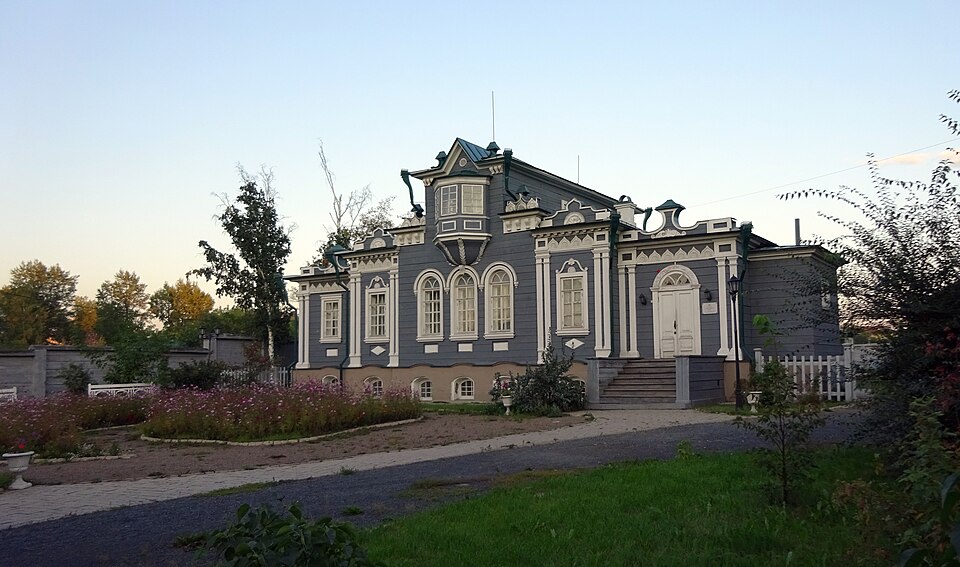
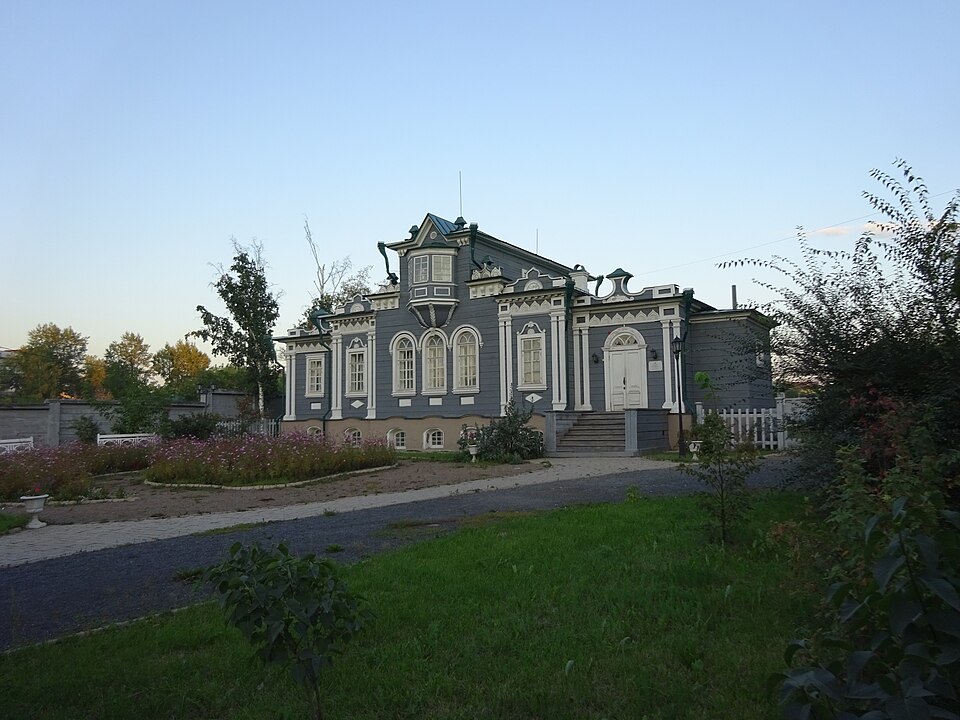
This wooden house once made a journey of its own. Built in 1838 in the village of Urik, it belonged to the family of the Decembrist Sergei Volkonsky during his enforced settlement after penal labour. When permission came to move to Irkutsk, the building was dismantled and transported. By 1847 it had been reassembled here. It is therefore more than a famous address: it took part in the family's relocation.
Volkonsky was an aristocrat and a major-general involved in the Decembrist movement, whose members challenged the imperial order in 1825. His wife Maria followed him to Siberia. Yet that familiar summary can conceal the decades that followed: raising children, arranging a household and building relationships in unfamiliar surroundings. The house brings a national political story down to the scale of daily life.
Notice the combination of formality and material. The design recalls a noble residence, but the building is timber. Two projecting bay windows distinguish the upper floor. This is not a metropolitan palace simply reproduced without alteration. It reflects the effort to create a recognisable domestic world under changed circumstances, retaining some habits while adapting to a new place.
The museum collection includes musical instruments associated with Maria Volkonskaya, among them a Lichtenthal grand piano and an unusual pyramid piano. Music broadens the story of exile. It recalls skills, tastes and activities that can disappear when a biography is reduced to a political event. Beside documents recording a person's fate, an instrument suggests how that person might have filled an evening.
The building served other purposes after the family left Siberia. A museum opened here in 1985 following a long restoration programme. Some historical interiors have been reconstructed, so the rooms should not all be imagined as untouched nineteenth-century settings. Original personal possessions and restored spaces contribute different forms of evidence.
During the visit, choose something connected with an ordinary action: writing, reading or making music. It can help turn figures from a history book back into people who occupied rooms and organised their days. The Volkonskys' story remains one of forced displacement and hardship. The house also preserves the effort to establish family life in a place where they had never planned to live. That effort, rather than grandeur alone, gives this stop its emotional weight.
Learn more
A pyramid piano has an unfamiliar profile: its body rises upwards, using height rather than spreading across the floor. It is a reminder that musical history includes practical experiments in arranging strings, mechanisms and cases within domestic spaces.
The museum's example is associated with Maria Volkonskaya. Its importance combines unusual construction, the history of its making and ownership by a particular person. Remove the personal connection, and an interesting instrument remains. Keep only the famous name, and the maker's work disappears. Together, those perspectives offer a fuller account.
Look at it as an object intended for use, not merely for display. A player would need a seat in front of it, with space nearby for listeners. Even in silence, that relationship can suggest a small scene of domestic life, without inventing a specific performance that the evidence does not establish.