LISTEN TO THE PLACE
A story worth knowing
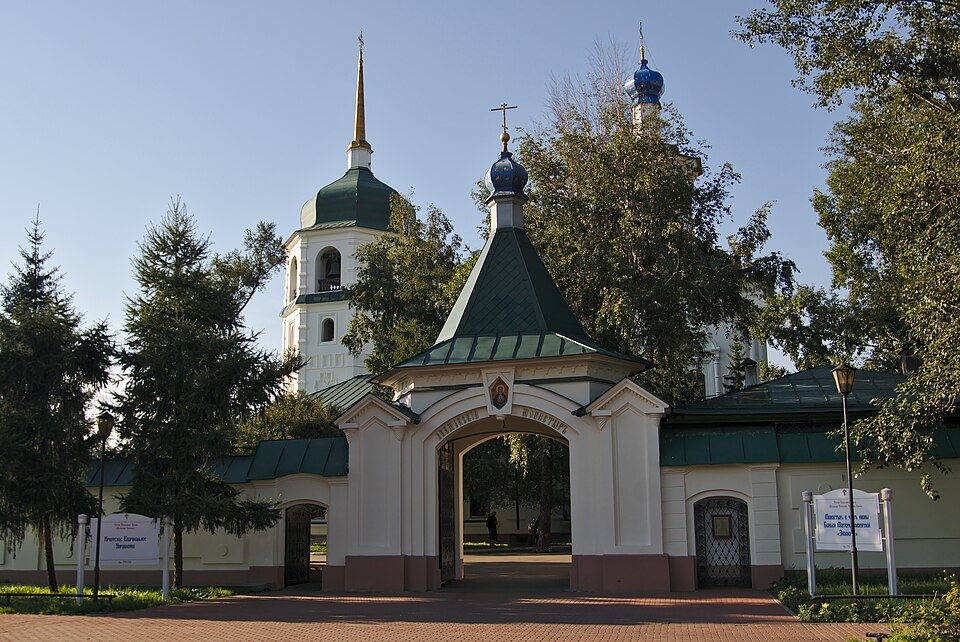
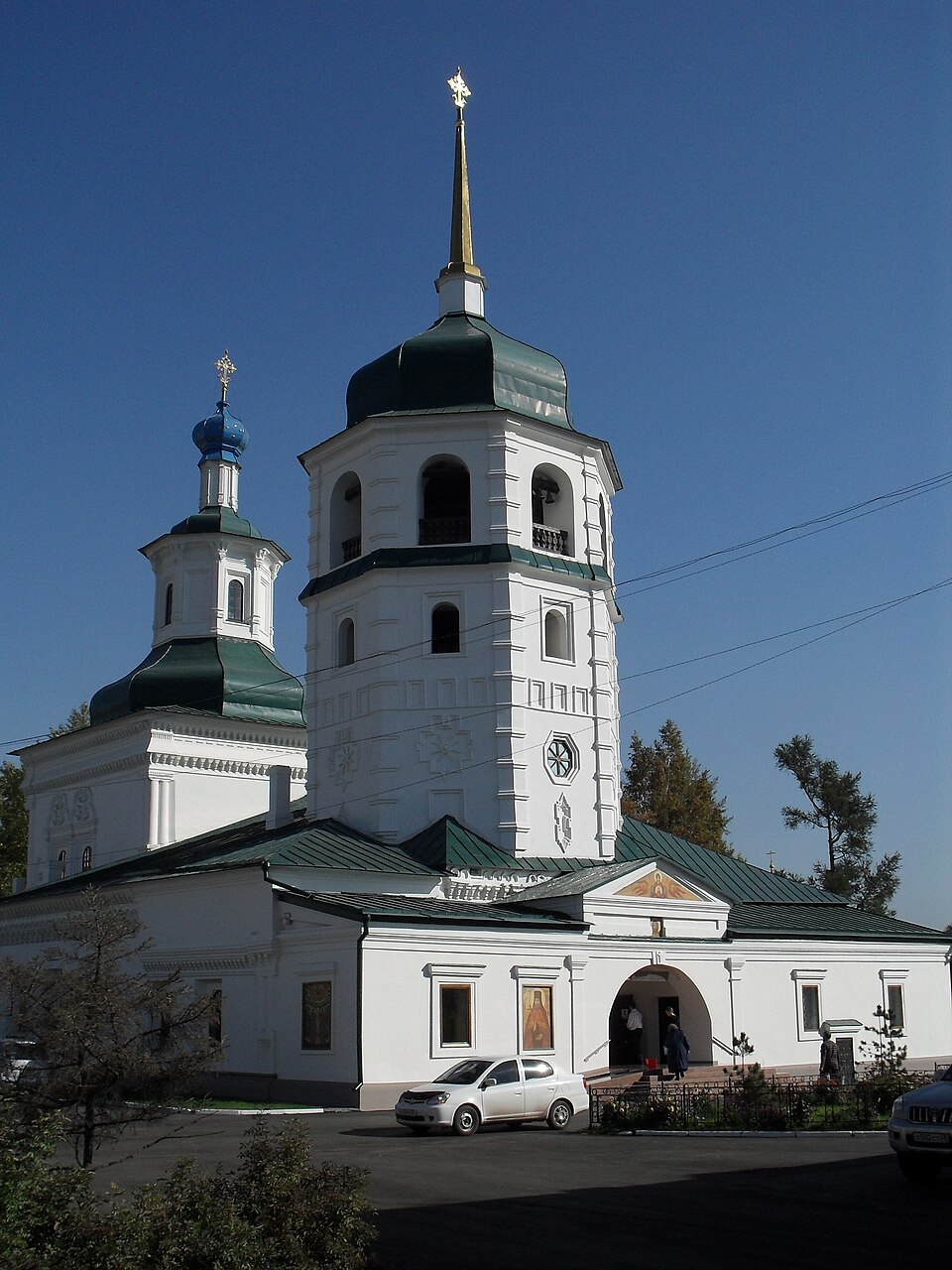
Znamensky Convent stands near the meeting of the Ushakovka and Angara rivers. The location connects it with both Irkutsk and the wider Siberian world. Founded in the late seventeenth century, it is among the region's oldest women's religious communities.
Its earliest buildings were wooden. A stone church appeared in the eighteenth century, and the complex continued to change afterwards. It is not the product of a single year: generations of work, local support and urban change shaped what survives.
Notice the relationship between church and burial ground. History is written here in names as well as domes. Grigory Shelikhov, associated with Russian expansion across the northern Pacific, is buried here, as is Ekaterina Trubetskaya, who followed her Decembrist husband into Siberian exile. Their lives reveal very different paths to Irkutsk.
The twentieth century brought closure and secular use of the buildings. Religious life was interrupted and later resumed. The convent is therefore not a motionless island of the past, but a place marked by breaks and returns.
The surrounding area is also associated with the death of Admiral Kolchak. Memorial traditions should be distinguished from a precise reconstruction of every historical circumstance. Several difficult stories coexist within a relatively small space.
Do not hurry to turn them into one legend. The church, graves and commemorative markers each have their own histories. Reading the names carefully reveals Irkutsk as a meeting point of trade, long-distance travel, exile and personal loyalty.
Learn more
A convent burial ground is more than a list of famous people. It reveals relationships between the city, a religious community and individual families. Look at dates, neighbouring graves and the forms of memorials as well as recognisable names. These remain places of remembrance, so stay on paths and allow space for visitors who have come to mourn rather than to sightsee.