LISTEN TO THE PLACE
A story worth knowing
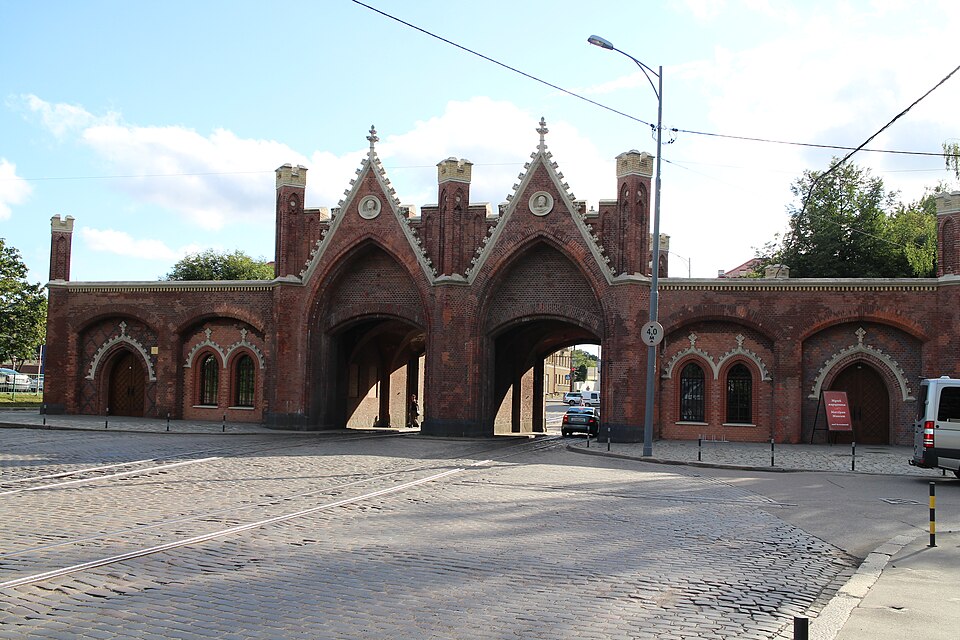
Start by listening to this gate. Instead of museum quiet, you hear the movement of an ordinary street. Brandenburg Gate still carries road traffic, an unusual distinction among Kaliningrad’s surviving city gates. Begin on the pavement where you can see the façade, rather than standing in the carriageway for a photograph.
The name may make you think of Berlin, but the local explanation belongs to another road. This route led towards Brandenburg Castle, near the present settlement of Ushakovo. For someone leaving Königsberg, the gate’s name was a practical indication of direction. What we now approach as a monument once marked a real transition between the town and the road beyond it.
The first gate here was built of wood in 1657. Its materials and appearance subsequently changed. A major remodelling in 1843 gave the structure elaborate architectural decoration. It is therefore better to remember a sequence than a single founding date: an early entrance, later strengthening, and a more ornamental façade. Several building periods contribute to what you see today.
Examine the upper part. Pointed features and decorative details draw your gaze upwards even though the building itself is comparatively low. Below, a different set of shapes does the practical work. Openings receive the street’s movement, while substantial masonry frames it. One compact structure combines two purposes: allowing passage and making an impression.
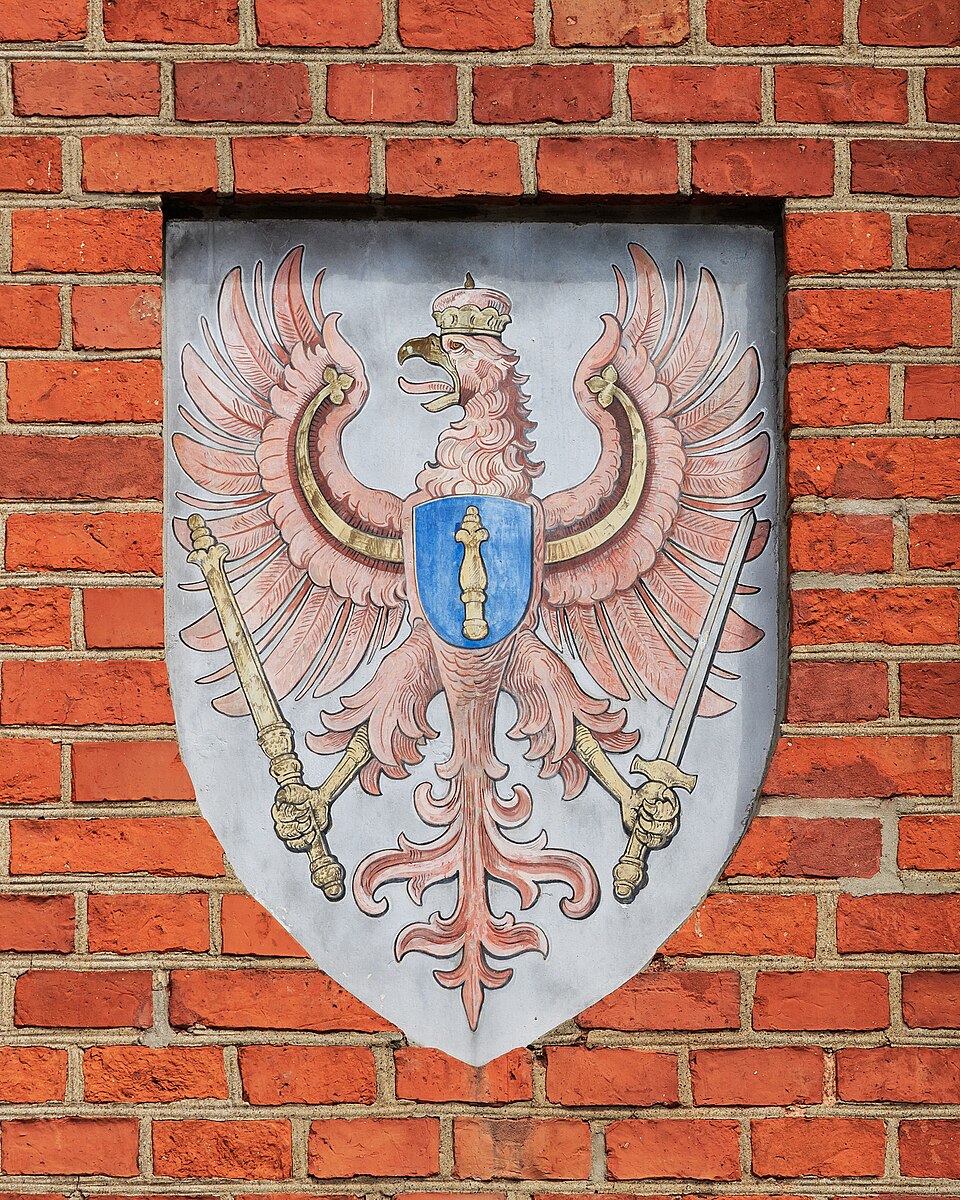
Portrait reliefs of Prussian military figures add another layer. Decoration on a defensive building could communicate ideas about authority and service. To a modern visitor, these faces may initially look like anonymous historic ornament. For people familiar with the figures, the references were more specific, much as names and emblems on public buildings carry meanings today.
The gate now also houses a marzipan museum. Fortifications and sweets seem an unlikely combination, but they belong to different aspects of urban life. A visitor can enter this building for reasons very different from those of a traveller two centuries ago. New uses contribute another chapter without erasing the shape of the old entrance.
Before moving on, mentally remove the surrounding modern city and extend the line of fortifications on either side. The detached brick structure becomes part of a larger system. Then bring today’s street back into the picture. What makes this stop distinctive is not simply a surviving façade: an old architectural form still participates in the everyday movement of Kaliningrad.
Learn more
Why decorate a city gate so carefully? Strength might seem its only essential quality. Yet an entrance met travellers before most of the city’s buildings did. Residents, merchants and visitors passed through it, making it an unusually public place to convey an impression.
You can read architecture as a message. Heavy masonry can suggest protection; symmetry can suggest order; portraits indicate whose memory a society chose to display. This is an interpretive exercise, not a claim that every detail has one fixed official meaning.
Choose a small feature that is difficult to distinguish from farther away. Then move back a few steps along the pavement. The detail will fade, while the overall silhouette becomes clearer. You have encountered two scales of the same building: close attention to a maker’s work and the larger statement of a city landmark. A rewarding walk leaves time for both, instead of reducing the gate to a single photograph.