LISTEN TO THE PLACE
A story worth knowing
Fishing Village has a small secret worth knowing before your first photograph. This is a young waterfront development, although its roofs and façades suggest a much greater age. Construction began in 2006. A useful question for your walk is therefore this: how did modern Kaliningrad choose to present its relationship with the river?
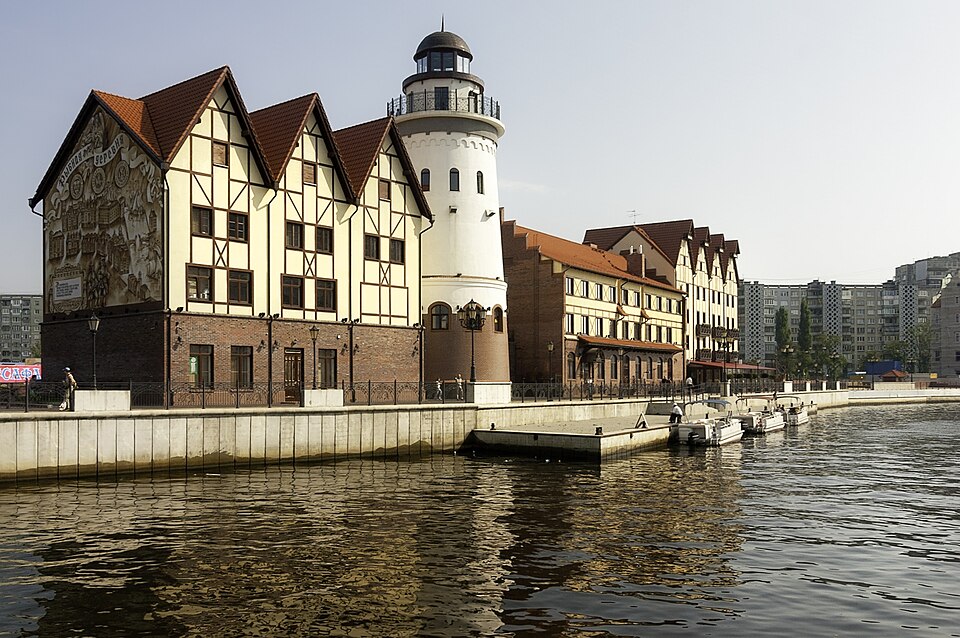
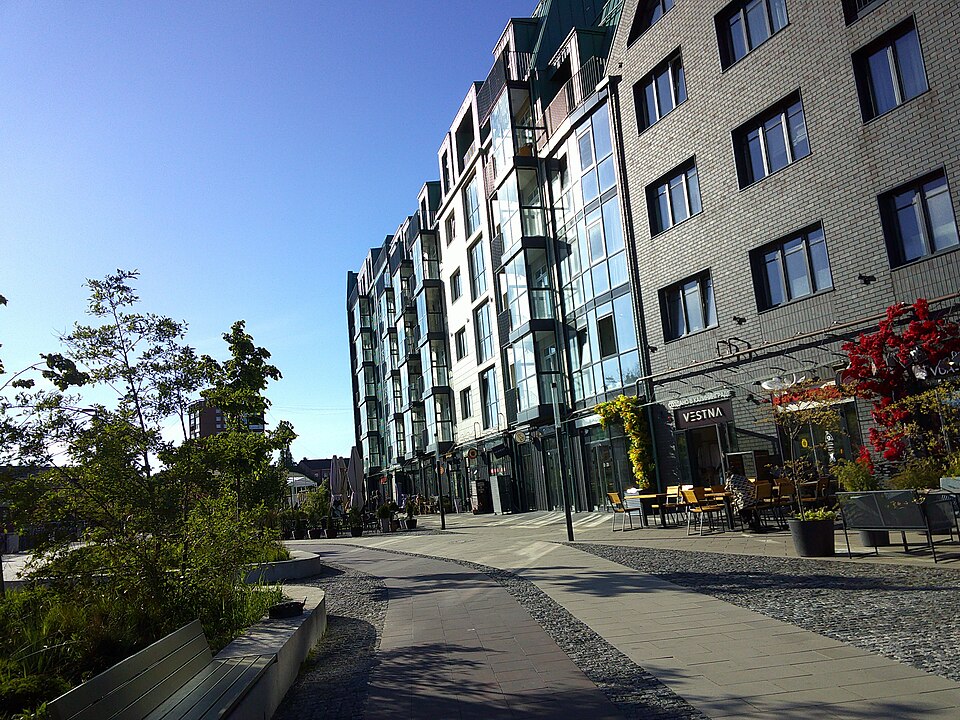
Look along the buildings from the waterside. Your eye moves between separate façades, changing rooflines and a tower, rather than following one continuous block. This rhythm suits walking. After a few steps, another detail takes over. You can move closer to it, then step back into a wider view. The architecture encourages a slower pace, even if you originally intended simply to reach the cathedral.
The development was planned for tourism and business, with hotels, restaurants, landing stages, an information centre and a viewing tower called the Lighthouse. That name might suggest an old maritime function. Yet the construction documents identify it as a viewing tower. Its purpose is to offer a different height from which to experience the city. Its convincing appearance does not require an invented career guiding historic ships.
At the embankment, the Pregolya River becomes part of the composition. Water leaves an open space that no shop window or sign can occupy. The cathedral stands across it, reflections move below, and boats pass beside stationary buildings. You can remain in one place and see several different pictures as the light changes or something moves along the river.
The waterfront also grew in stages. Project records date the tower, information centre and river terminal to 2007, with other buildings following later. What now looks like a single ensemble developed gradually. Imagine the embankment with a few façades missing: it becomes easier to appreciate how much the whole scene depends on relationships between neighbours.
You can enjoy this place without assigning it an ancient age. Admiring the rooflines or having coffee beside the water is entirely compatible with knowing when the development appeared. Architectural pleasure and historical authenticity are different questions, and both can have a place in the same walk.
Try taking two photographs: one of Fishing Village itself, another of the open water and cathedral. The first records a modern image of Kaliningrad. The second shows how that image connects with the opposite bank. Together, they tell a more interesting story than pretending this is an untouched street that somehow survived from old Königsberg.
Learn more
Consider the Lighthouse tower as a landmark rather than an isolated building. Height alone does not make a useful landmark. Its position, neighbouring roofs and visibility from different directions matter too. Walk a short distance along the river and notice how its relationship with the cathedral changes.
We often remember cities through pairs like these: a tower and a bridge, a dome beside water, a high roof at the end of a street. Such relationships can help us navigate even after street names have disappeared from memory.
Try looking away from your map for a moment while remaining on the pedestrian path. Choose a conspicuous landmark and work out which direction your next stop lies in relation to it. Then check the map. A pleasant view has become practical knowledge of the city. Remember, however, that a destination visible across the river may require a longer walk to the nearest suitable bridge.