LISTEN TO THE PLACE
A story worth knowing
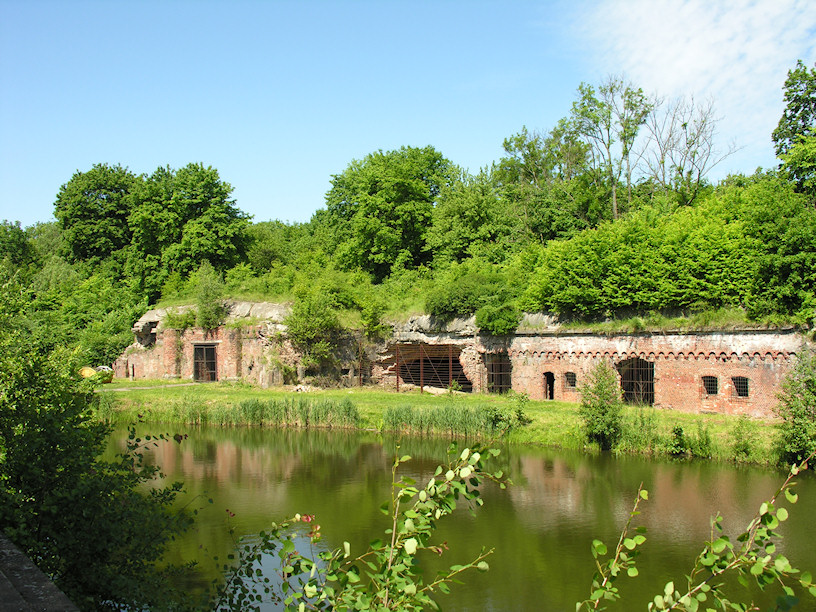
This monument has almost no grand façade. A fort was meant to disappear into the landscape, not announce itself from a distance. Earth, vegetation and a low outline all contributed to its protection. It was designed for a very different kind of warfare from the tall towers of a medieval castle.
Fort Number Five was built in the late nineteenth century and named after King Frederick William the Third of Prussia. It formed part of Königsberg's outer defensive belt. The separate forts were intended to support one another with their fire and keep attackers away from the city. Think of this structure as one link in a larger system rather than an isolated fortress.
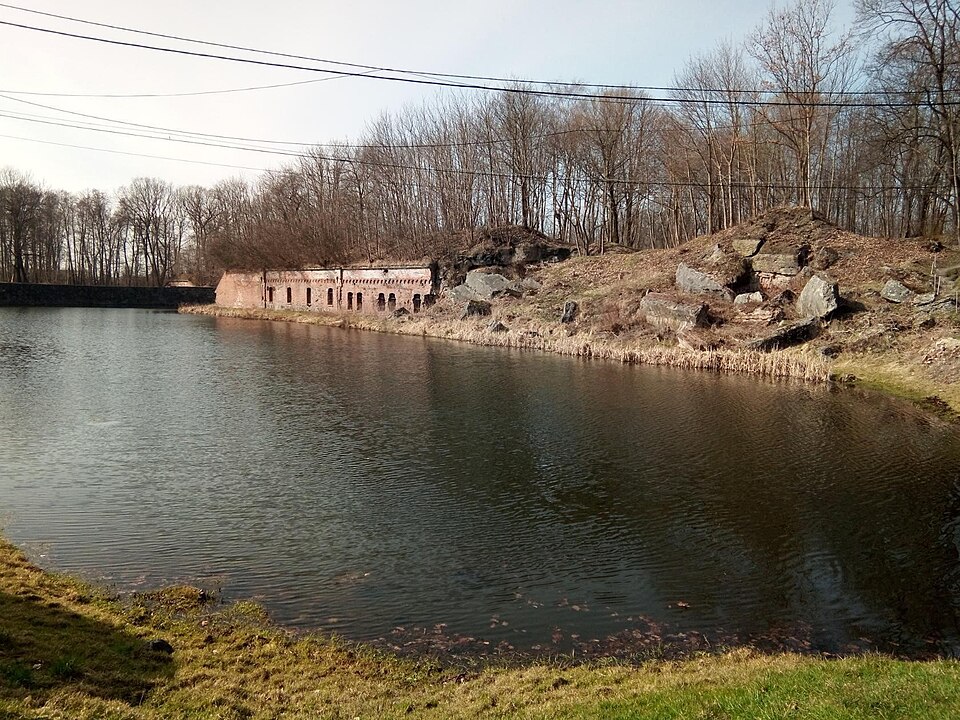
Notice the moat and the thickness of the defences. Behind them were accommodation for the garrison, stores and passages, protected from above by earth. Improvements in artillery repeatedly forced military engineers to strengthen existing structures. Weapons and defences were engaged in a continuing race, sometimes making a recent building seem outdated within a surprisingly short time.
The fort's most difficult chapter came in April 1945, during the Soviet assault on Königsberg. Its defences resisted heavy bombardment. Assault groups had to cross the water-filled moat and break through the protected positions. The remaining garrison surrendered on the morning of the eighth of April. Fifteen Soviet participants in the fighting for the fort received the title Hero of the Soviet Union.
The surviving damage gives this place a gravity that a pristine reconstruction could not provide. The story concerns both engineering and the human cost of overcoming it. Follow the designated visitor paths rather than exploring broken structures or the moat. Before leaving, look back at the low earth-covered outline. The fort's most revealing feature is its original effort not to be seen.
Learn more
A casemate is a protected chamber within a fortification. Depending on its position, it might house people, supplies or a weapon. The earth covering the brick and concrete was not simply material left over from construction: it formed part of the defence against shells. A photograph of a single wall therefore tells only part of the story. To understand a fort, look at the ground levels and imagine the structure in cross-section.