LISTEN TO THE PLACE
A story worth knowing
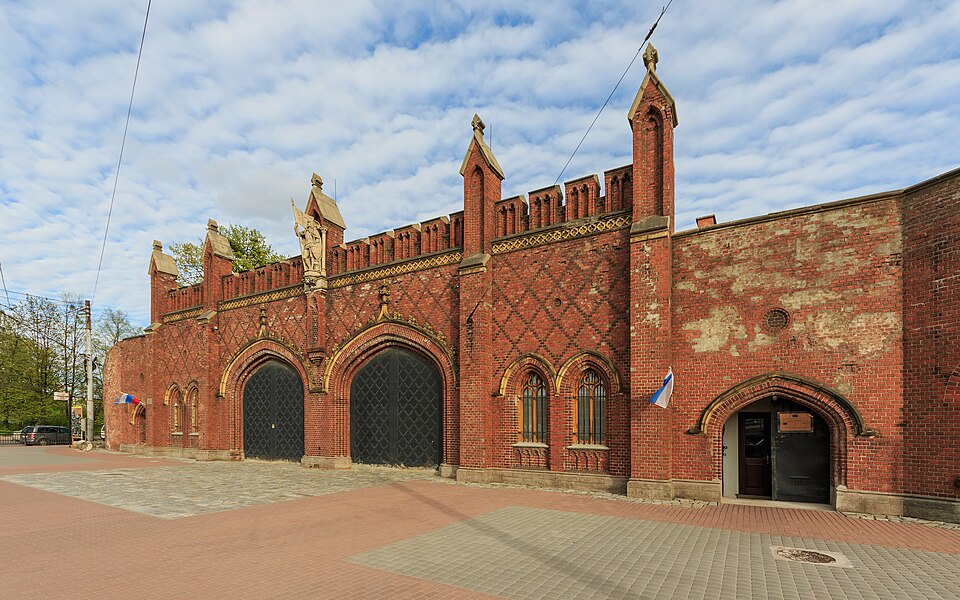
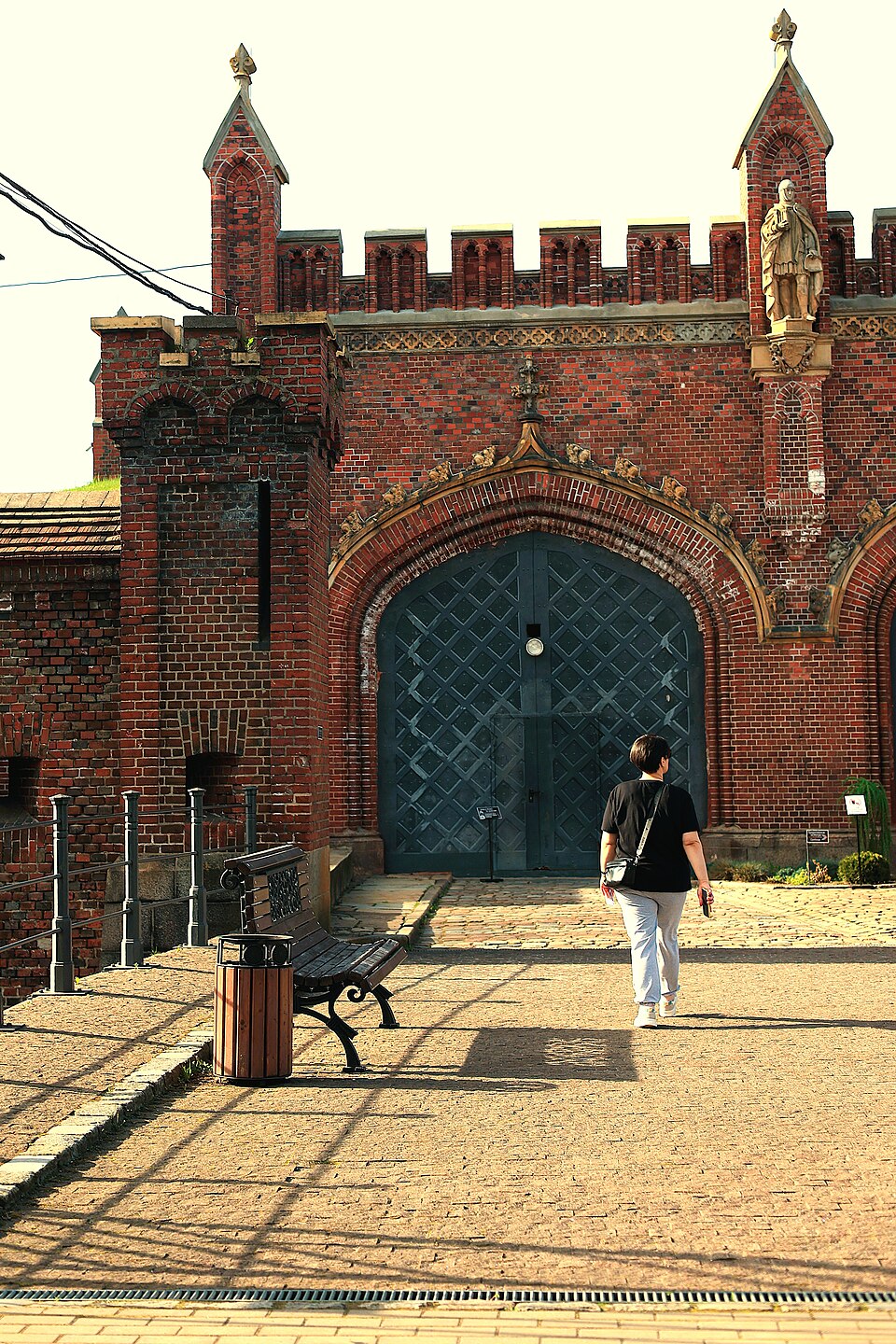
Friedland Gate offers a way into the everyday history of old Königsberg. Its name came from the road towards Friedland, now called Pravdinsk. A city gate was both a defensive opening and a useful signpost: this was where the journey to a neighbouring town began.
The surviving building dates from the middle of the nineteenth century. Its precise construction dates and architect are not firmly established, so assigning it one certain year or designer would be misleading. Its architectural language is much easier to read: red brick, pointed arches, projecting supports and decorative battlements. Together they suggest a medieval building, although the structure is considerably younger.
Find the two passages in the central section. Protected rooms occupied the spaces on either side. Notice how the vertical projections divide the long façade into smaller parts. They give a practical military structure an almost ceremonial appearance, something that travellers entering the city would recognise and remember.
By the early twentieth century, the old defensive belt no longer suited a growing city. The road was redirected beside the gate and the arches lost their transport function. The building remained, but everyday traffic flowed around it. Here a change in the street network is visible in the biography of a single structure.
After the war, the gate was used for storage. Later, objects uncovered during work in neighbouring South Park helped form a museum collection. Everyday possessions brought back the memory of people who seldom appear in stories about kings and battles. Try imagining the gate as part of an ordinary day rather than an empty monument: a road, passing residents, goods arriving, and the city beginning beyond the arch.
Learn more
Gate names once served as a practical navigation system. They could identify a road's destination, a nearby suburb or a route associated with a ruler. Friedland Gate retains its older name even though Friedland is now Pravdinsk. Such names can be read as miniature historical maps. They preserve connections between places that are not immediately obvious when travelling through the modern city.