LISTEN TO THE PLACE
A story worth knowing
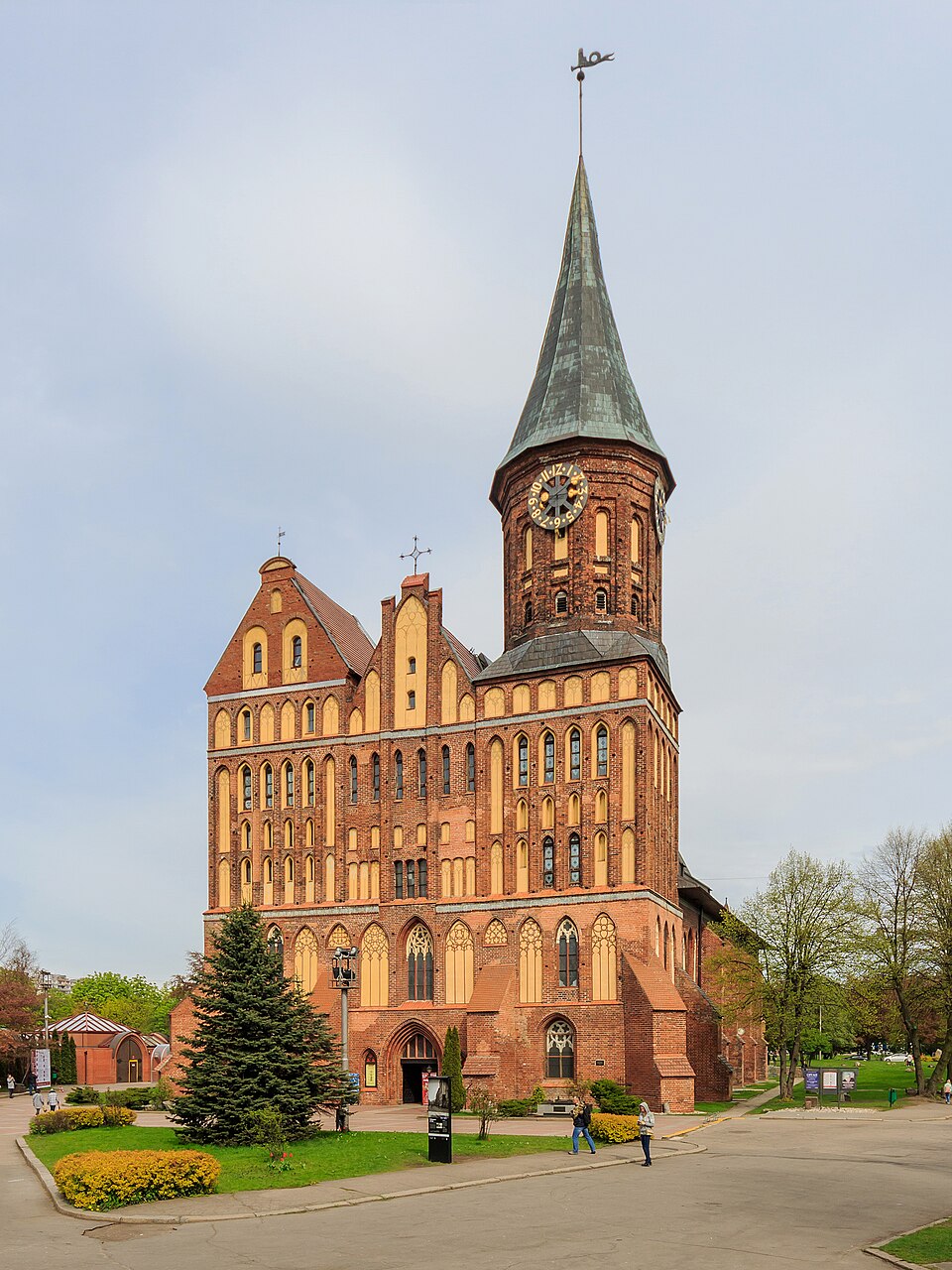
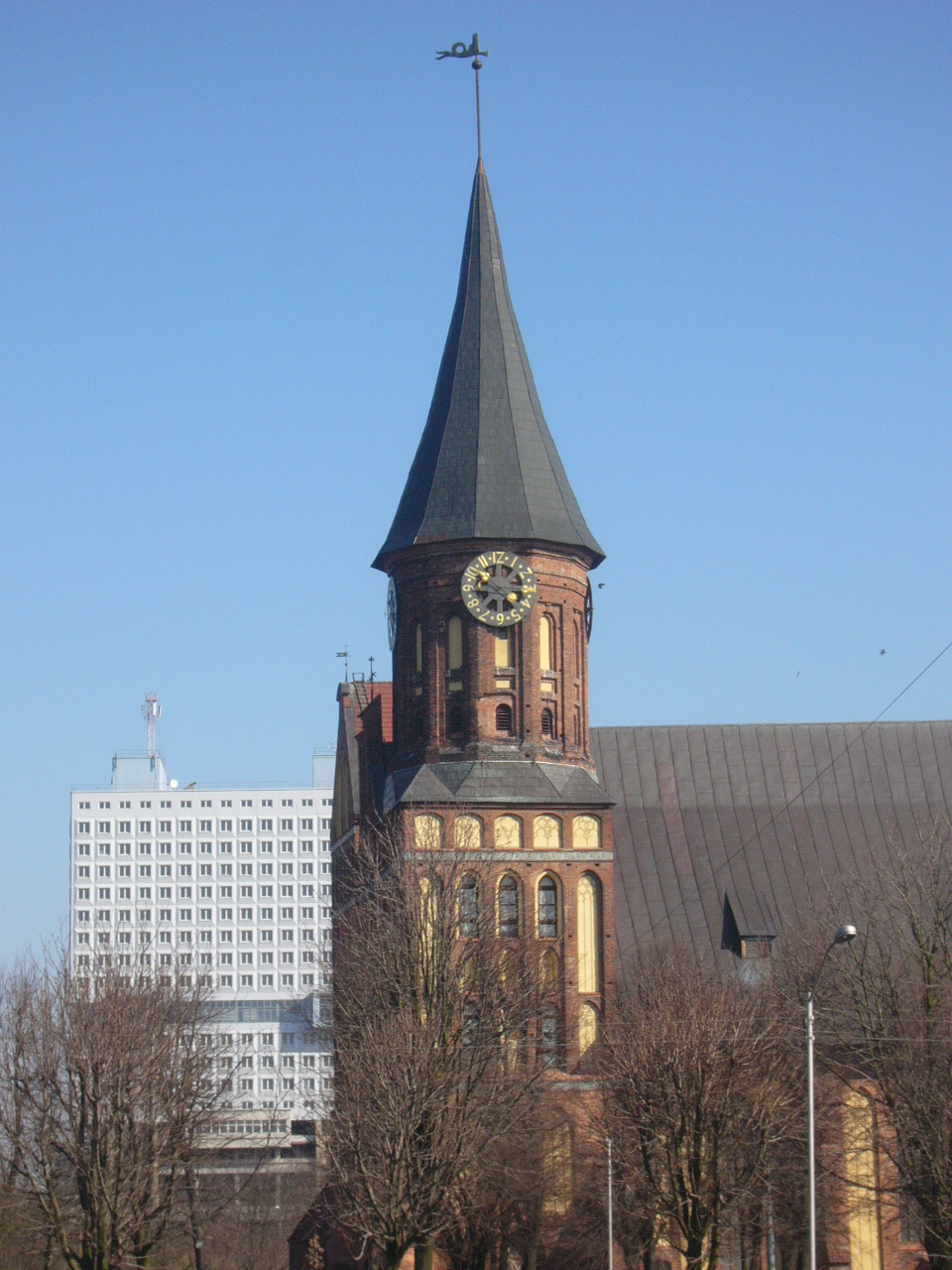
The cathedral has an unexpected setting. Trees and open ground surround a building that once belonged to a densely built island town. Its apparent solitude was never the original plan. This is the main surviving landmark of Kneiphof, the island district of old Königsberg. To picture its earlier life, imagine houses and busy streets much closer to the walls.
The cathedral dates its foundation to 1333. Red brick gives the building its character, while tall windows and elongated forms place it in the Gothic tradition. It began as a Catholic cathedral and became Protestant during the Reformation. Worship changed, generations came and went, and the building remained a principal reference point on the island.
One of its best-known neighbours is a philosopher rather than a ruler. Immanuel Kant, who died in 1804, is buried beside the northern wall. His name connects the cathedral with the university and the history of European thought. Visitors therefore arrive with different intentions: some to see the architecture, others to spend a quiet moment at his tomb. Those experiences are only a short walk apart.
British air raids in August 1944 left the cathedral burned out, with parts of its vaulting collapsed. For decades, its walls enclosed a ruin exposed to the weather. Picture the sky where the roof now stands. Restoration during the 1990s began to recover the building's complete outline. The cathedral before you therefore brings together medieval origins and the much more recent work of reconstructing a devastated monument.
It now functions primarily as a concert and museum complex. A building originally made for a religious community has acquired a further public life through music and exhibitions. An organ concert offers another way of understanding the architecture: sound fills the volume that you can only estimate from outside. The building becomes something to hear as well as something to photograph.
Look at the western front as a whole. Its asymmetry gives it an individual silhouette rather than a perfectly repeated pair of halves. Then follow the long side wall with your eyes. These two views show the difference between a familiar postcard emblem and a substantial building that occupies real ground.
The story here is one of return to use. The surrounding lost town has not simply reappeared, but the cathedral links medieval construction, university life, wartime destruction and present-day Kaliningrad in a single place. Allow those different periods to settle into the same view before continuing across the island.
Learn more
Kant's tomb has an architectural history of its own. The portico over it was built in 1924 to mark the two-hundredth anniversary of his birth. Its architect was Friedrich Lahrs. The memorial is therefore much younger than the cathedral and was never part of its original medieval design.
Notice the change of scale. The cathedral announces itself across the island, while the philosopher's memorial offers a smaller place at which an individual can stop. A whole building and the memory of one person occupy adjoining ground without making the same architectural statement.
The tomb survived the war despite severe damage to the cathedral. That contrast needs no invented miracle to make it meaningful. A great interior lost its roof and furnishings, while a personal memorial remained attached to a particular wall. Here, the city's history can be understood through something more intimate than its skyline.