LISTEN TO THE PLACE
A story worth knowing
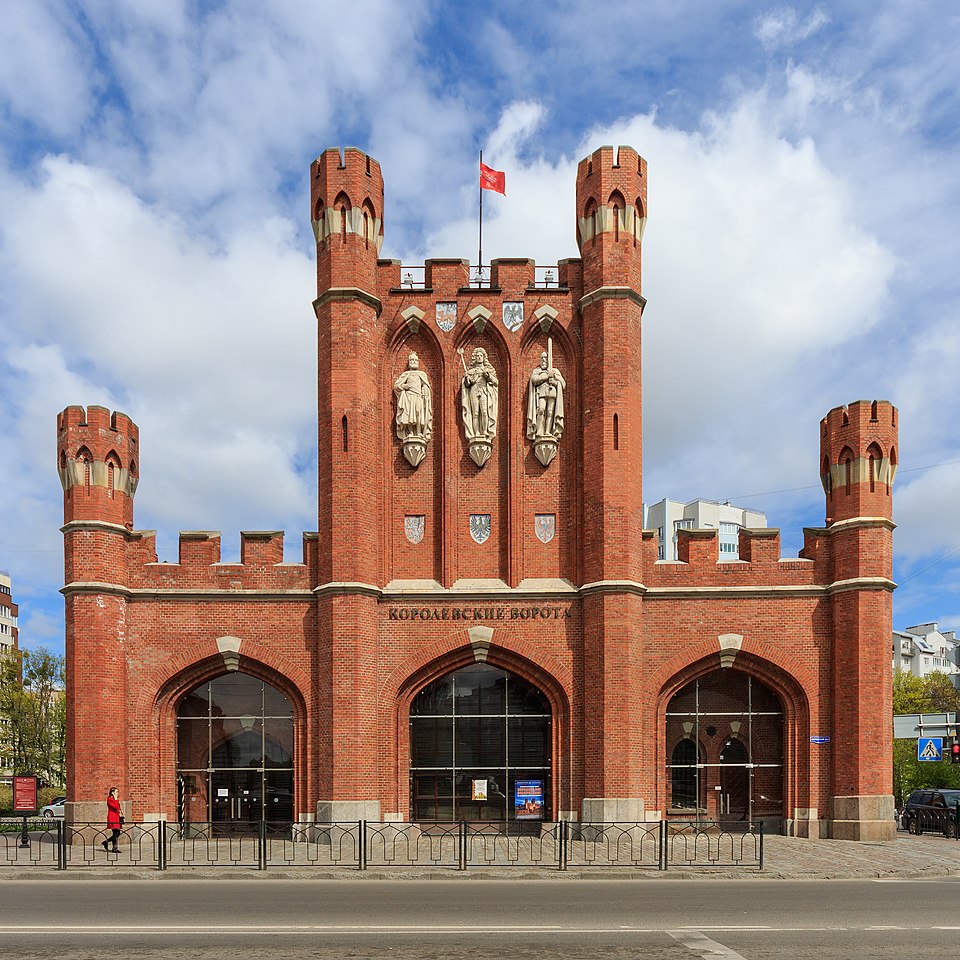
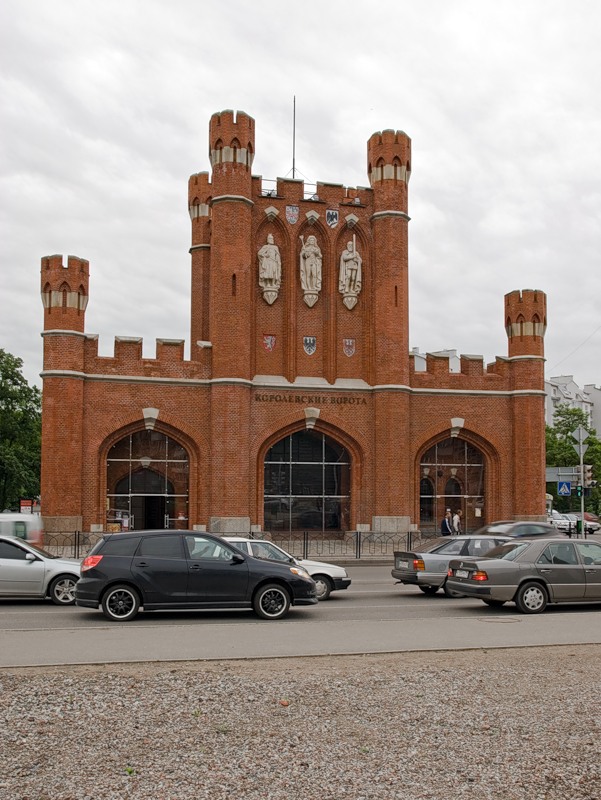
These gates look rather like a small castle. Begin by finding the passage through the building, then look up at the little towers. The arrangement makes more sense when you remember that this was an entrance through Königsberg's defences, rather than a royal residence.
The surviving King's Gate was built between 1843 and 1850. Its name recalls a road used by Prussian kings. The pointed arches and brickwork look back to the Middle Ages, although the building belongs to the age of steam engines and railways. That historical appearance helped present a modern fortress as the heir to a much older tradition.
Look for the three figures on the façade. They represent King Ottokar the Second of Bohemia, Duke Albert and King Frederick the First of Prussia. These men lived in different centuries. Together they turn the wall into a compressed account of the region's past: its foundation, changing rulers and political identity. You do not need to recognise every costume to see how deliberately the figures have been arranged for public display.
When the defences lost their military purpose, the city began to outgrow its enclosing belt. Removing the earthworks changed the gate's appearance. What now seems an isolated monument was once an opening in a much longer barrier. Imagine that barrier continuing on both sides and the building becomes an entrance again.
The twentieth century brought damage and neglect. The gate was restored for the city's 750th anniversary in 2005 and became a cultural centre of the Museum of the World Ocean. Several periods now meet in a single view: medieval figures, nineteenth-century military architecture and a present-day museum. Take another look at those statues. They are more than decoration above an arch; they reveal how the city once chose to tell its own history.
Learn more
The museum's Great Embassy theme recalls Peter the Great's European journey. However, Peter could not have passed through the arch you see today: this building was constructed long after his lifetime. The history associated with a site and the age of its surviving architecture are different things. Keeping that distinction in mind makes the gate more interesting, connecting an earlier diplomatic journey with a later effort to give a city entrance an impressive historical identity.