LISTEN TO THE PLACE
A story worth knowing
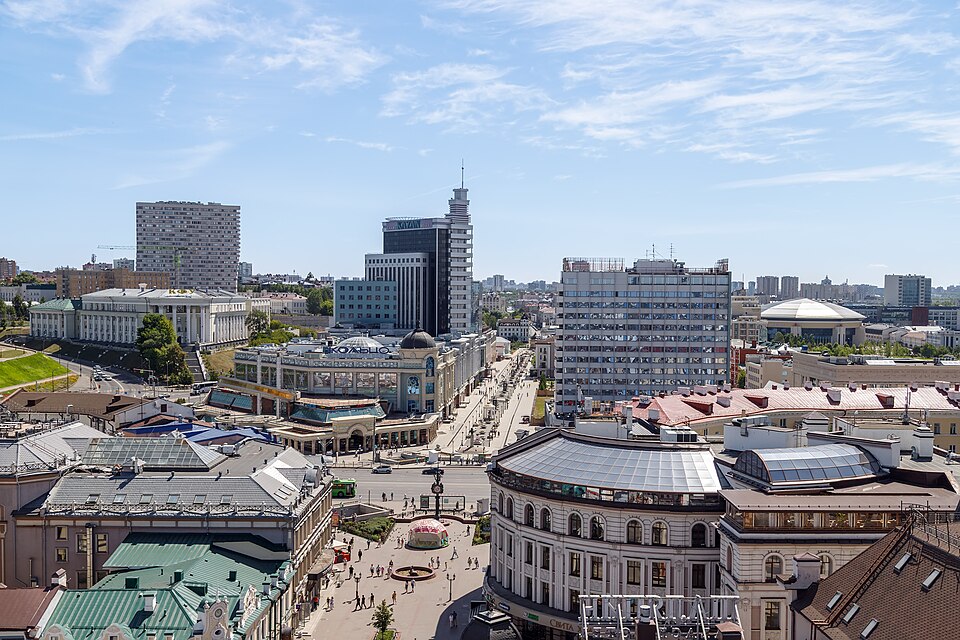
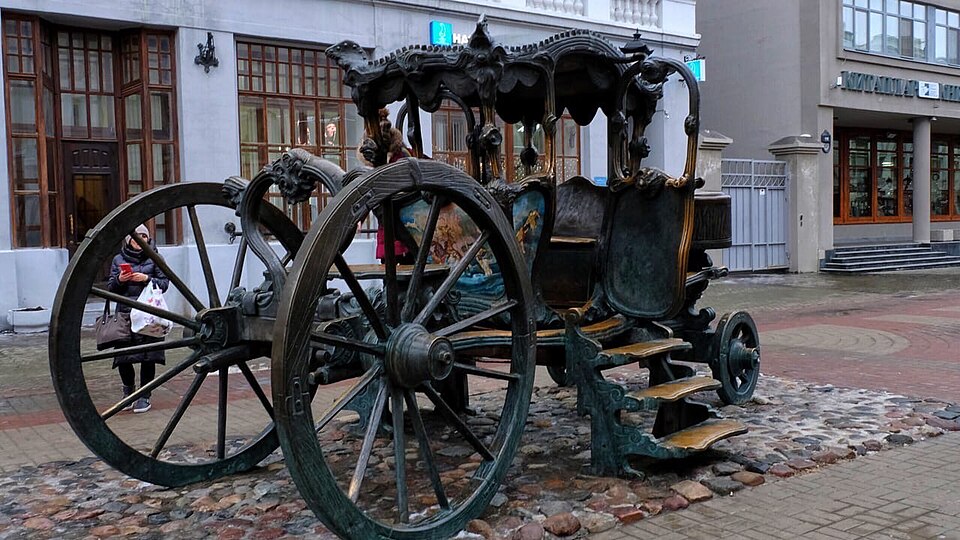
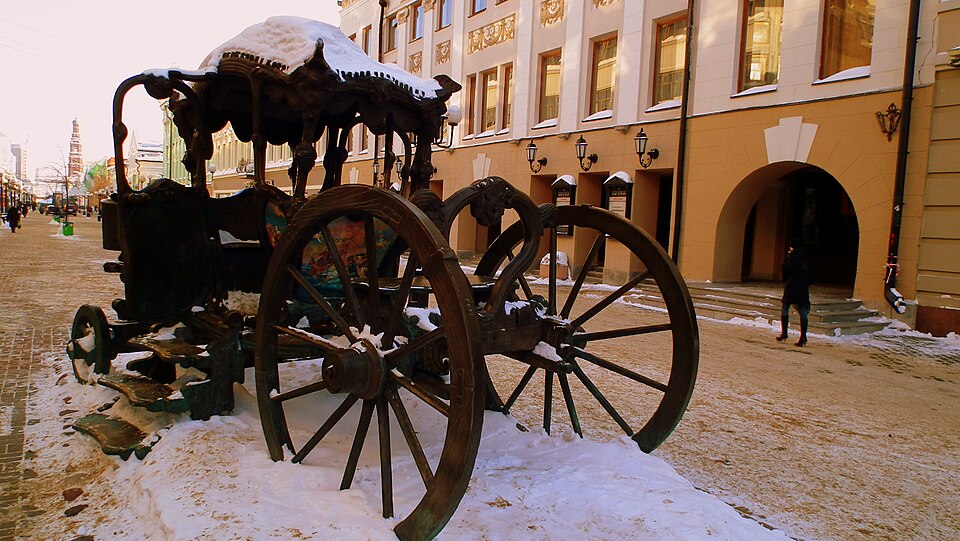
On Bauman Street you can find a carriage that is in no hurry to go anywhere. There are no horses or driver, but usually someone is ready to take a photograph. This monument recalls Catherine the Second's visit to Kazan. One distinction matters from the start: it is a sculptural replica, not a historic carriage left outdoors.
The empress visited in seventeen sixty-seven during a journey along the Volga. The river carried her between cities; travelling through their streets required another kind of transport. A carriage connects the grand scale of an imperial journey with particular corners, addresses and encounters.
The original associated with the visit is held by the National Museum of the Republic of Tatarstan. This street replica appeared much later, in the year two thousand. It therefore tells two stories: one about the eighteenth century and another about how a modern city chooses to remember it.
Look at the wheels, the body and the doorway. A ceremonial vehicle had to carry its passenger, but it also had to make an impression. It announced the owner's status before anyone stepped out. Imagine hearing wheels and horses, seeing the vehicle approach and only then meeting the person inside. This imagined scene suggests the part transport played in ceremony.
A modern tourist belief has grown around the sculpture: sit inside and wish for a future journey, and the wish will come true. That is a present-day visitor tradition, not a documented custom from Catherine's lifetime. Such small rituals allow people to connect a monument with their own lives.
You can enjoy the idea without expecting a miracle. Where would you like to travel next? It is a pleasant question halfway through a walk. Meanwhile, the sculpture shows how something associated with a museum collection can become a familiar presence on a pedestrian street.
Unlike a statue on a pedestal, it offers no portrait of the empress. An object associated with travel does the remembering instead. You supply the absent passenger and the surrounding city in your imagination.
If you later visit the museum, compare that encounter with this one. A brief photo stop can become a small exploration of the different ways Kazan preserves and retells its past.
Learn more
Four different layers are sometimes mixed together in accounts of this carriage. Catherine's visit is an eighteenth-century event. The museum carriage is a historical object associated with it. The Bauman Street sculpture is a later public reminder. The travel wish belongs to modern tourist tradition.
Each answers a different question: what happened, what survived, how it is remembered, and how visitors make a story personal. Keeping the layers separate does not make the monument less interesting. It helps explain why a small, approachable sculpture can reveal as much about a city's relationship with its past as a grand formal memorial.