LISTEN TO THE PLACE
A story worth knowing
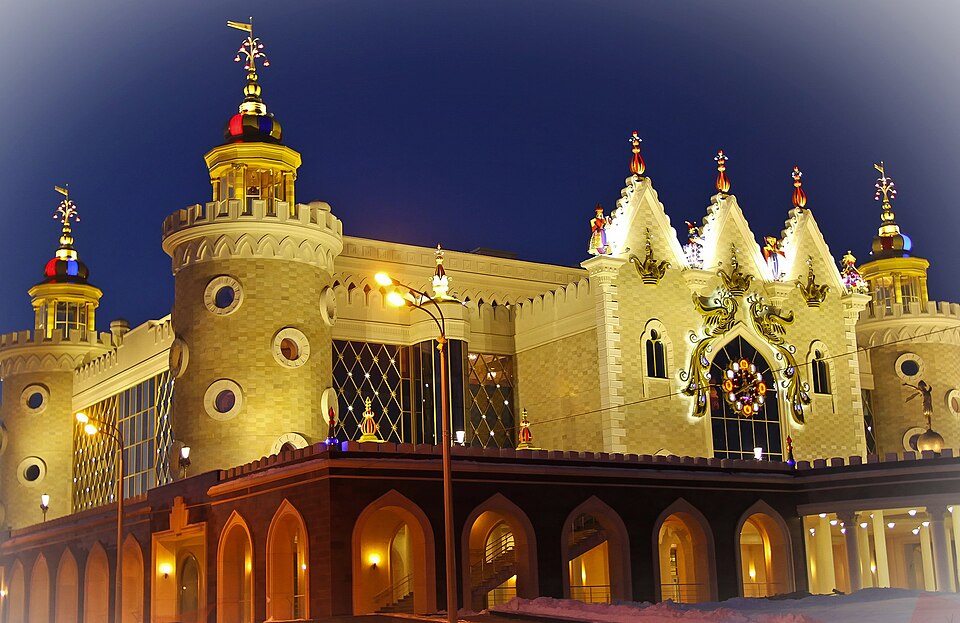
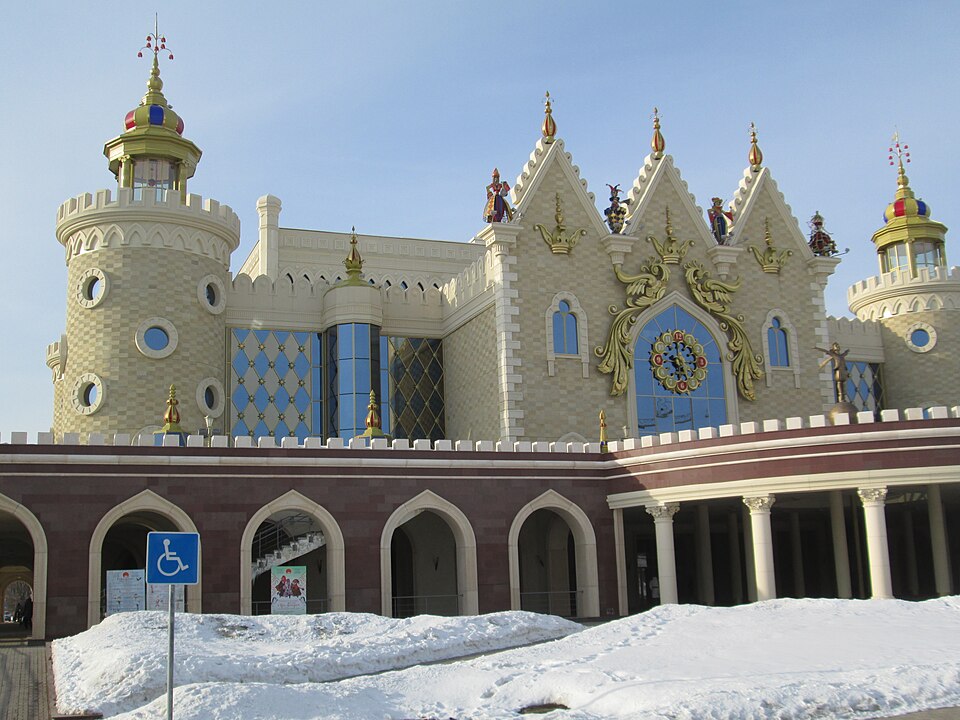
At Ekiyat Puppet Theatre, the fairy tale begins before anyone takes a seat. Towers, colourful rooftops and oversized decorative details turn the building into something like an illustration that has escaped onto an ordinary city street. It invites you to look with a little more imagination.
Ekiyat means fairy tale in Tatar. Behind the playful appearance, however, is a theatre with a long professional history. The company was founded in nineteen thirty-four. Its present home on Peterburgskaya Street opened much later, in two thousand and twelve. The age of an institution and the age of its building are not the same.
Find the detail that first surprised you. It might be a tower, a window or a combination of colours. Now imagine how it would look to a child standing much lower down. A building's scale changes with the viewer's position, and this one offers things to discover at several levels.
Puppetry is often associated only with children, but Ekiyat also presents work for adults. A puppet can tell many kinds of story. Movement, voice, lighting and the performer's skill give an object a personality. We know it is made, yet we begin to care about it.
That transformation does not require a belief in magic. A precisely timed gesture, pause or turn of the head can make a character seem alive. Behind the apparent ease are rehearsals and the shared work of designers, makers, performers and directors.
On this walk, we mainly encounter the theatre's exterior. It is worth thinking about the practical activity behind it: workshops, scenery and different techniques for bringing puppets to life. The fairy-tale facade marks a place where imagination becomes skilled, material work.
If you are walking with a child, invent someone who might live in one of the towers. This will be your own story, not a traditional legend about the building. Then compare your invention with any characters you can identify in the decoration.
A performance requires a separate choice of production, language and age guidance. This stop can simply be an encounter with the theatre from outside. Before leaving, take in the whole building again: a cultural place can welcome its audience well before the doors open and the performance begins.
Learn more
The theatre began with Russian and Tatar groups. That matters in Kazan: one theatrical tradition has developed through more than one language. Check a performance's language when booking, even if its title is familiar.
Think too about what a puppet can communicate without words. Pace, gesture, music and silence carry emotion, though they do not replace every meaning in a script. This makes puppetry a rewarding way to compare cultures. Stories differ, but audiences share the ability to see a living character in something made by human hands. The fairy tale promised by the facade can take many forms once you are inside.