LISTEN TO THE PLACE
A story worth knowing
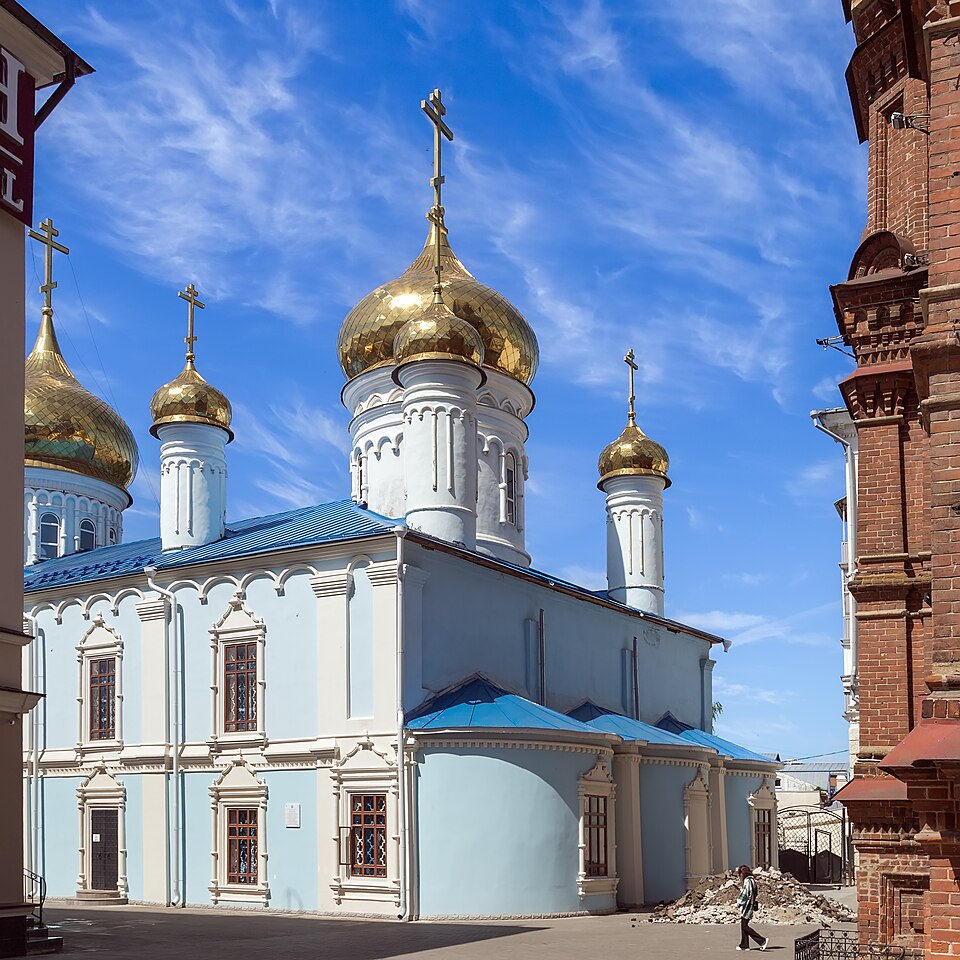
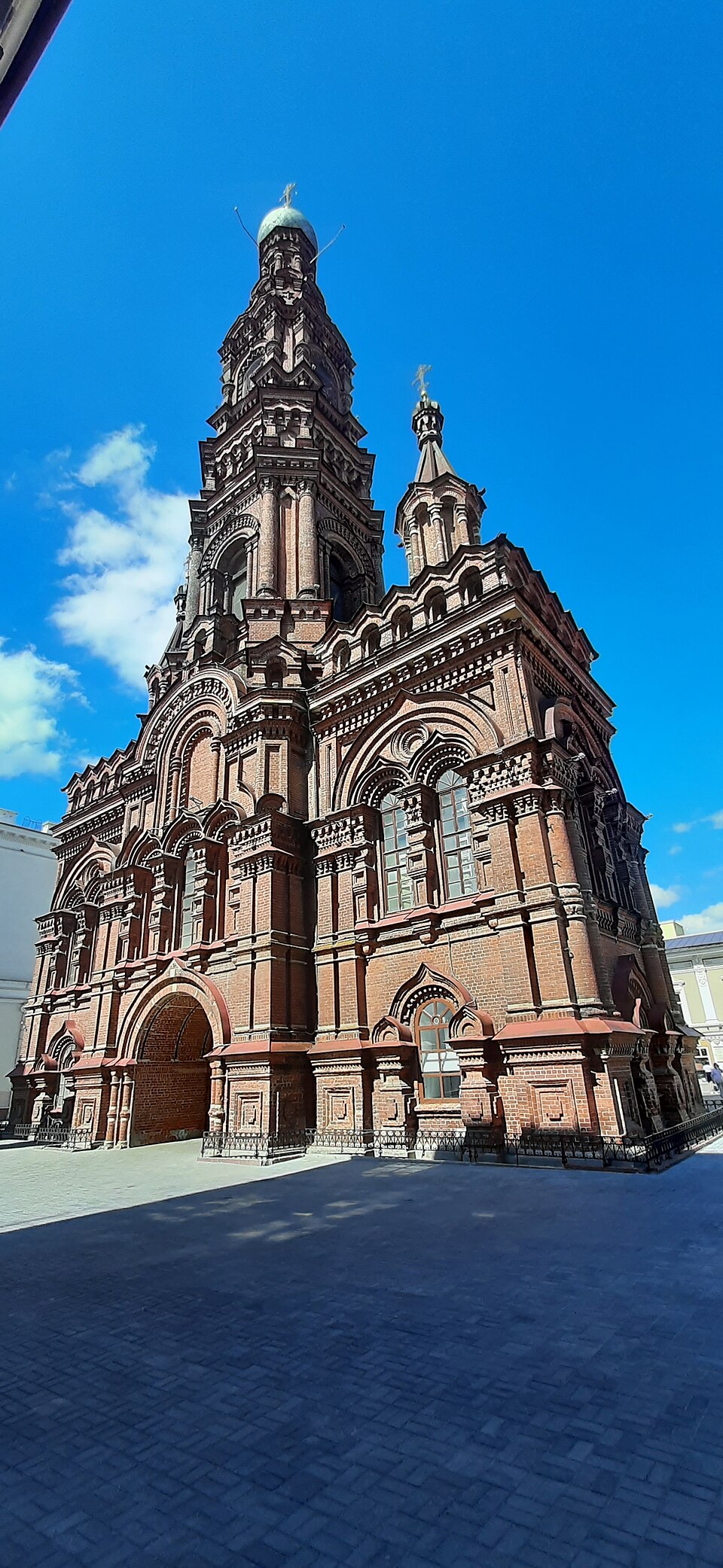
If you have been looking for a landmark above the roofs of Bauman Street, the Epiphany bell tower may already have caught your eye. Its tall brick silhouette is so striking that the church beside it can receive less attention than it deserves.
Separate the histories of the two buildings. The stone church dates from the eighteenth century. The familiar bell tower was added near the end of the nineteenth. They form one ensemble, but they were not built together. The city gradually enlarged the complex and changed its impact on the street.
Notice how the tower uses brick. We usually think of brick as something that makes a wall. Here it also creates a pattern. Projections, recesses and frames around the openings give the surface depth. In light from the side, even a small detail casts a shadow of its own.
Follow the building from the ground upwards. Its base connects it firmly to the street. Higher up, openings and lighter-looking forms emphasise the ascent. The substantial lower section suggests stability, while the upper stages draw your eye towards the sky. You can recognise that effect without knowing an exact measurement.
The Epiphany Church is connected with the life of the singer Feodor Chaliapin, who was baptised here. There is also a monument to him on Bauman Street. This brings the story down to a human scale: a voice later known around the world began with a child whose life was rooted in Kazan's ordinary addresses and family events.
A bell tower is also about sound. It was intended to be heard as well as seen, carrying signals across the surrounding city. Imagine the street without today's background noise. The tower would be a source of shared sound as much as a visual landmark. That is an imagined listening exercise, not a reconstruction of one particular day.
Access to upper levels and visiting arrangements need to be checked separately. From the pedestrian street, you can already understand the church and tower as distinct parts of one story.
Before leaving, find a small brick pattern on the facade. After the first impression of height, this detail restores the scale of human work. A major landmark is made from many small decisions.
Learn more
Why can a bell tower stand separately from its church? Its task is to raise the bells above the surroundings so their sound can travel. A freestanding tower is one way of doing that, though church ensembles use several different arrangements.
The tallest and most decorative structure is not automatically the main place of worship. Here, the bell tower became the most prominent street landmark, while the church has its own religious role. Visibility and function do not always coincide. Look for similar relationships elsewhere on your walk: the building that attracts your attention first may not be the most important one for understanding what happens at the site.