LISTEN TO THE PLACE
A story worth knowing
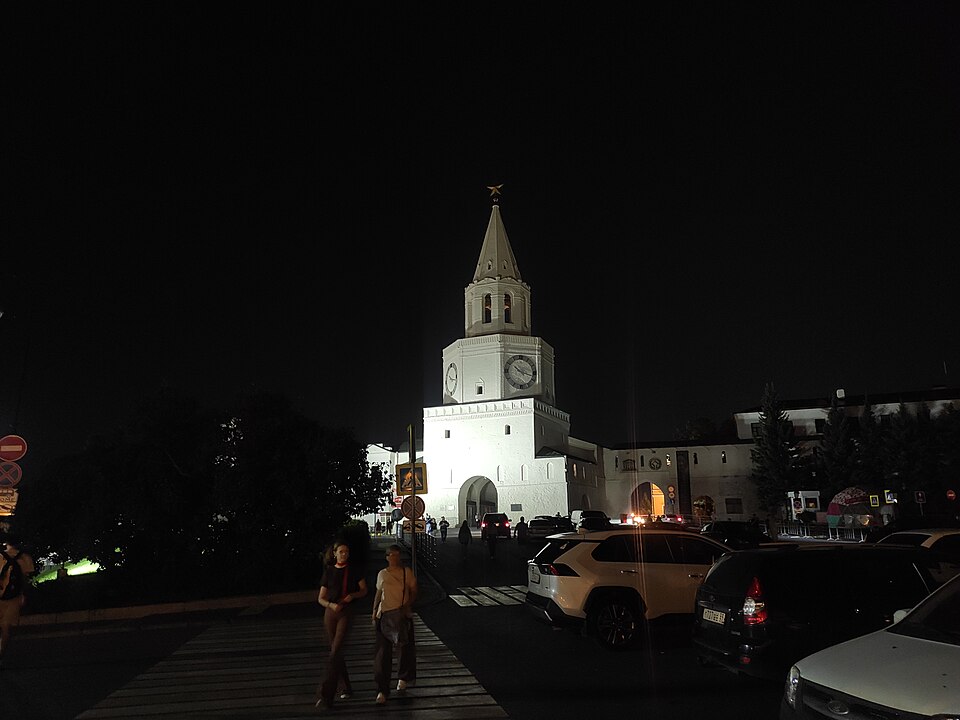
Think of the Kazan Kremlin as a small town inside a larger one. It has streets, squares, gateways, places of worship and buildings where decisions are made. Rather than beginning with a single tower, start with a question: why did this hill become the heart of Kazan?
The high ground offered a view across the surrounding landscape and helped protect the settlement. During the Kazan Khanate, it was a centre of power. After Ivan the Terrible's army captured Kazan in fifteen fifty-two, the fortress was rebuilt. That transformation began the story of the white-stone ensemble we recognise today. Traces of the earlier city nevertheless survive beneath and between its buildings.
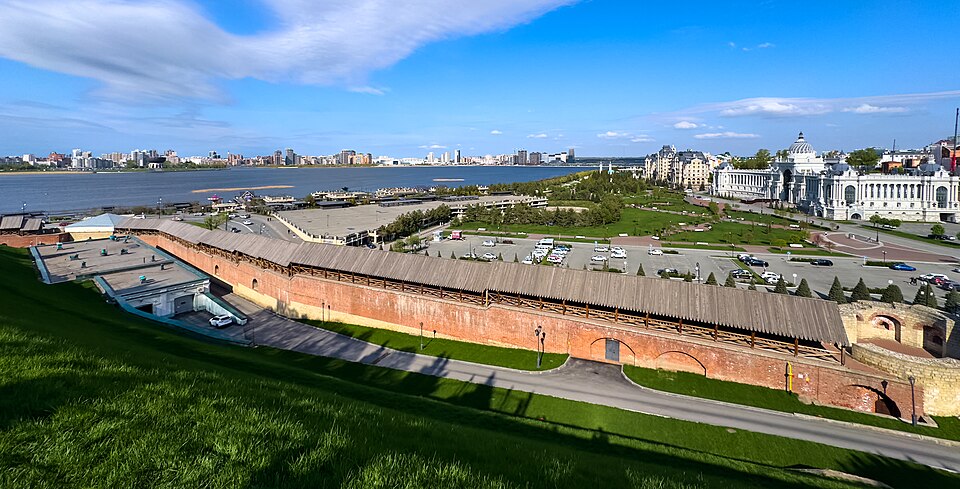
Try separating the scene into layers. Walls and towers speak of defence. The cathedral and mosque speak of religious life. Administrative buildings tell another story, about government. Museums add what an outdoor view cannot show: archaeological discoveries, objects and the history of the people who used them.
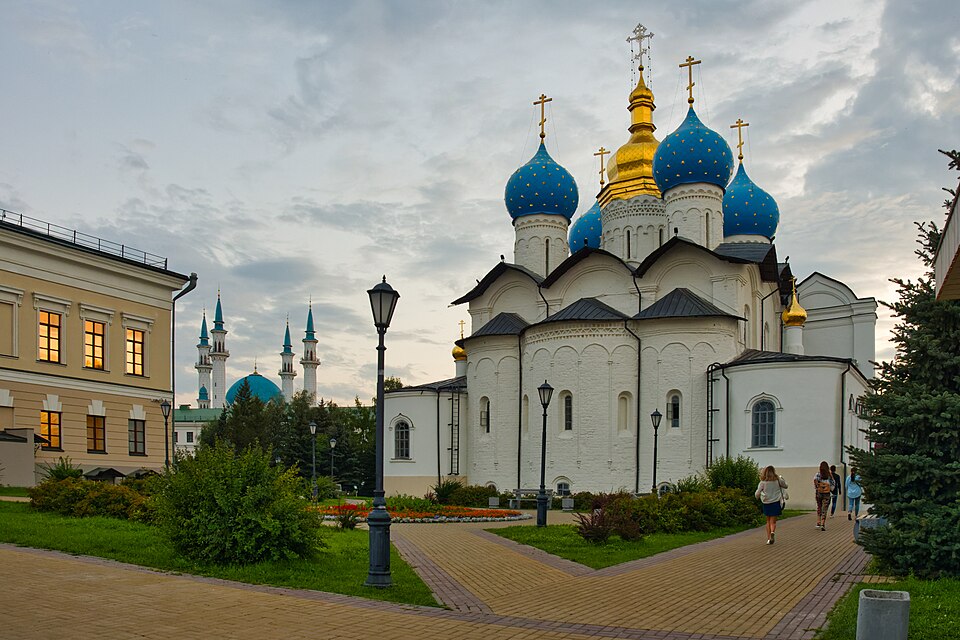
Two buildings often share the most familiar views of the Kremlin: the Annunciation Cathedral and Kul Sharif Mosque. They belong to different periods. The stone cathedral dates from the sixteenth century; the present mosque opened in two thousand and five. This was never a stage set completed from a single design. Its appearance changed as the city changed.
In the year two thousand, the historic and architectural complex became a UNESCO World Heritage Site. That recognition concerns the place as a whole, including the relationships between its buildings. Notice the transitions: a narrow passage opening into a square, a heavy wall beside a slender minaret, a river view giving way to a sheltered courtyard.
For your first visit, do not worry about remembering every name. Choose three landmarks: a tower, a religious building and a stretch of wall. Compare their materials, proportions and positions. Notice how one becomes a backdrop for another. You are building your own mental map of the Kremlin.
Exploring the grounds and visiting individual museums are different experiences. You can spend this walk looking at architecture and return another time for the collections. The pleasure of the Kremlin is that each circuit reveals another part of the story.
Learn more
A wall's colour can suggest its history, but it cannot give you an exact date. Buildings have been repaired and restored, and different parts of the same structure may belong to different centuries. Materials, shapes and documentary evidence need to be considered together.
Choose one repeated feature, perhaps an arch. Find it in a gateway, on a facade and around a window. The basic shape stays familiar, while its purpose and effect change. This is an easy way to notice how different periods share an architectural vocabulary. The Kremlin's museum exhibitions can help you explore those historical layers in greater detail.