LISTEN TO THE PLACE
A story worth knowing
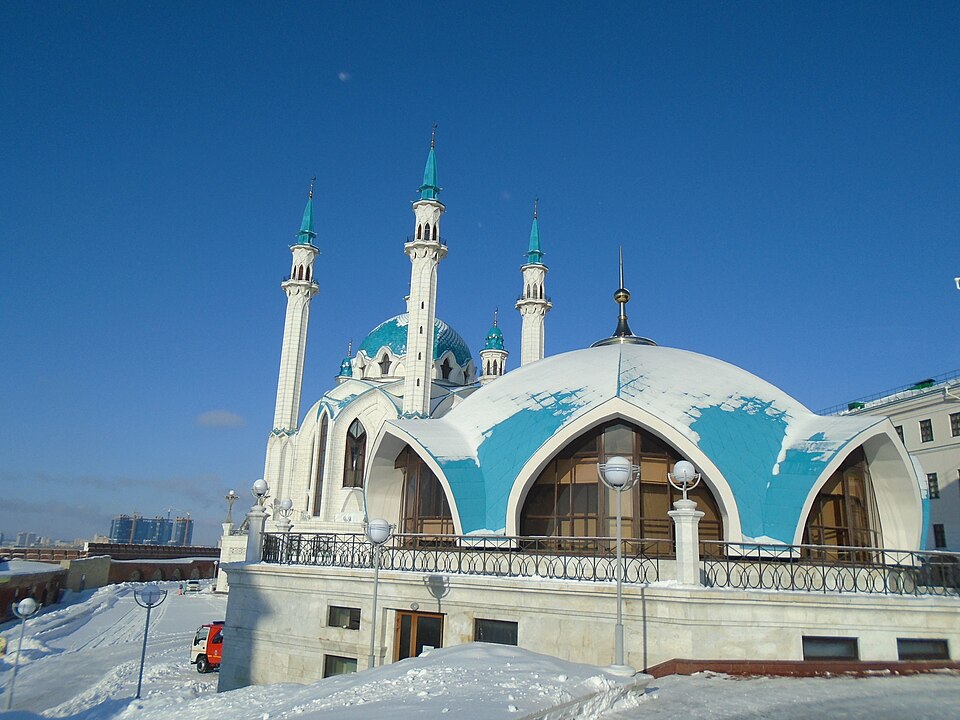
Find the turquoise dome, then the four tall minarets around it. This is Kul Sharif Mosque, a building many visitors recognise before they arrive in Kazan. In photographs it can look like an ancient part of the Kremlin. The present building is much younger: construction ran from nineteen ninety-six to two thousand and five.
It commemorates Kul Sharif, a religious leader and one of the defenders of Kazan in the sixteenth century. The mosque of the khanate's capital was lost when the city was captured. Today's building honours that memory, but it is not an exact reconstruction from a surviving medieval plan. It is an architectural project in its own right.
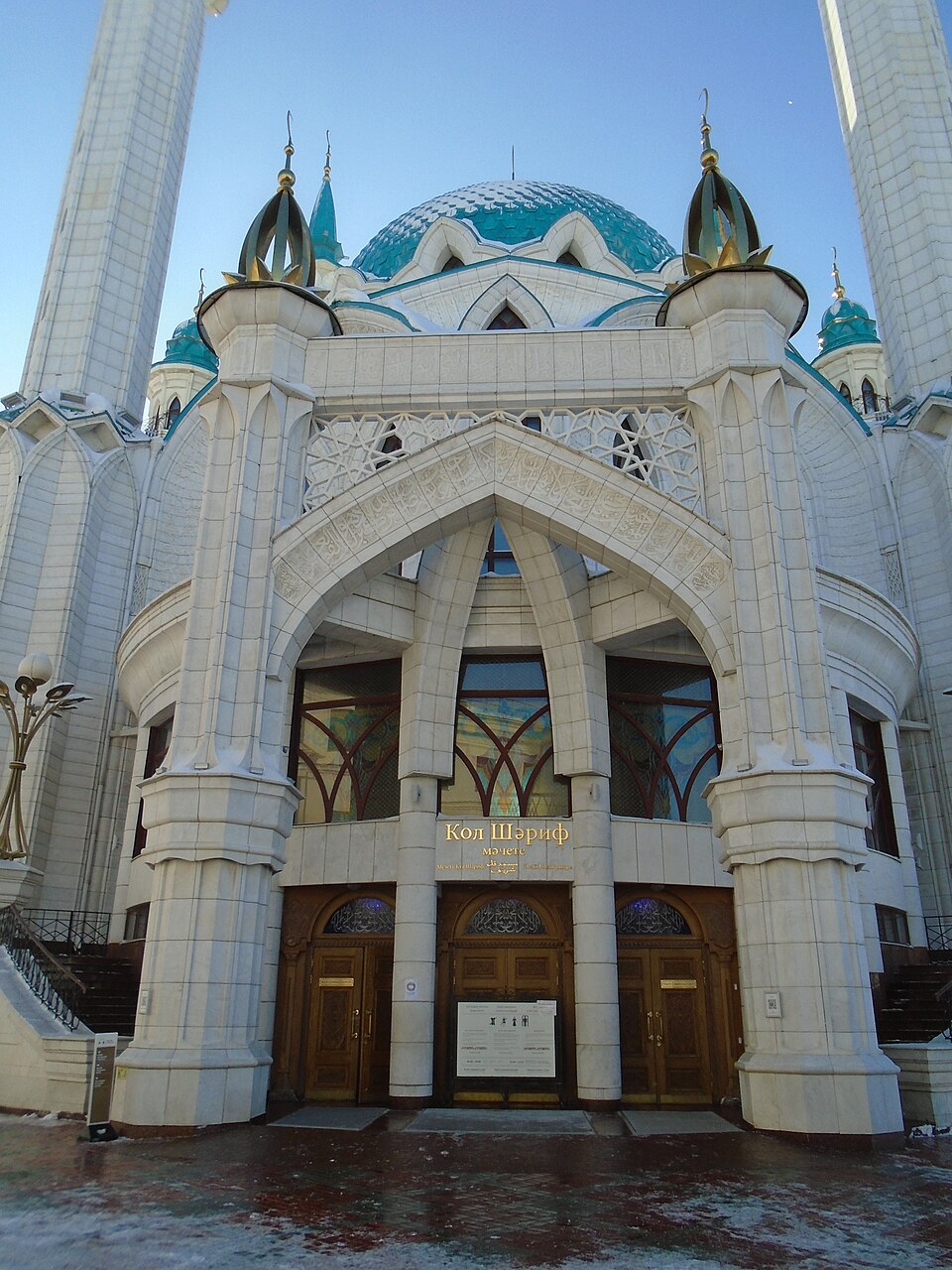
Look at the silhouette. The large central dome holds the composition together, while the slender minarets frame the space around it. Let your eyes travel upwards from the broad base, past the windows and towards the tips of the towers. The building feels firmly grounded and upward-reaching at the same time.
Its plan is based on two squares turned relative to one another, creating an eight-sided arrangement. That geometry helps explain why the mosque offers so many different faces. If your route allows, look from another side. The same dome will appear to line up differently with the minarets.
White surfaces and turquoise colour make a clear impression from a distance. Closer up, there is another scale to explore: ornament, inscriptions and window surrounds. Start with the whole building, then allow your attention to move between those smaller details. The architecture gradually becomes something you can read.
Kul Sharif is an active mosque. Sightseeing takes place alongside prayer, so quiet and consideration matter, especially indoors. Visitor access may change during religious events. The Museum of Islamic Culture occupies the lower level and offers a separate opportunity to explore the subject.
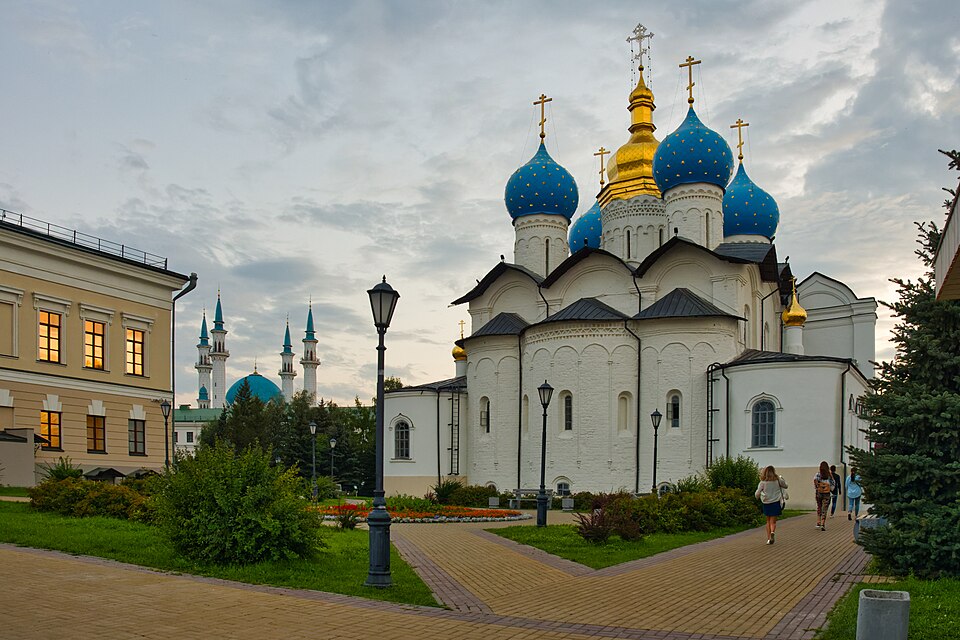
Before moving on, look again at the surroundings. A modern mosque stands inside a historic fortress. That difference in age is part of what makes the scene interesting. Here Kazan shows both what it has inherited and how it has chosen to express that inheritance in the present.
Learn more
The mosque brings together materials and craftsmanship from several places. Marble came from the Urals, carpets were a gift from the government of Iran, and a large crystal chandelier was made in the Czech Republic. Its construction has a geography as well as a local history.
If you visit the interior, follow one material through the room. Stone, timber, coloured glass and fabric each respond differently to light. Look too at the tulip-like forms of the dome windows. These details bring the work of individual craftspeople into focus. During prayer, put sightseeing and photography aside and follow the mosque's visitor guidance.