LISTEN TO THE PLACE
A story worth knowing
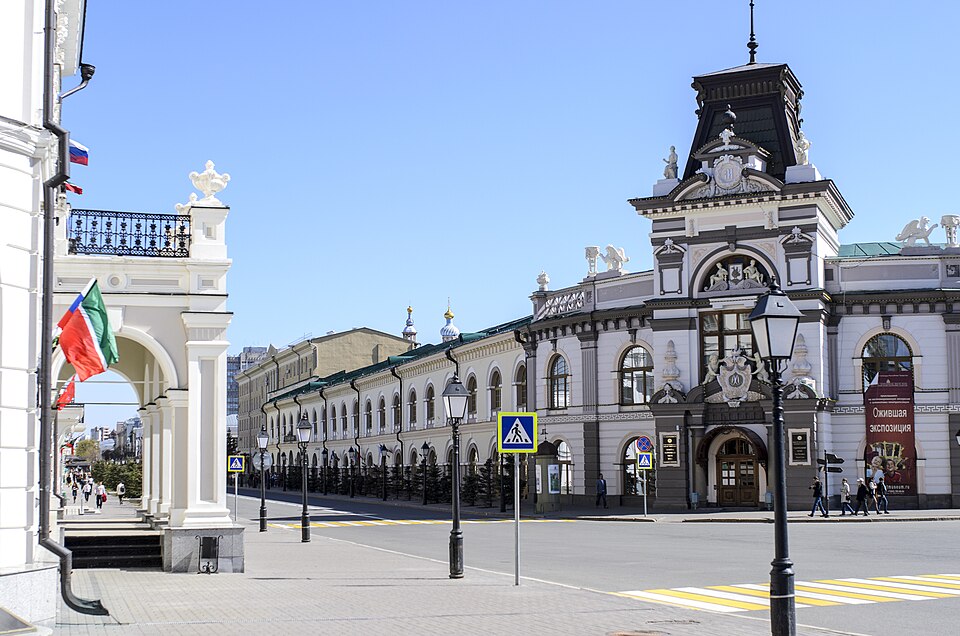
Near the Kremlin stands a building that offers another way to travel through Tatarstan. Fortress walls can be explored in the open air. The things people wore, made, traded and saved need a different kind of home. This is the National Museum of the Republic of Tatarstan.
The museum opened in eighteen ninety-five. The collection of Andrey Fyodorovich Likhachev, a Kazan researcher and collector of antiquities, formed an important foundation. One person's curiosity became part of a much larger public undertaking. Objects gained a place where they could be studied and shared.
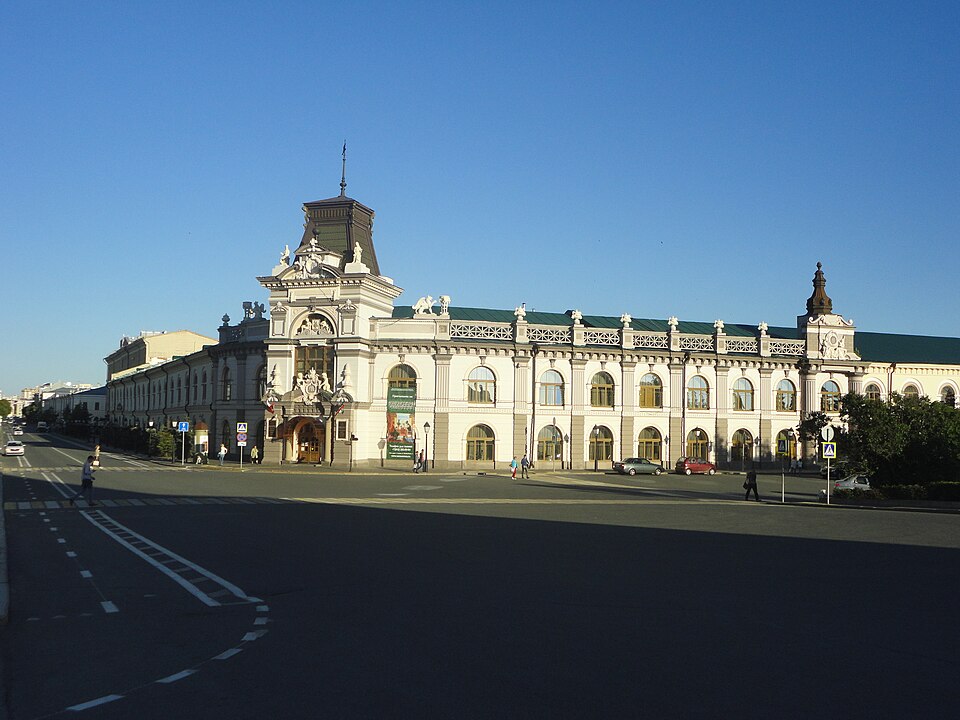
The building contributes its own story. It was formerly the Gostiny Dvor, a trading complex. Despite the association of its Russian name with guests, this was not a hotel in the modern sense. Goods, sellers and customers once met here; later came historical objects, researchers and visitors. In both roles, the building brought a region's variety together under one roof.
Look at the long facade and repeated windows. A large public building establishes a different rhythm from a private house. It almost organises a whole side of the square. Imagine the movement of traders and customers in an earlier day. This is an imagined scene, but it helps you picture the building's previous purpose.
A museum also invites a question: when does an ordinary thing become historical evidence? A coin reveals connections between places as well as a monetary value. Jewellery speaks of skill and taste. Household utensils preserve routines that grand chronicles often leave out. A modest object may have a surprisingly rich story.
If you decide to go inside, choose one question instead of trying to absorb every display. How did people live? What linked Kazan to other regions? How did clothing and crafts change? A question gives a visit a personal direction.
For now, notice the museum's position beside the Kremlin. These neighbours offer two scales of memory: a whole historical landscape and individual objects with their own histories. Together they bring the past closer through work, trade, family life and the curiosity of people who cared enough to preserve its traces.
Learn more
One well-known object in the museum is the carriage associated with Catherine the Second's visit to Kazan. A sculptural replica stands on Bauman Street. Seeing both offers an interesting comparison: outdoors, the carriage becomes part of everyday life and visitors' photographs; in the museum, the original can be studied as a historical object.
The replica alone cannot tell you about the original's materials, construction or condition. Those questions need the object and its museum documentation. A street monument and a museum collection serve different purposes. Both can introduce the same history, but they invite different kinds of attention and understanding.