LISTEN TO THE PLACE
A story worth knowing
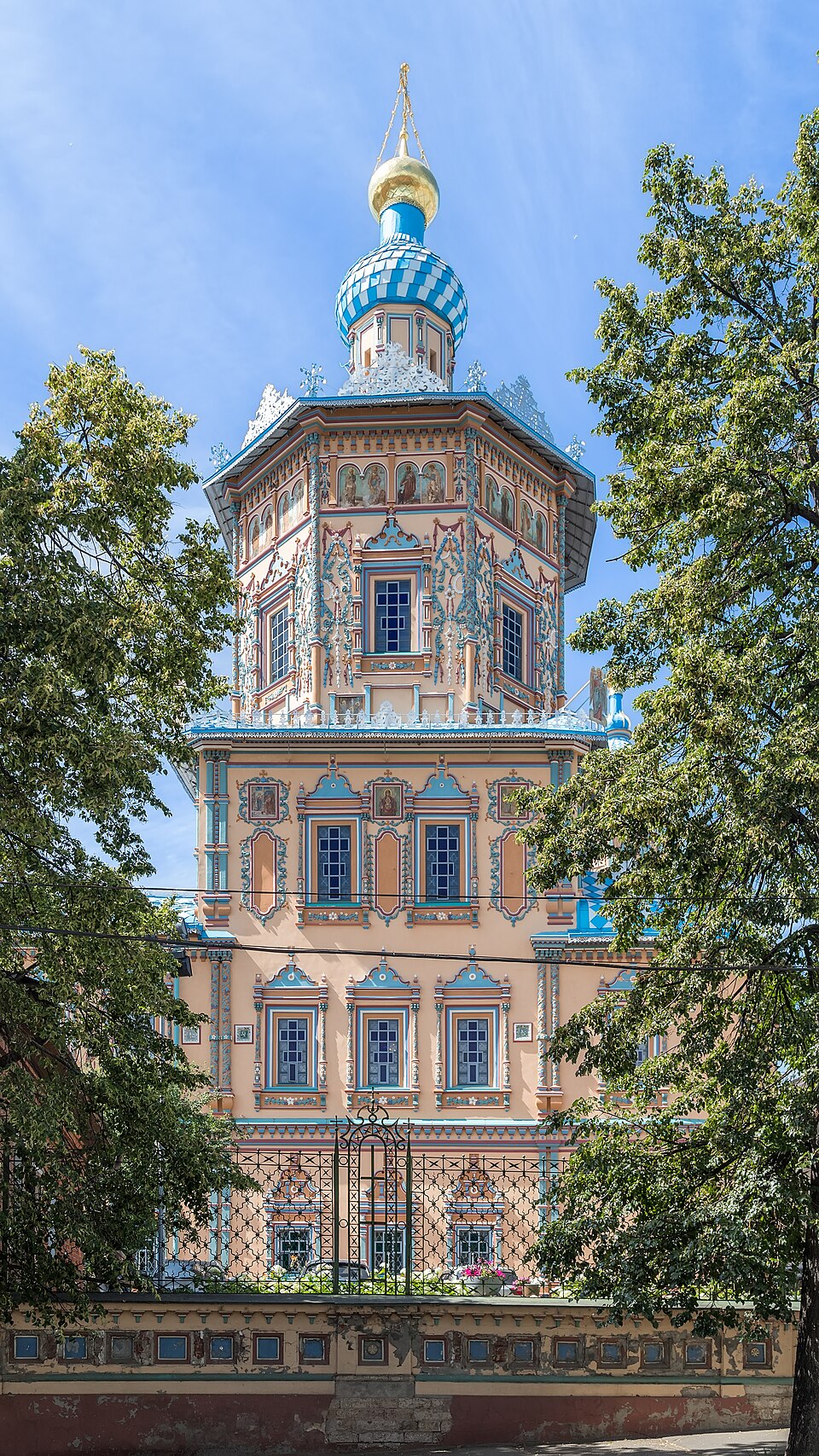
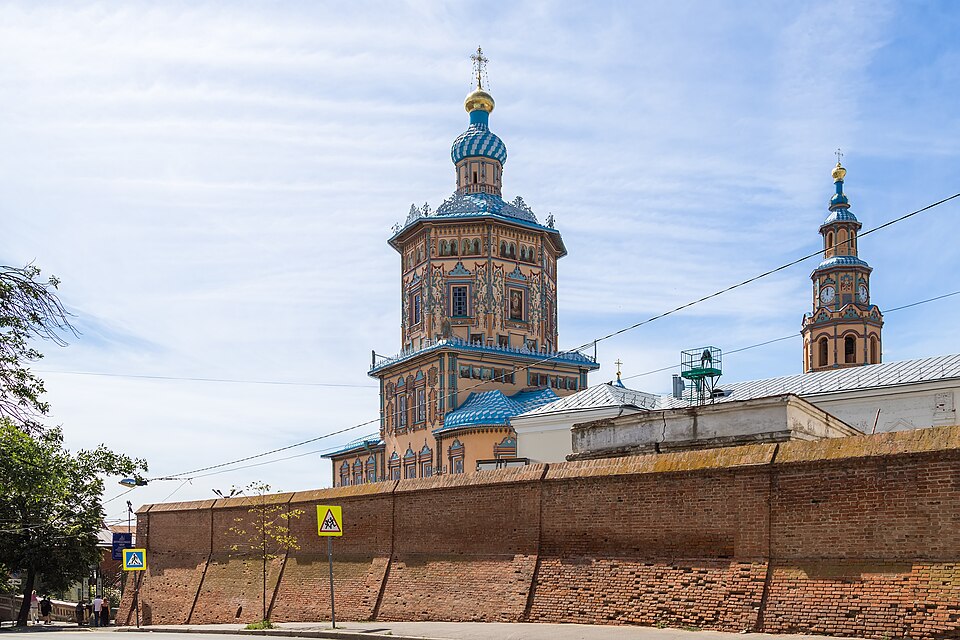
Look at Saints Peter and Paul Cathedral twice. First take in the silhouette from a distance. Then study a small part of the facade as though it were a richly patterned fabric. There are so many decorative details that a first glance rarely gathers them into a clear picture.
The stone cathedral was built in the first half of the eighteenth century with funding from the merchant Ivan Mikhlyaev. Its history is linked with Peter the Great's visit to Kazan. A prosperous merchant could leave a mark on the city through more than a business or a private house: supporting an important community building was another lasting contribution.
The architecture is described as Baroque. You do not need a textbook definition to experience it here. Notice the energetic treatment of the walls, the decoration around openings, and the way colour brings out relief. The surface seems determined not to remain flat. Your eyes keep finding another projection, curve or transition.
Choose one small area and stay with it. Where does the ornament begin? Is it repeated symmetrically? Which features are immediately obvious, and which appear only after a few seconds? This makes the richness easier to understand and brings the work of the craftspeople into focus.
The cathedral is dedicated to the apostles Peter and Paul. Inside is a tall, multi-tiered iconostasis, but an outdoor visit already offers plenty to explore. If you return for the interior, allow for services and the rules of an active church.
The cathedral was closed during the twentieth century and returned to worshippers in nineteen eighty-nine. Its beauty today should not suggest an entirely peaceful, uninterrupted existence. Changes of use, preservation and restoration also belong to its history.
Now let your attention move from a single decorative pattern back to the whole building. The silhouette may feel different after that close inspection. You are no longer seeing only a colourful church, but large forms, vertical accents, colour and small details working together.
That is the particular pleasure of this stop. Architecture can guide your attention without requiring specialist knowledge. A quick glance gives you a bright memory; a longer pause reveals a facade that keeps offering something new.
Learn more
Merchant funding connects trade with the appearance of the city. Some private wealth supported buildings that served a community and became shared landmarks. Saints Peter and Paul Cathedral is one example of that relationship.
But the patron should not be credited with every architectural decision. Between the funding and the completed building stood builders, decorators, artists and other craftspeople. As you examine the ornament, think about that collective labour. A patron's name often survives more clearly than the names of the people who carried out the work. The facade preserves the result of their combined efforts, long after the original occasion for construction has passed.