LISTEN TO THE PLACE
A story worth knowing
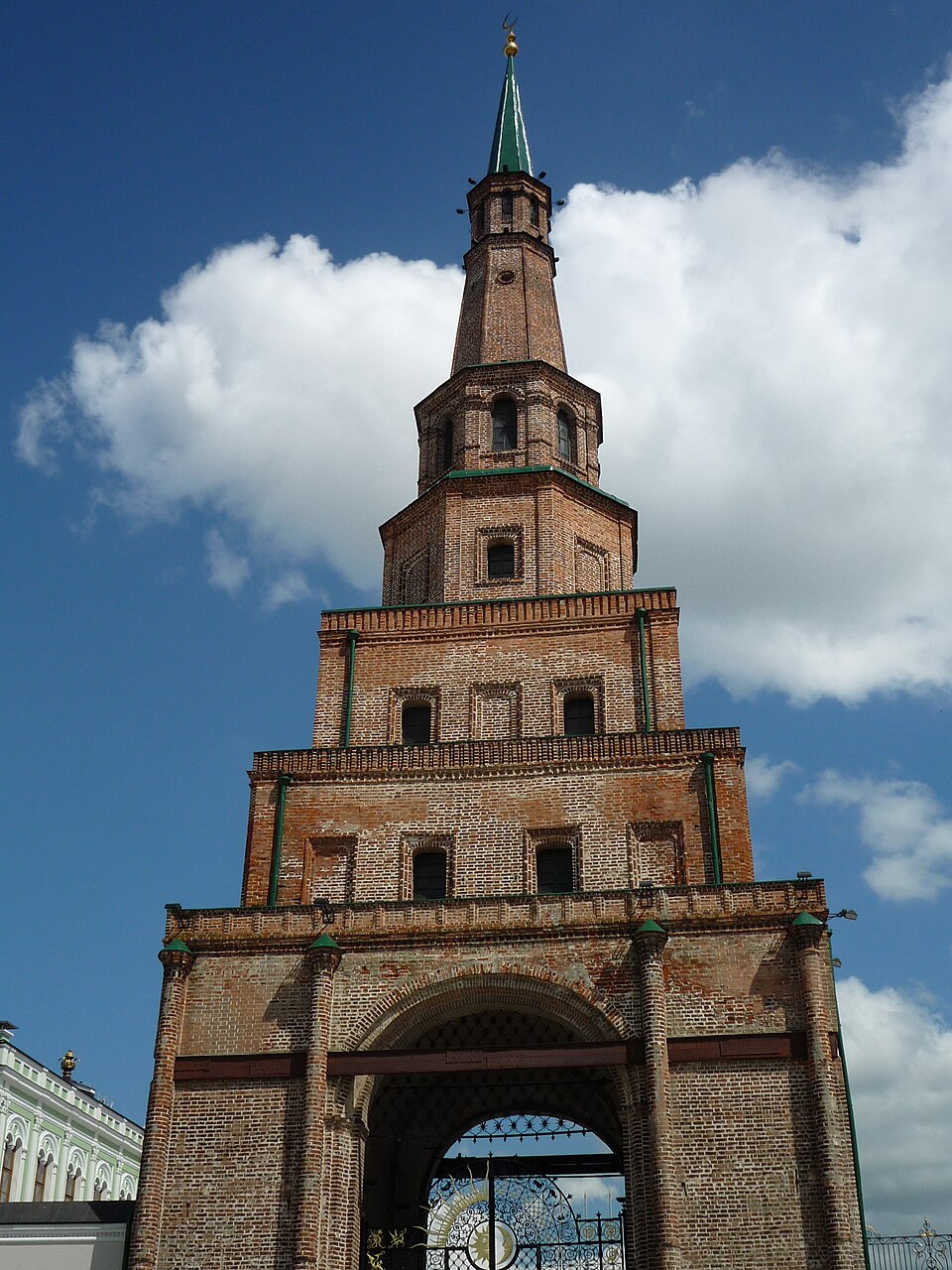
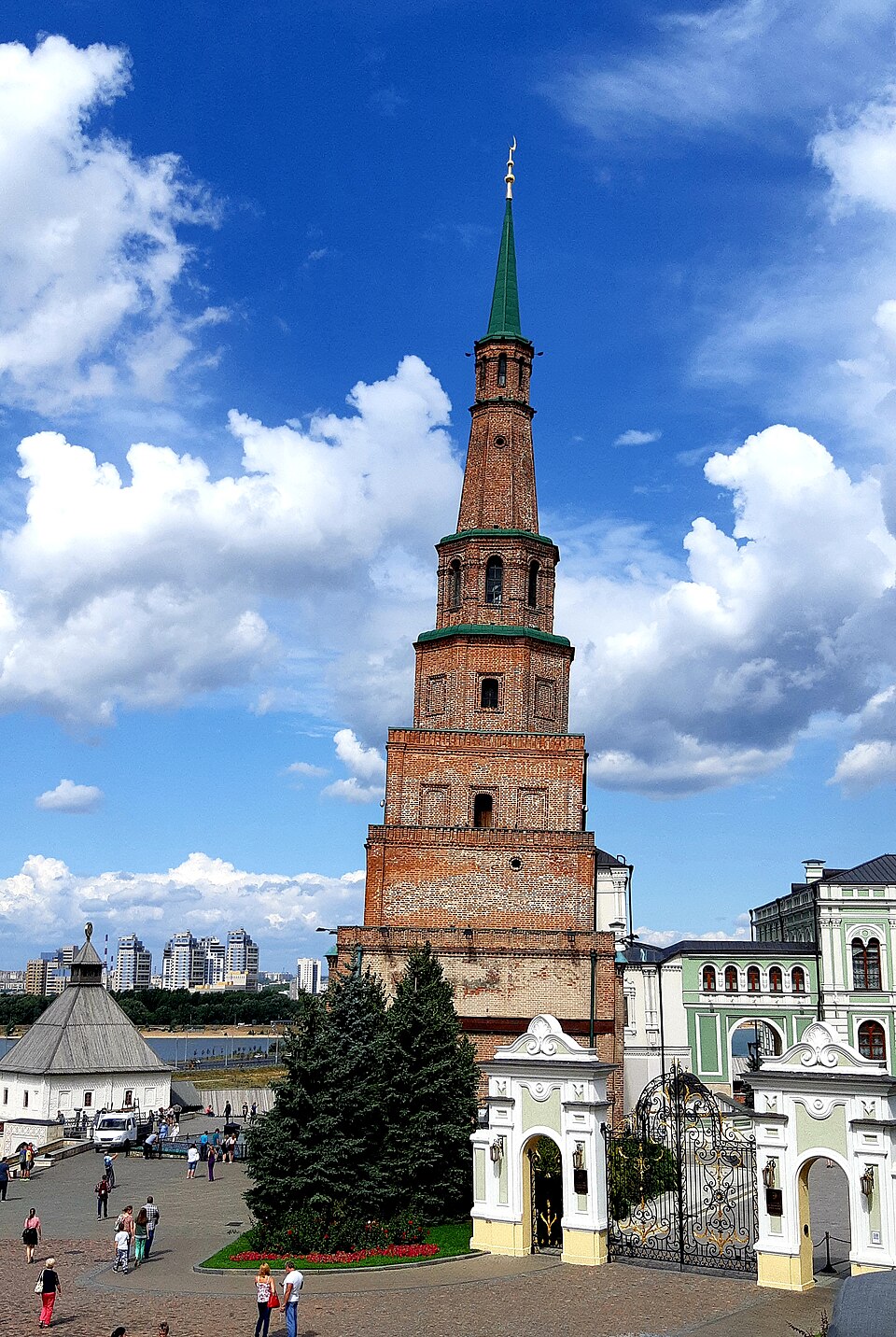
There is one thing visitors immediately want to check about Soyembika Tower: it leans. But first, look at it without concentrating on the tilt. The brick structure grows narrower and lighter with each level. A passage opens at its base, and a slender spire with a crescent completes the top. Even without a legend, it is a memorable silhouette.
The tower bears the name of Soyembika, a ruler of the Kazan Khanate. That can suggest she ordered it built, but a name and a construction date are different matters. The Kremlin museum places its likely origin in the seventeenth or eighteenth century. The precise dating remains debated, so we should not confidently describe it as a building from her lifetime.
A famous legend tells a different story. In it, Ivan the Terrible demands her hand in marriage. She asks him to build a tower in seven days, then climbs to the top and throws herself down. This is a dramatic tale, not an established biography. Soyembika was taken away from Kazan and later married Shah Ali, the khan of Kasimov. Her documented life does not follow the legend's ending.
Perhaps the story endures because the solitary tower gives memory a powerful image. We may read loss, dignity or a vanished capital into its shape. That is an interpretation of the monument, not evidence that the events happened.
Now return to the architecture. Count the levels: there are seven. The lower sections are square, while the upper ones become octagonal, making the transition towards the summit gradual. The tower stands about fifty-eight metres high. Its upper platform once provided a vantage point over the surroundings.
Look at the passage and metal gates as well. Not everything beside an old monument is equally old. The gates called Day and Night are a modern work, installed in two thousand and three.
You can leave with two impressions: the architecture you have actually seen and the legend through which the city remembers its past. They can sit comfortably together, provided we keep the distinction between historical evidence and storytelling clear.
Learn more
The Day and Night gates deserve a closer look. Their metalwork includes the sun, a crescent, stars, plants and fantastical creatures. Architect Rustem Zabirov designed this separate visual story at the foot of the tower.
Find a repeating plant curl, then a figure that interrupts its rhythm. A moment ago you were looking at a skyline; now you are reading details at eye level. The shift changes the whole experience of the place. The gates also illustrate how an old architectural ensemble can acquire new elements. A contemporary work can respond to a historic building without pretending to be an original part of it.