LISTEN TO THE PLACE
A story worth knowing
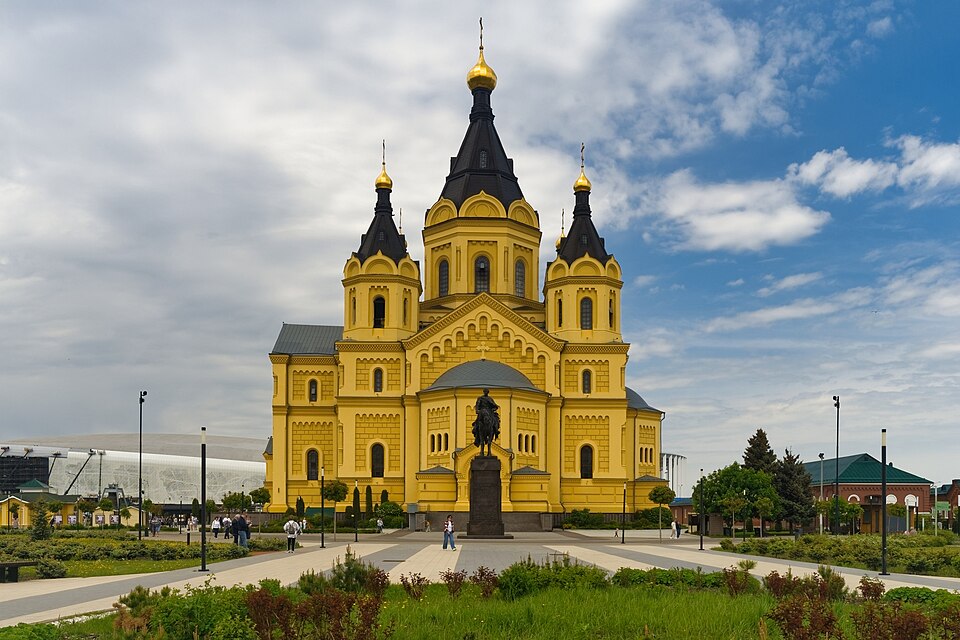
Where the Oka meets the Volga, the city changes scale. The space between the riverbanks becomes enormous, and a building needs a strong outline to remain visible. Alexander Nevsky Cathedral, with its tall tent-shaped roofs, meets that challenge. Its story, however, began with the needs of the Nizhny Novgorod Fair rather than a desire to decorate the skyline.
By the middle of the nineteenth century, the existing fair cathedral could no longer accommodate everyone who wished to attend. Merchants proposed another large church. Fundraising, approvals and construction took years, and the new cathedral was consecrated in 1881. Behind its prominent silhouette lies the collective effort of people who came to trade and also needed a place of worship.
This explains its alternative name, the New Fair Cathedral. The name distinguishes it from the older Saviour Cathedral associated with the fair. Remembering the pair is useful: these are not simply two unrelated large churches in one district. They help reveal the growth of a trading community whose requirements extended well beyond stalls and warehouses.
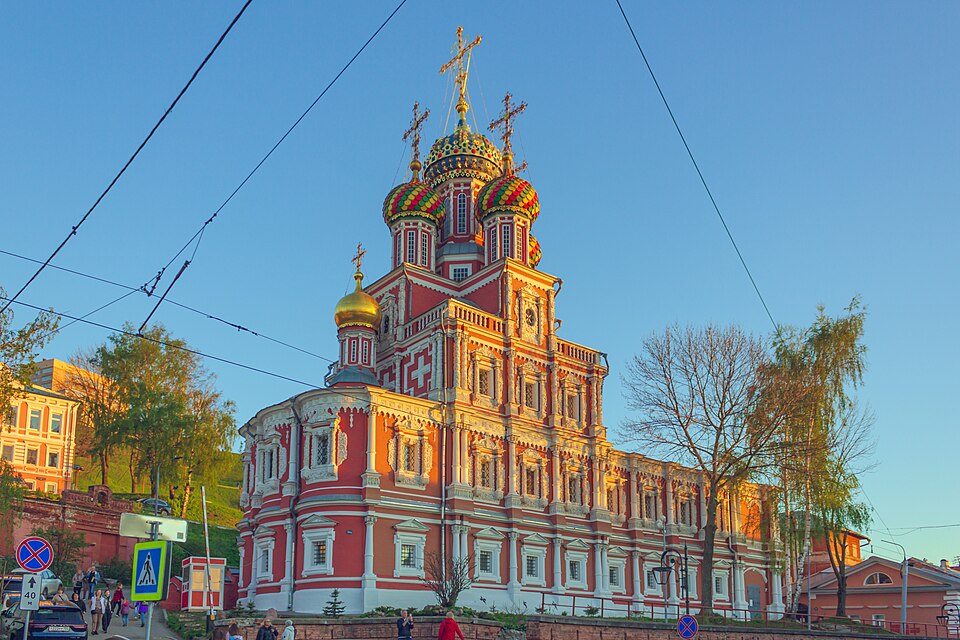
Look at the upper composition. The central tent-shaped roof draws the surrounding forms together, while the smaller roofs reinforce its upward movement. Close to the walls, you must tilt your head to take it in. From farther away, the structure becomes a clear landmark above the low riverbank. Compare those impressions as you continue walking: substantial nearby, almost weightless against the distant sky.
Architects Lev Dal and Robert Kilevein are associated with the cathedral’s design and construction. This is nineteenth-century architecture drawing on earlier Russian forms, rather than a medieval building. Its historical appearance invites a question about the people who commissioned it: what did this image offer a large and prosperous trading centre?
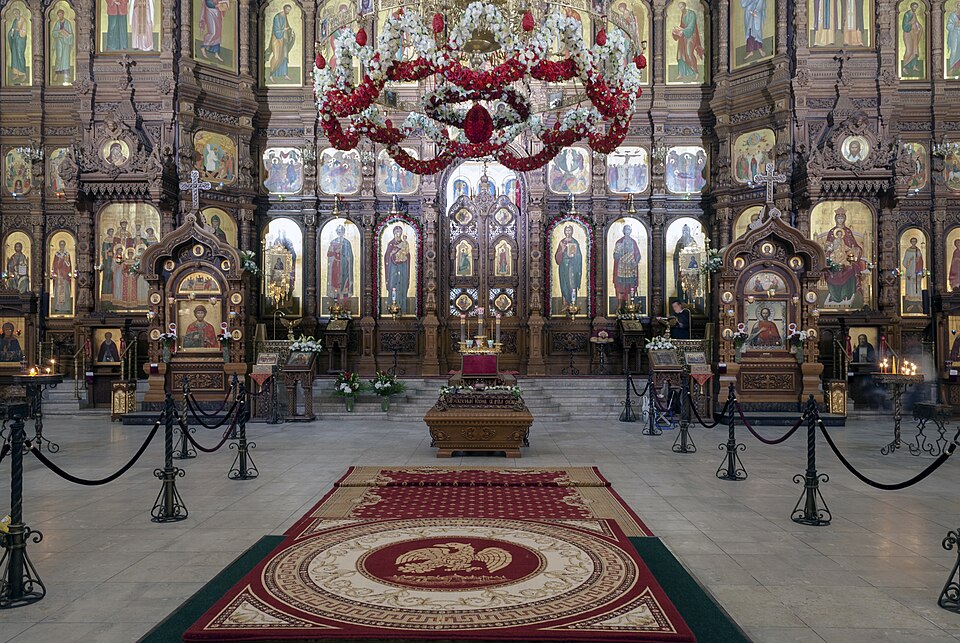
During the Soviet period, worship ceased, and the building experienced losses and nonreligious use. Restoration and the return of services belong to a later chapter. Today it is an active cathedral, with a religious life that continues alongside its importance in the city panorama.
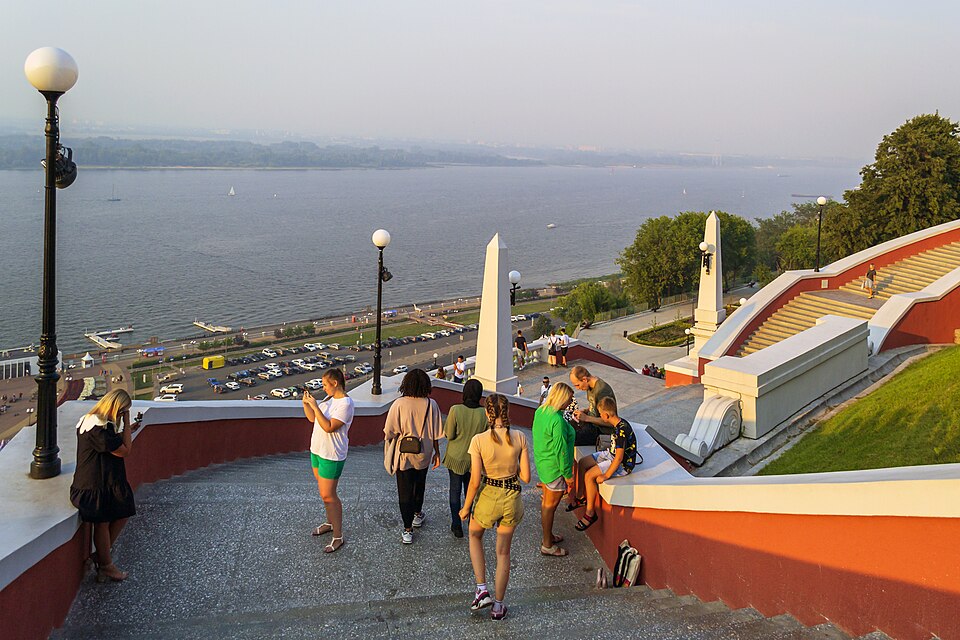
Before leaving, face the meeting of the rivers and imagine approaching Nizhny Novgorod by water. Shoreline landmarks would become visible before arrival. The cathedral could shape a traveller’s first impression well before they stepped ashore. Your walk offers the reverse viewpoint: from land, you can see how architecture and water work together, and why this particular building feels so closely connected to its setting.
Learn more
The word “fair” can suggest a few festive stalls that disappear by evening. In Nizhny Novgorod, it described a far more substantial commercial environment. The existence of two fair cathedrals is one way to appreciate that scale without reciting figures for trade turnover.
Merchants spent time here, conducted business, met other people and maintained aspects of their social and religious lives. Churches formed part of that environment alongside commercial buildings and other services. Their history therefore intersects with the history of trade, although the activities inside were very different from those in the shops.
As you continue, try linking the surviving fair buildings into a mental plan. What need did each one serve? What would a visitor require nearby in order to live and work? Individual monuments begin to reveal a periodically gathering commercial town, populated by people arriving from many different places.