LISTEN TO THE PLACE
A story worth knowing
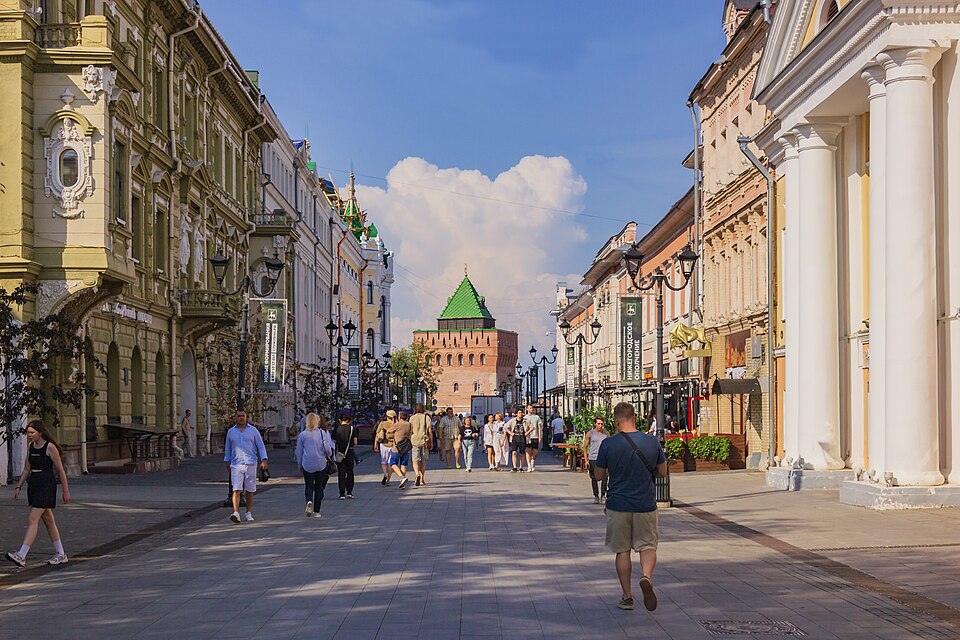
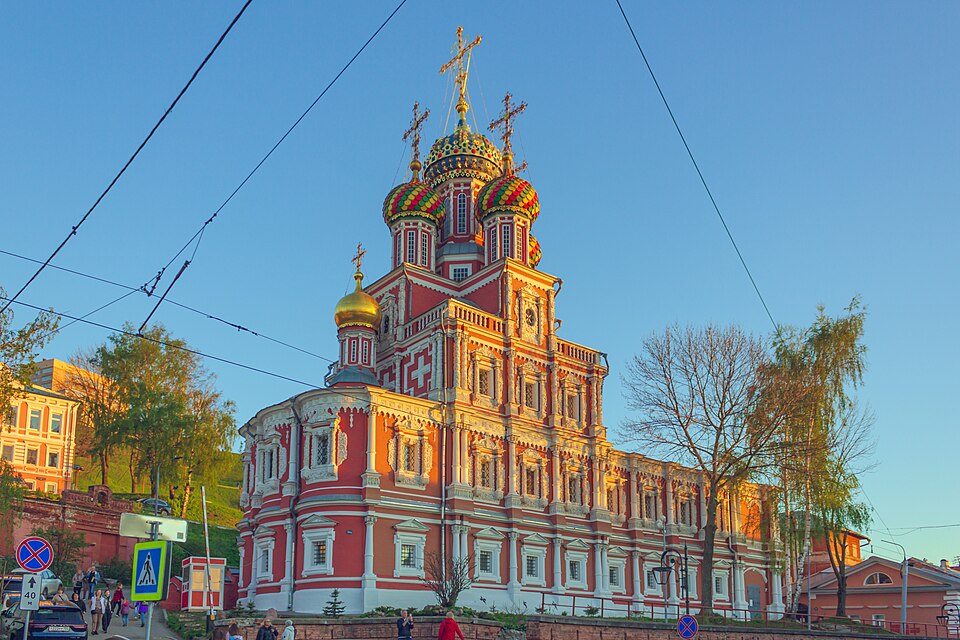
Lift your eyes from the busy street to the white ornament on the red walls. The decoration is so dense that the church invites you to examine it like a carved object. This is the Stroganov Church, more commonly called the Nativity Church.
The two names tell different stories. Stroganov recalls the merchant Grigory Stroganov, who financed the construction. Nativity belongs to local usage and the history of the street. The main dedication is actually to the Synaxis of the Mother of God, celebrated on the day after Christmas.
Work began in the late seventeenth century. Interruptions and a fire delayed completion, and the church was consecrated in 1719. After Grigory's death, his wife Maria continued the project. The building therefore also represents a family undertaking that outlived its original patron.
Look closely at the window surrounds. Their ornament leaves very little of the wall undecorated. Details like these help explain why historians identify a distinct Stroganov style. Yet the richness does not dissolve into confusion: a clear overall shape and repeated rhythms hold it together. First take in the whole church, then choose a single window and follow its pattern.
The position beside a commercial street matters too. A richly decorated church could make a merchant's resources and religious commitment visible to the city. Trade and church building were closely connected in the history of Nizhny Novgorod.
Instead of searching for one perfect photograph, try two viewing distances. Step back far enough to include the bell tower, then return to the smaller details. The church works on several levels: a landmark in the street, an ordered architectural composition and a collection of skilled individual decorations. Each scale reveals something that the others cannot.
Learn more
Several popular stories attempt to explain Peter the Great's closure of the church. Some involve icons or the ruler's displeasure, but colourful details should not automatically be treated as established history. It is useful to distinguish the building's documented past from later explanations. Even the familiar name Nativity Church shows how local memory can become more enduring than an official dedication.