LISTEN TO THE PLACE
A story worth knowing
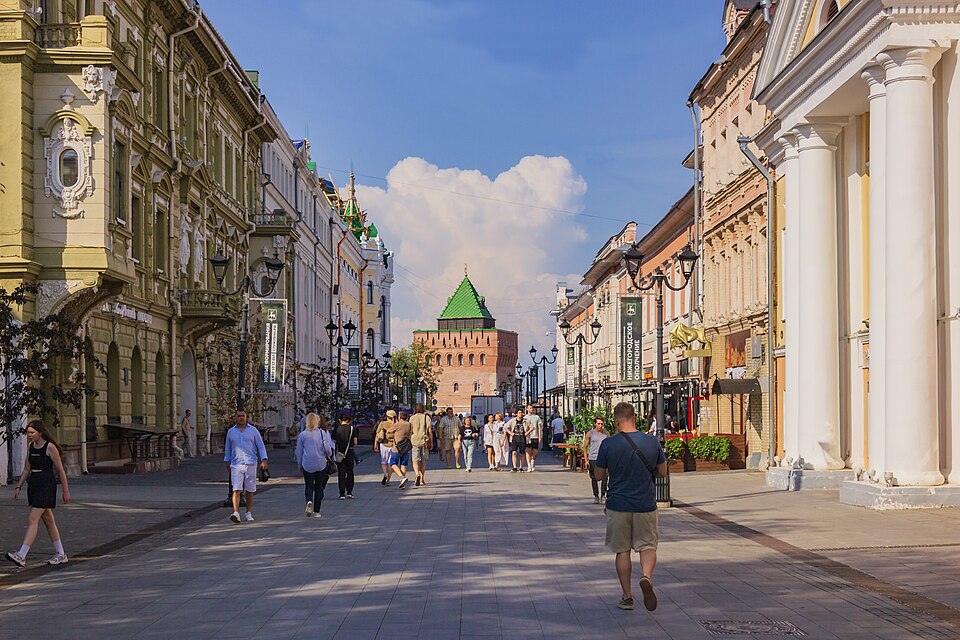
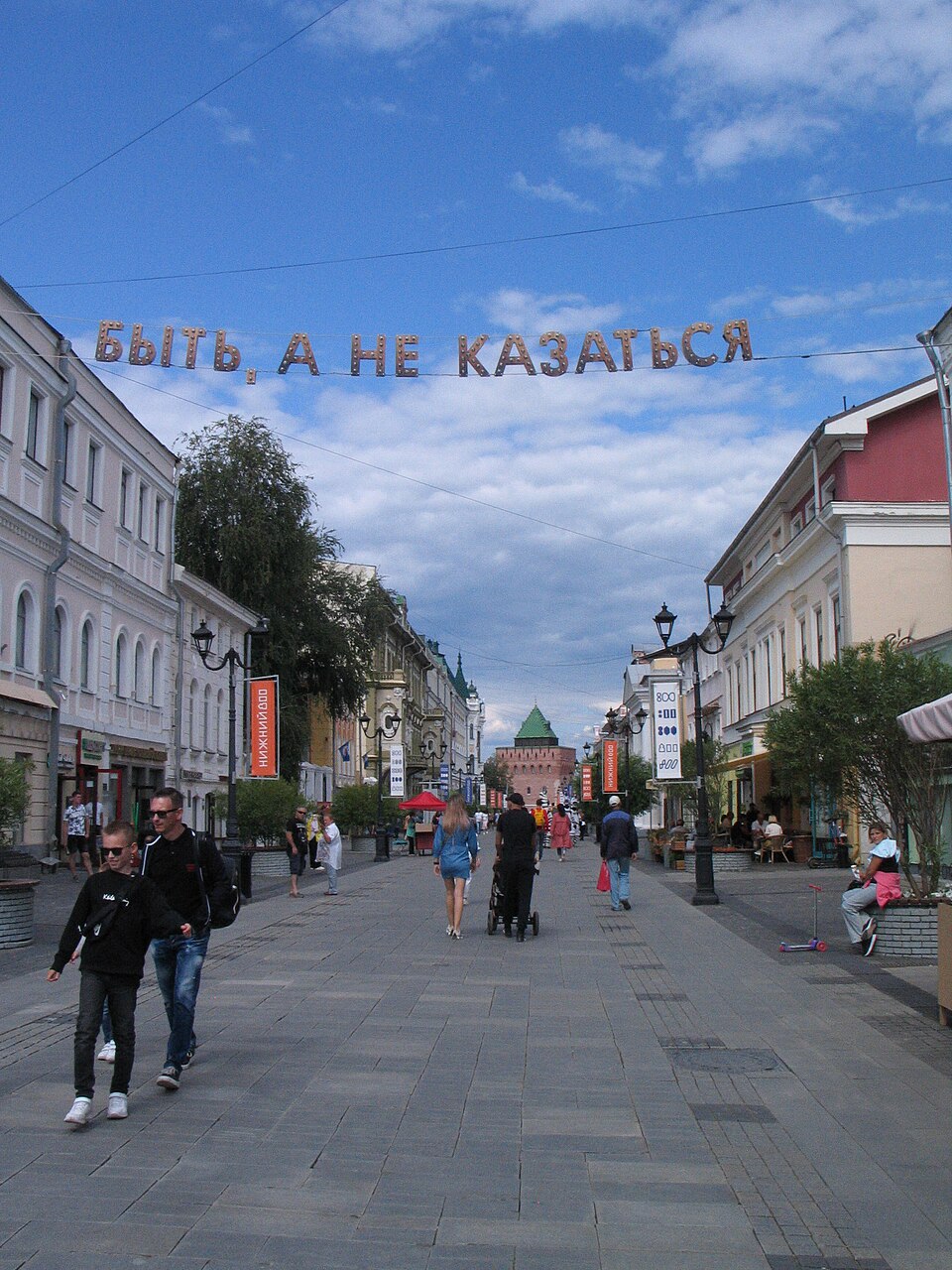
Bolshaya Pokrovskaya has a useful quality for a visitor: you can get to know Nizhny Novgorod without constantly searching for the next landmark. Simply walk and look above the shop windows. Some façades appear restrained, while others compete for attention with a turret, an elaborate window surround or an unexpected roofline. This is a street for a city that wanted to look both prosperous and entertaining.
Locals often shorten its name to Pokrovka. Its pedestrian section is a favourite place for a stroll, but it is not a single architectural composition. Buildings from different periods stand together, each with a different purpose. A theatre, a bank and a residential building make very different statements to a passer-by.
One prominent stop is the Drama Theatre. Its building opened in 1896, the year Nizhny Novgorod hosted the All-Russia Industrial and Art Exhibition. Architect Viktor Schröter designed it. The young Fyodor Chaliapin took part in the opening, singing Ivan Susanin in Glinka's opera A Life for the Tsar. This dramatic theatre therefore has a memorable operatic chapter in its biography.
If you are not beside the theatre now, keep it in mind as you continue. Then compare its appearance with the State Bank at number twenty-six. Completed in 1913 and designed by Vladimir Pokrovsky, the bank uses towers and powerful masses to evoke old Russian architecture. Behind that historical costume was an institution dealing with the very contemporary business of money and documents.
Its interior paintings were made from designs by Ivan Bilibin. You do not need access to the interior, however, to appreciate the building's architectural ambition. From outside, notice how its different parts form a complex outline. First step back to see the whole composition, then choose one detail to examine. The change is rather like moving from a wide shot to a close-up in a film.
Between these celebrated addresses are quieter façades that deserve attention too. Compare the arrangement of windows, the treatment of entrances and the boundaries between neighbouring buildings. Such details help you see a continuous street instead of jumping between labelled attractions on a map.
Pokrovka rewards an unhurried pace. You might pause for a street musician, return to a detail you missed or turn towards the next stop on your route. Its portrait of Nizhny emerges gradually: a city of business, theatrical life and architectural imagination, with more than one way of presenting itself to the world.
Learn more
Why did the theatre open in the exhibition year of 1896? A major exhibition gave Nizhny Novgorod an opportunity to introduce itself to a large visiting public. A new stage helped present its cultural ambitions alongside industry and trade.
The building's history includes some very practical achievements. Its designer, Viktor Schröter, was an experienced theatre architect. Construction and interior work took less than two years, and a commission accepted the completed building in April 1896.
Now imagine its façade at two different moments: during the day, when you study the architecture, and before an evening performance, when people converge on the entrances. The second scene reveals another aspect of a theatre. It is a place designed to bring people together, guide their movement and direct their attention towards a stage. For a little while, the street outside becomes part of the performance's unfolding occasion.