LISTEN TO THE PLACE
A story worth knowing
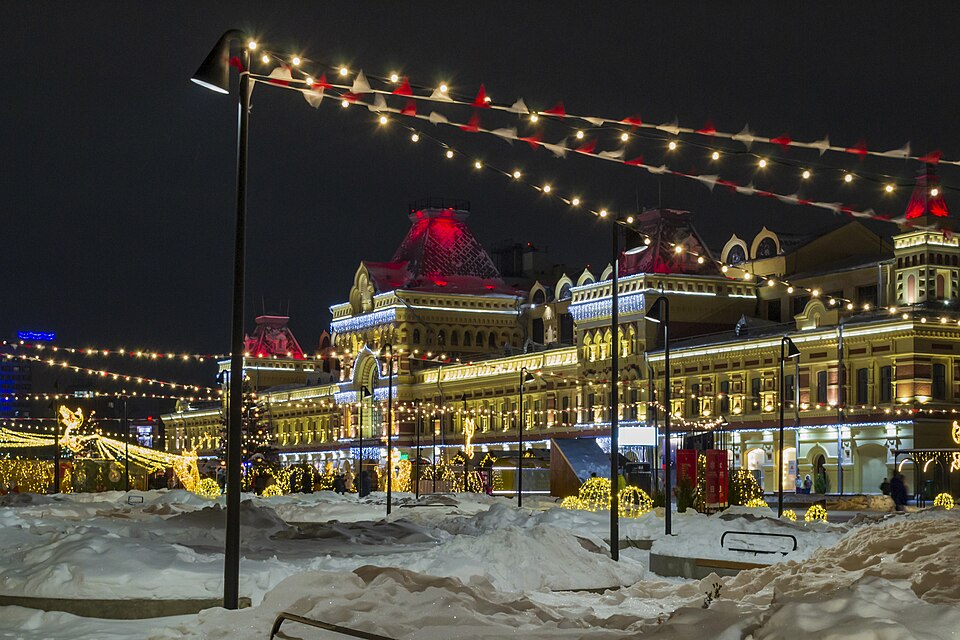
It is easy to mistake the ornate Main Fair Building for the entire Nizhny Novgorod Fair. In reality, it was the public face of a much larger trading system. During the nineteenth century, people came here to negotiate deals, compare prices, find customers and exchange news. For a time, the fair brought together people whose homes and businesses lay enormous distances apart.
Its predecessor stood beside the Makaryev Monastery farther down the Volga. After a fire in 1816, the market moved to Nizhny Novgorod. Trading began at the new site in 1817, while the permanent stone complex opened in 1822. These dates describe different stages, rather than competing versions of the same event.
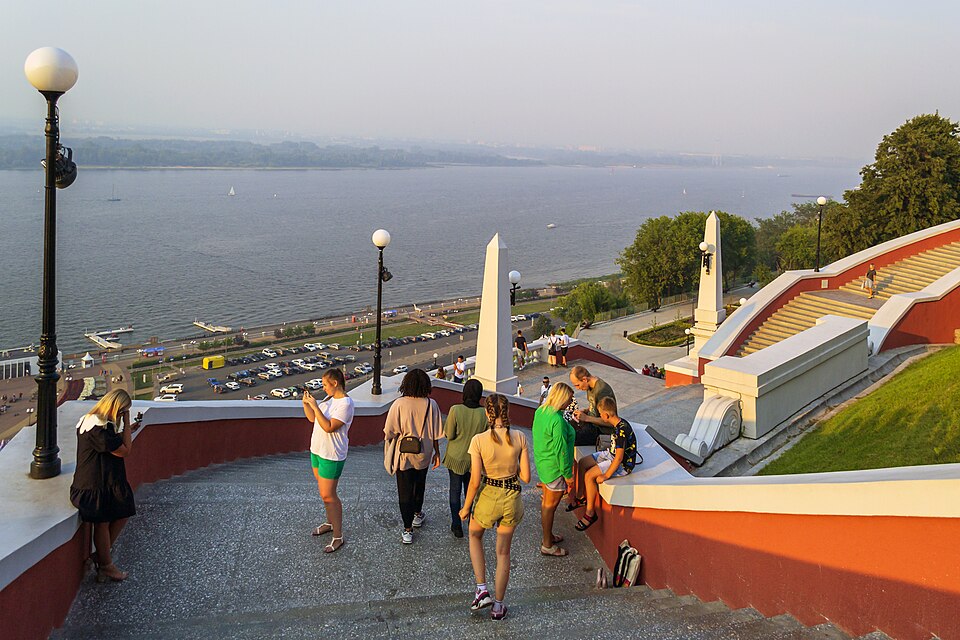
Geography explains the location. The Oka and Volga meet nearby, linking numerous trading routes. For a cargo, a river was a road. But unloading goods was only the beginning. They had to be stored, displayed, sold and sent onwards. The fair therefore needed the infrastructure of a small commercial town, rather than simply an open market square.
Engineer Agustín de Betancourt directed construction. A canal around the complex played a role in water management and fire protection. Think of the engineering behind the familiar image of a busy market. A customer sees a stall and its goods; the planner must also consider water, waste, access and the safety of a large gathering.
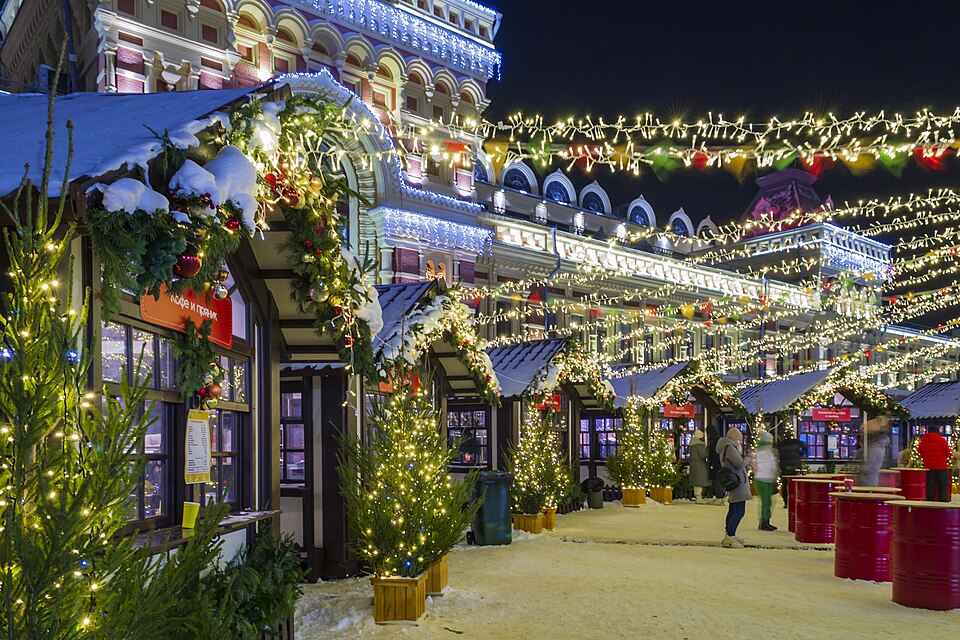
The Main Building you see today belongs to a later chapter. It was completed in 1890, decades after the fair's arrival. From a distance, its broad composition creates a ceremonial impression. Closer up, numerous decorative details compete for attention, rather like an elaborate display designed to invite a second look.
Business was accompanied by entertainment. Theatre and other attractions gave visitors reasons to linger beyond their negotiations. Someone arriving to close a deal might leave with memories of a performance or an unfamiliar technological novelty. Commerce and curiosity occupied the same ground.
The old trading rows have not survived as a complete, untouched district. Plans, photographs and individual buildings help us recover their scale. Exhibitions and events continue the site's role as a meeting place. Look once more at the Main Building and imagine the less visible network behind it: waterways, warehouses, correspondence and agreements. That network made the fair far more than an impressive building in a city square.
Learn more
How could the fairground connect with the main city before there was a permanent bridge across the Oka? A floating bridge provided a crossing, with its roadway supported by boats known as pontoons. In effect, a carefully arranged line of vessels carried a road over the water.
This reveals another side of the fair's convenient riverside position. The waterways carried goods over long distances, but they also separated neighbouring banks. Changing water levels and ice created practical challenges that are easy to forget when using a permanent bridge.
Look at a map and separate two journeys: travelling along the river from far away, and crossing it within the city. Both mattered to the fair. Cargo might travel hundreds of kilometres, yet the final short journey to the right bank still required organisation. Large-scale trade depended on these very particular engineering problems, including how to keep a road afloat.