LISTEN TO THE PLACE
A story worth knowing
The name Pechersky begins underground. It refers to the caves associated with the monastery's earliest community. Dionysius, who came here in the fourteenth century, is regarded as its founder. The surviving ensemble, however, is not on precisely the same site as that first settlement.
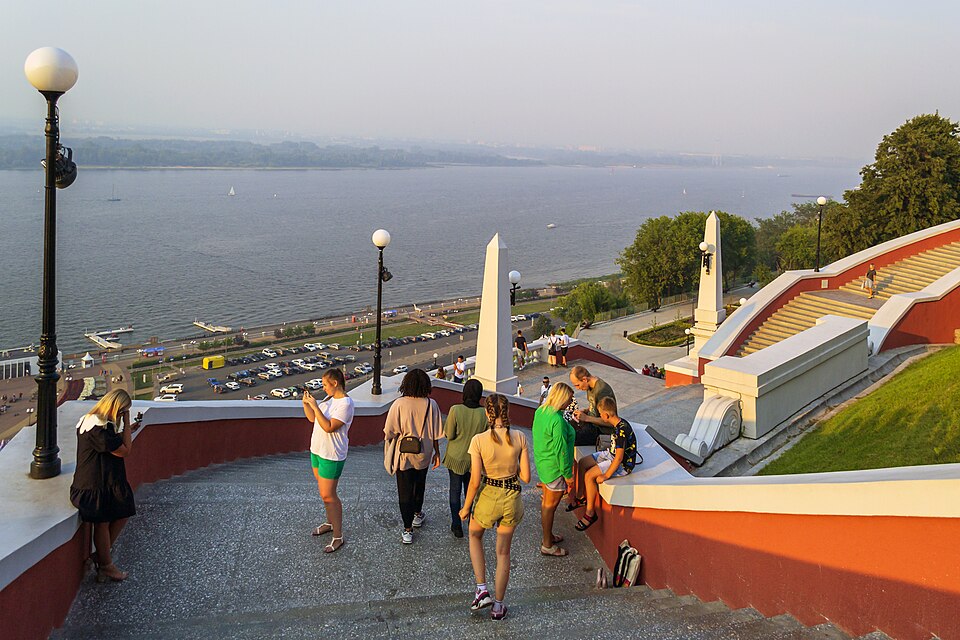
A major landslide destroyed the old monastery in 1597. The community relocated, and the surviving stone buildings belong mainly to the following century. The high Volga bank was more than a beautiful view or a natural defence: it was a changing landscape that could force people to begin again.
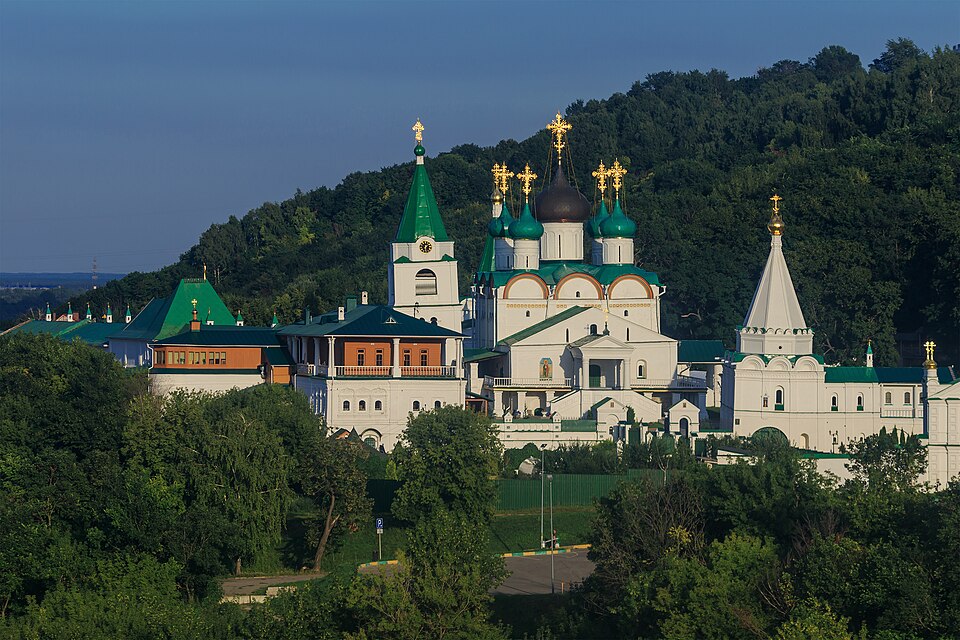
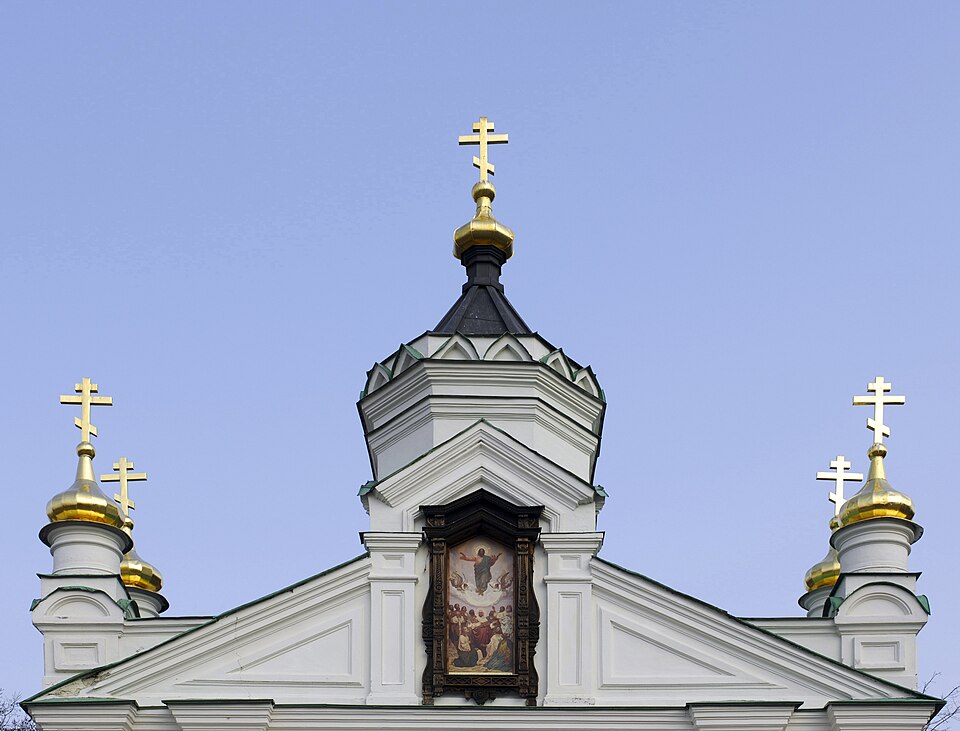
Notice how the cathedral, bell tower and other buildings create a world of their own. A monastery was not just a group of churches. It was a place of shared life, work, worship, learning and the care of books. Its boundaries organised that community as well as separating it from the surrounding town.
Pechersky is also connected with the history of Russian writing. Its tradition recalls the Laurentian Chronicle and the book culture of medieval Nizhny Novgorod. A manuscript represented a remarkable investment of labour. Its creation and survival depended on particular people, materials and institutions.
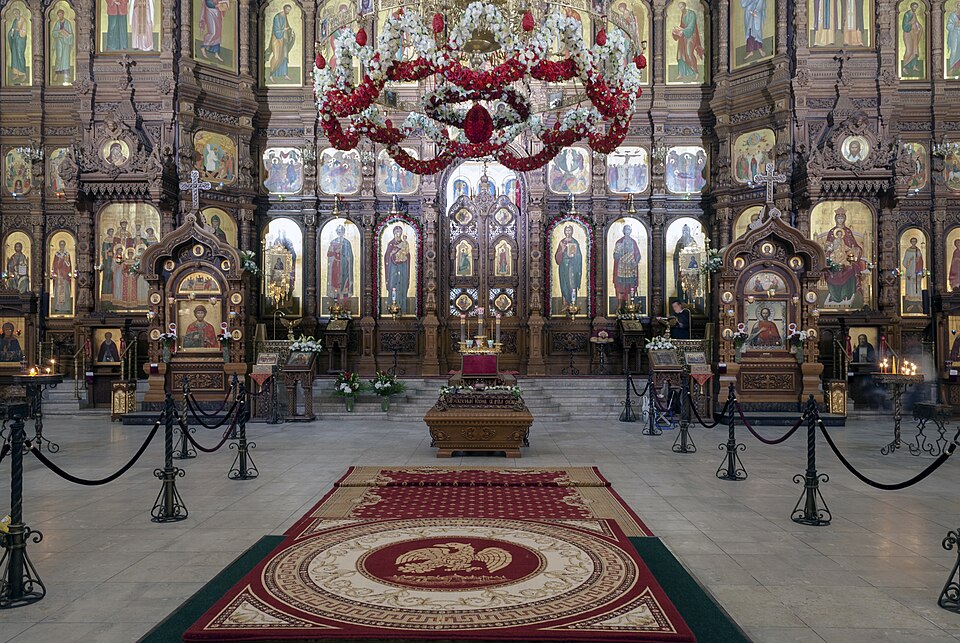
This remains an active monastery. If you enter, take account of services and the rules of the religious community. The buildings are not simply museum displays; they continue to support worship.
For an outdoor visit, pause to follow the outline of roofs and domes, then compare it with the broad setting of the Volga. The tranquil ensemble preserves a history of disaster, relocation and reconstruction. It shows how a community can survive the loss of its original home and establish continuity in another place.
Learn more
The similar names of Pechersky and Kyiv-Pechersk monasteries refer to a cave-based religious tradition, but they identify different places. Medieval monks carried books, practices and ideas about communal life between regions. A familiar name can therefore indicate spiritual continuity rather than membership of a single architectural complex. Here it is a clue to the founding community's background, not a sign that the two monasteries are the same.