LISTEN TO THE PLACE
A story worth knowing
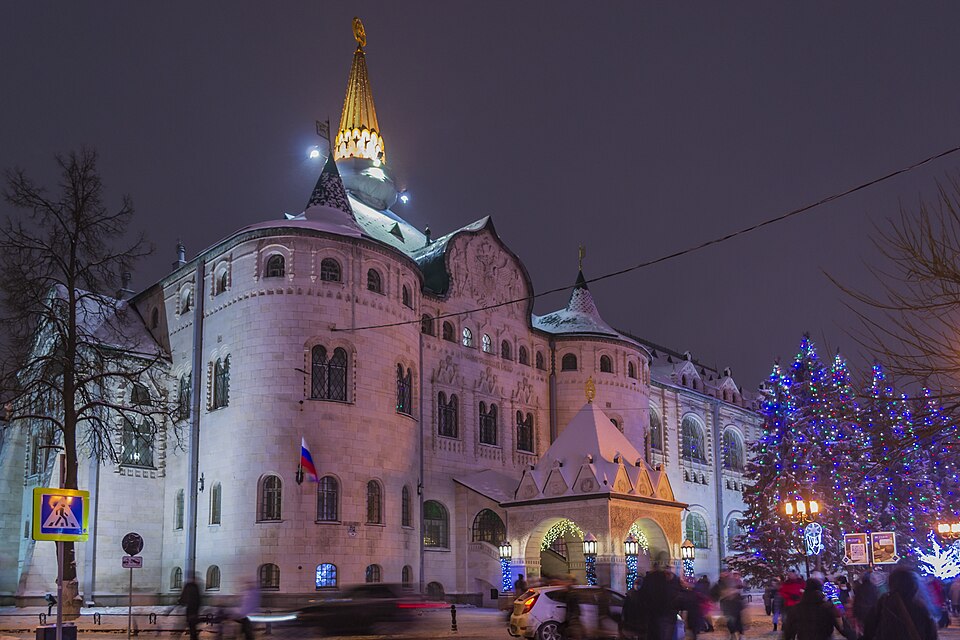
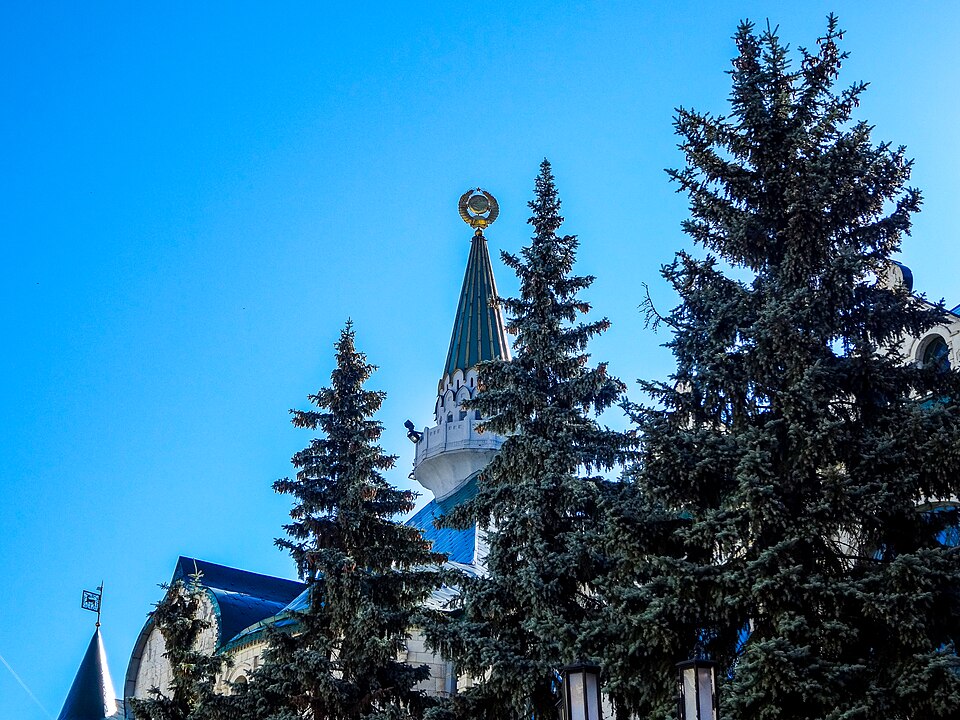
On Bolshaya Pokrovskaya Street stands a building that could belong to a storybook kingdom. Its original purpose, however, was thoroughly practical: it housed the Nizhny Novgorod branch of the State Bank. Architect Vladimir Pokrovsky gave a financial institution the appearance of an old Russian palace. The result brings money, contemporary technology and an emphatically historical image into the same project.
Completed in 1913 for the Romanov dynasty’s three-hundredth anniversary, the complex took roughly two years to build. Nicholas II visited during the jubilee celebrations. That occasion helps explain the ceremonial character of the architecture. This was a working bank, but also a building expected to represent the state before the city and its visitors.
Compare the lower and upper parts of the façade. Grey Finnish granite forms the base, while white stone from the Urals faces the main building. The contrast does more than change the colour. Below, the eye registers weight and support; above, it begins to follow carving and individual decorative features. You can examine the bank almost like a finely made object: outline first, surface next, then a small detail.
The interiors extended this approach. Brothers Nikolai and Georgy Pashkov worked on the main banking hall using designs by Ivan Bilibin, an artist closely associated with illustrated tales. Imagine the difference between a neutral modern banking space and a hall whose decoration tells stories about the country. You can appreciate the ambition of that combination even while standing outside.
Nizhny Novgorod had substantial reasons to need banking services. Its fair attracted trade, bringing payments, loans and transfers alongside physical goods. According to the Bank of Russia Museum, the city long had both a permanent branch and a temporary fair office. Behind the remarkable façade were the everyday financial demands of a major commercial centre.
The building retains its banking function. This outdoor stop therefore does not imply unrestricted entry: visits to museum spaces are arranged separately. From the street, try finding a position where you can see the decorated entrance and main body together. The relationship between them is part of the design.
There is a useful question to take away. Why should an institution concerned with calculation and order choose such expressive architecture? Several interpretations are possible. Here, a business building can suggest reliability, historical continuity and civic prestige before you have even read its sign. Its purpose and appearance belong to one story, rather than competing stories.
Learn more
The words “Bank of Russia” may bring to mind a familiar branch where customers use their personal accounts. A central bank has a different role, involving currency and the wider financial system. That distinction helps explain why this institution occupied such a substantial and representative building.
Try reading the façade as a promise of stability. A weighty base, solid walls and carefully worked surfaces can suggest reliability before you know what happens inside. This is an interpretation of architectural effect, not evidence that every historical visitor responded in the same way.
Decoration does not necessarily weaken that serious impression. It also gives an organisation a memorable identity. Modern companies pursue recognition through many forms of design; here stone, carving and silhouette do much of the work. Later in your walk, compare this façade with an ordinary office building and consider what each one communicates without words.